
Located just outside Florence, the city of Prato boasts a textile and clothing district renowned as the largest in Europe. With around 7,000 companies operating in the fashion sector in this area, it has an unparalleled concentration of mills, factories, and wholesalers. In fact, as of 2022 Prato alone accounted for roughly 3% of all textile production in Europe, with its textile and apparel companies exporting on the order of €1.5–2 billion annually. This massive output is made possible by a deeply integrated local supply chain covering every step of production.
Prato’s industrial heritage in textiles dates back centuries, and today it excels in modern ready-to-wear production. The “Prato ready-to-wear” is famous across Europe – the district is a key sourcing point for many international fashion brands, thanks to its quality, speed, and flexibility. Local manufacturers can turn around new designs quickly, making Prato a pivotal hub for fast fashion and luxury alike.
One of Prato’s strengths is its complete supply chain in one place. The district covers everything from yarn spinning and fabric production to dyeing, finishing, and garment manufacturing. This means a fashion business can find virtually any material or product category within a few square miles – whether it’s premium wool fabrics or trendy polyester prints, basic T-shirts or elaborate eveningwear. Additionally, decades of know-how and a tradition of craftsmanship underlie the Made in Prato quality, even as the district embraces rapid production cycles and trend-driven styles.
Why Source from Prato?
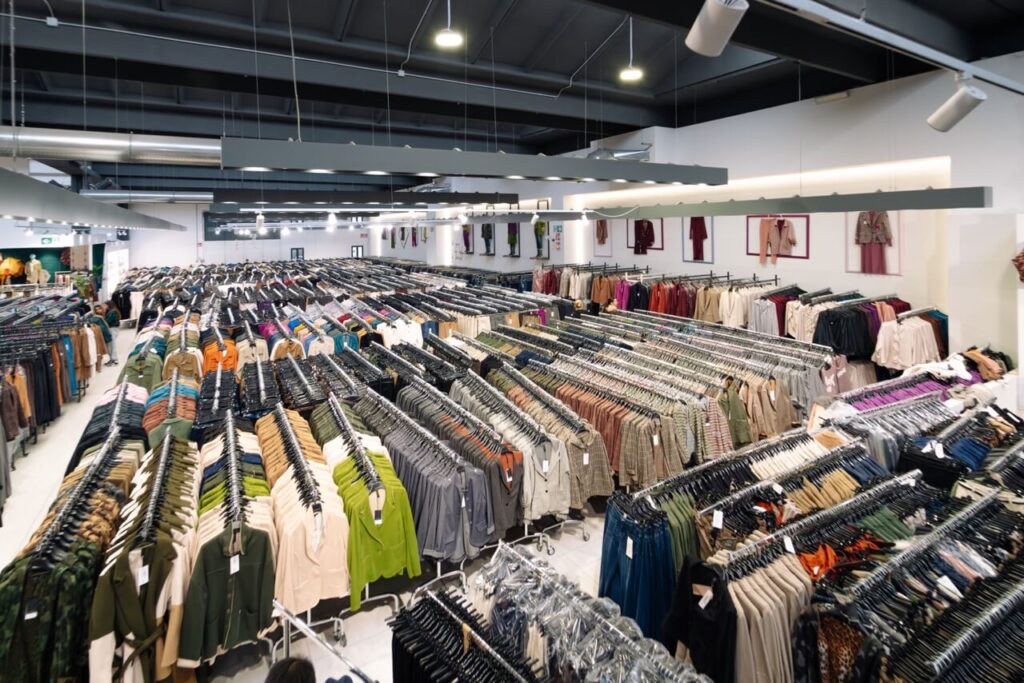
For boutique owners and fashion labels around the world, Prato offers several compelling advantages. Variety and volume are a major draw – the sheer number of suppliers means buyers have access to a vast range of styles at different price points. Whether you are seeking the latest Italian pronto moda pieces (seasonal fast-fashion styles) or looking to produce a custom design, there is likely a Prato manufacturer that fits your needs. The scale of the district also allows for scalability: one can source small batches or tens of thousands of garments as needed, tapping into a network of specialized producers.
Another key advantage is speed to market. In recent years, Prato has attracted companies from across Europe by supplying clothing much more quickly than distant manufacturing centers. Global supply chain challenges have led many brands to prefer nearby suppliers over ordering from China or Bangladesh, so they can respond faster to trends and avoid long shipping delayspratowear.it. In Prato, new collections can be developed and delivered in a matter of weeks, not months. For a fashion retailer, this agility can mean staying ahead of the competition with fresh styles.
Additionally, sourcing from Prato often means lower minimums and more flexibility compared to Asian production. Many Prato wholesalers will sell assortments of in-stock merchandise with relatively low minimum order quantities, and factories in the area can handle production runs starting at around 100 pieces per style – an accessible scale for independent brands. This empowers smaller labels to offer Made in Italy products without needing the massive orders that offshore factories usually demand.
Quality control and communication are also typically easier when sourcing in Italy. There is no major time zone barrier for European and even North American buyers, and working with Italy often provides more transparency and adherence to EU quality standards. By partnering with local agents or experts in Prato, foreign buyers can overcome any language gaps and cultural differences, ensuring the products meet their specifications.
Navigating Prato’s Wholesale Market Remotely
While Prato’s opportunities are immense, navigating this district as an outsider can be challenging. The abundance of suppliers is a double-edged sword – it’s hard to know which vendors offer the styles or materials you need, who has the best pricing or quality, and who is trustworthy to work with. Many wholesalers in Prato may not have a big online presence or English-language catalogs, making it difficult for overseas buyers to identify the right partners from afar. This is where having a local sourcing agency or buying partner becomes invaluable.
Our experience has shown that a guided approach yields the best results. Typically, the process begins with an initial consultation (often a video call) where the buyer’s needs are discussed in depth. For example, a boutique might share information about their target style (e.g. casual dresses with a certain print), their budget, sizing requirements, and any branding preferences like having their own label sewn into the garments. With this input, the local expert taps into their knowledge of Prato’s suppliers to create a plan.
The next step is usually scouting and pre-selection. Based on the client’s brief, the agent will survey the market – visiting showrooms and warehouses around Prato – to find matches for the desired styles or to identify factories capable of producing the client’s designs. By doing this groundwork, the agent narrows down the overwhelming array of options to a curated selection of vendors that fit the client’s criteria in terms of style, quality, and price range. This preparation ensures that when the client is ready for a buying appointment, no time is wasted.
Increasingly, buying from Prato can be done entirely remotely via live video. During the scheduled purchasing appointment, the client connects with the agent by video call (using a platform like WhatsApp or Zoom). The agent then takes the client on a virtual tour of the selected showrooms and stockrooms. In real time, the buyer can see the products – the agent will showcase garments on camera, pointing out details of the fabric, fit, and finish. The client can request to see different colors or variations, ask questions, and make selections as if they were physically there. This live virtual shopping experience brings the rich offerings of Prato directly to an overseas buyer’s screen.

Throughout the session, the agent helps negotiate and compile the order. One of the benefits of using a local intermediary is the ability to combine purchases from multiple vendors into one order. For instance, the client might choose dresses from Vendor A, blouses from Vendor B, and handbags from Vendor C – all in one day’s session. Rather than the buyer having to place and manage separate orders with each vendor, the agency consolidates everything. They will typically issue a single invoice covering all the items from different suppliers, and handle collecting the goods into one shipment. This consolidation not only simplifies payment but also significantly reduces international shipping costs, as the buyer receives one bulk shipment instead of many smaller parcels.
Private Label Production in Prato
Beyond buying in-stock merchandise, Prato also excels in private label production italy – producing custom-branded clothing for clients. There are two main avenues for private label manufacturing in Prato:
1. Original Design Manufacturing: In this route, a brand provides its own design or sample garment, and a Prato manufacturer brings it to life. For example, you might send the factory a tech pack or a physical sample of a dress you want to produce. The Prato team will source similar fabric and trimmings and create a prototype sample for your approval. Thanks to the district’s resources, material sourcing is efficient and often high quality (with many fabric mills nearby). Once you receive the sample and approve the fit and construction, the factory can proceed to bulk production. The minimum order for production runs is usually about 100 pieces per style, though this can vary by supplier. Prato manufacturers are experienced in small to medium productions, meaning you can get a new design manufactured under your own label with a relatively quick turnaround. They can also assist with adding your branding – such as sewing in custom neck labels or attaching bespoke hang tags – so that the final product is fully branded for your boutique.
2. Customized Pronto Moda: The second option is to take an existing design from the Prato market (a ready-to-wear style) and customize it as your own. Prato’s vendors constantly have new trendy garments on offer. If you spot a dress or set that you love, you can arrange to have it produced with a few modifications and under your label. Modifications can be as simple as using a different fabric print or color, or adjusting measurements and details (for instance, adding sleeves, changing the neckline shape, or combining elements from two styles). Because the base style is already proven and patterns exist, this route can be very fast. The manufacturer essentially reproduces the item for you and can even make it in extended sizes or exclusive colors that the original vendor might not offer. The end result is a product unique to your brand but one that takes advantage of an on-trend design from the Prato market. Again, the agent will coordinate things like getting your labels attached during production and ensuring quality control throughout the process.
In both private label scenarios, working closely with a local expert is crucial. They will oversee the production schedule, perform quality checks on-site in Prato, and keep you updated with progress. It’s common for the agent to intervene at various stages – for example, checking the fabric roll before cutting, inspecting pieces during sewing, and making sure the final packaging meets your requirements. This hands-on management ensures that even if you as the client are thousands of miles away, your production is monitored as carefully as if you were locally present.

From Prato to Your Boutique: A Case Study
To illustrate how the Prato fashion district can serve international clients, consider the experience of a recent client – a boutique owner in North America – who worked with us to source and produce a new collection. She had fallen in love with certain Italian dresses she saw online and wanted to carry them in her store, complete with her own brand label for the upcoming season.
After reaching out to our agency, we scheduled an initial video consultation to understand her needs. It became clear she required two things: immediate stock of some items (to launch her store quickly) and a custom production of one particular dress style in larger quantities under her brand. Her budget for the first order was a few thousand euros, and she was also concerned about shipping to Canada and any import duties.
Armed with this information, our team began scouting in Prato’s wholesale arenas. We identified the vendor of the specific dress she wanted – a local manufacturer who had that style as part of their collection. We also found a couple of other suppliers offering matching sets and tops with similar fabric prints that could complement her lineup. We confirmed key details such as the unit prices, the minimum order quantity for a production run (100 pieces for the dress she wanted to produce), and the availability of stock for the other items she needed immediately.
During a live video shopping session, we walked her through the main showroom holding the dress style in question. She was able to see the garment up close via camera, and we discussed options like which colors to produce it in and the possibility of adding her private label tags. We also showed her the in-stock matching sets from another supplier and some blouses that went with the theme. In real time, she selected the items she wanted: committing to the production of 100 dresses (in a mix of four different colors) with her branding, and picking about €300 worth of ready-made garments (assorted pants and tops) to supplement her inventory.

At that point, our role shifted to order execution. We negotiated with the dress manufacturer on the price and terms – notably, we managed to include the cost of attaching her custom neck labels into the agreed price per piece. We also coordinated to get those labels produced (since she didn’t have them on hand yet, we arranged it with a local label maker in Prato). Meanwhile, we placed the order for the in-stock items from the other vendor as well, securing all the pieces she wanted.
All the goods – both the immediate stock and the soon-to-be-produced dresses – were consolidated for shipment. Over the next week, the factory completed the 100 dresses in her chosen colors. Our team visited the facility to inspect quality, checking that the stitching and fabric met expectations and that her labels were correctly attached to each garment. Once everything was ready, we gathered the items from both sources and packed them as a single delivery.
Logistics can be daunting for international orders, but we handled the entire shipping process end-to-end. We obtained competitive courier quotes and shipped the order via DHL Express. All the items fit into one large box (around 20 kg). We prepared all necessary paperwork: a commercial invoice listing every item, and crucially a certificate of origin with a CETA declaration. Because the client’s company had registered for a Canadian Business Number in order to utilize the CETA free trade agreement between Canada and the EU, her shipment qualified for zero import duties. We had advised her to obtain that number beforehand, and indeed it saved roughly 16–18% in import fees – a substantial cost reduction.
Finally, the package was sent on its way from Italy to Canada. We provided the client with a tracking number, and within a few days her products arrived safe and sound. The entire process – from initial inquiry to delivery – took only a few weeks. What began as an ambitious plan to source remotely from Italy turned into a smooth, transparent experience.
The client was able to launch her collection featuring authentic Italian-made garments, something that gave her store a distinct edge. She remarked that without the on-ground support in Prato, it would have been nearly impossible to coordinate so many moving parts – from finding the right supplier and negotiating production, to handling shipping logistics and customs. This example underscores how leveraging the Prato district, with the right guidance, can empower even small businesses to access exclusive styles and create their own brand collections with confidence.
Curious to see how international buyers navigate Prato in practice?
Read our detailed case study on a North American boutique’s first production order in Italy, from scouting to shipping.
Read the full case study →
Conclusion
The Prato fashion district represents a unique ecosystem where tradition meets speed and scale. For fashion entrepreneurs, it offers the best of both worlds: the cachet of Italian-made products and the agility of a fast-fashion supply chain. By sourcing from Prato, businesses can tap into an extraordinary variety of apparel and textiles, respond swiftly to trends, and work with manageable production minimums – all while maintaining quality standards.
However, as with any rich marketplace, success in Prato comes from knowing how to navigate it. Partnering with experts who have deep local knowledge is often the key to unlocking Prato’s full potential. Whether you aim to buy ready-made stock or develop a private label line, an experienced agency or buying office on the ground can streamline the process, from initial product scouting to final delivery. They act as your eyes and ears in the bustling warehouses of Prato, ensuring you get the best deals and that nothing gets lost in translation.
In summary, the Prato district opens a world of opportunities for fashion retailers and brands looking to source from Italy. With its concentration of skilled manufacturers, quick turnaround times, and supportive italian fashion services like logistics and quality control, Prato can be the gateway to elevating your collection with authentic Italian style. For those ready to venture into this vibrant market, the payoff – in both product differentiation and supply chain reliability – is well worth it.