
Sourcing fashion inventory from Italy’s renowned Prato district offers boutique owners two main paths: buying ready-made wholesale collections or producing a private label line under your own brand. Both strategies can deliver high-quality Made in Italy styles, but they differ in cost structure, lead times, and how much control you have over design. There is no one-size-fits-all answer – the right choice depends on your boutique’s concept, budget, and goals. By understanding the trade-offs between ready-to-wear wholesale and private label production, you can make an informed decision on the best sourcing strategy for your business.
An aerial view of Prato’s fashion district in Italy, home to thousands of clothing manufacturers and wholesalers. Italy’s Prato fashion district is a global hub for both ready-made wholesale and private label manufacturing. International boutique owners – from the USA and Canada to the UAE and Australia – are tapping into Prato’s vast supply chain for its quality, variety, and fast turnaround. But should you stock your boutique with curated wholesale pieces, invest in creating your own label, or consider a mix of both? In the sections below, we define each model and offer a side-by-side comparison of cost, speed, and flexibility. We’ll also give examples to help you decide which approach (or combination) fits your boutique type. By the end, you’ll have a clearer picture of how to buy Italian fashion wholesale in a way that aligns with your boutique’s needs – and how our team at Italian Fashion Sourcing can assist as your local sourcing agent in Italy.
What Is Ready-to-Wear Wholesale?
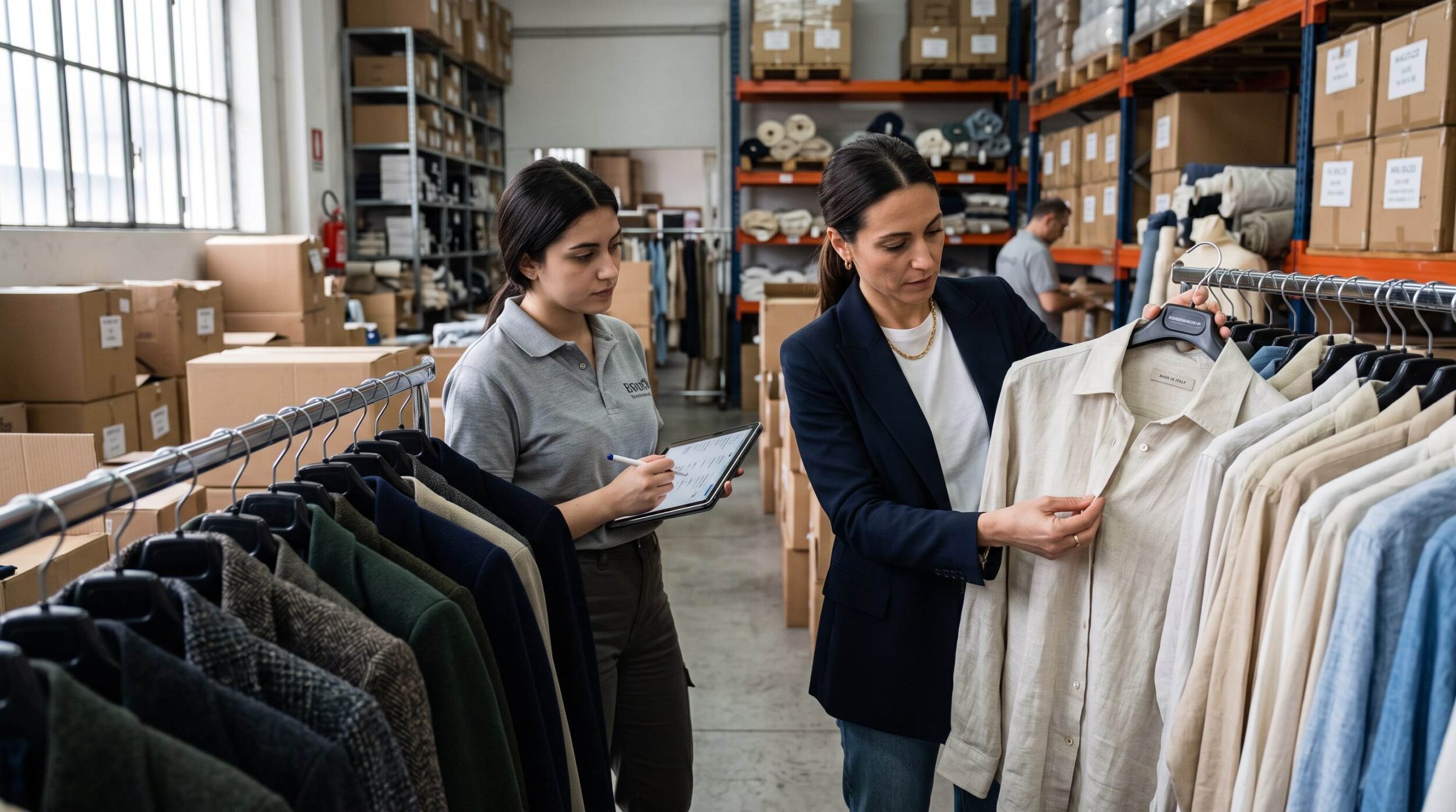
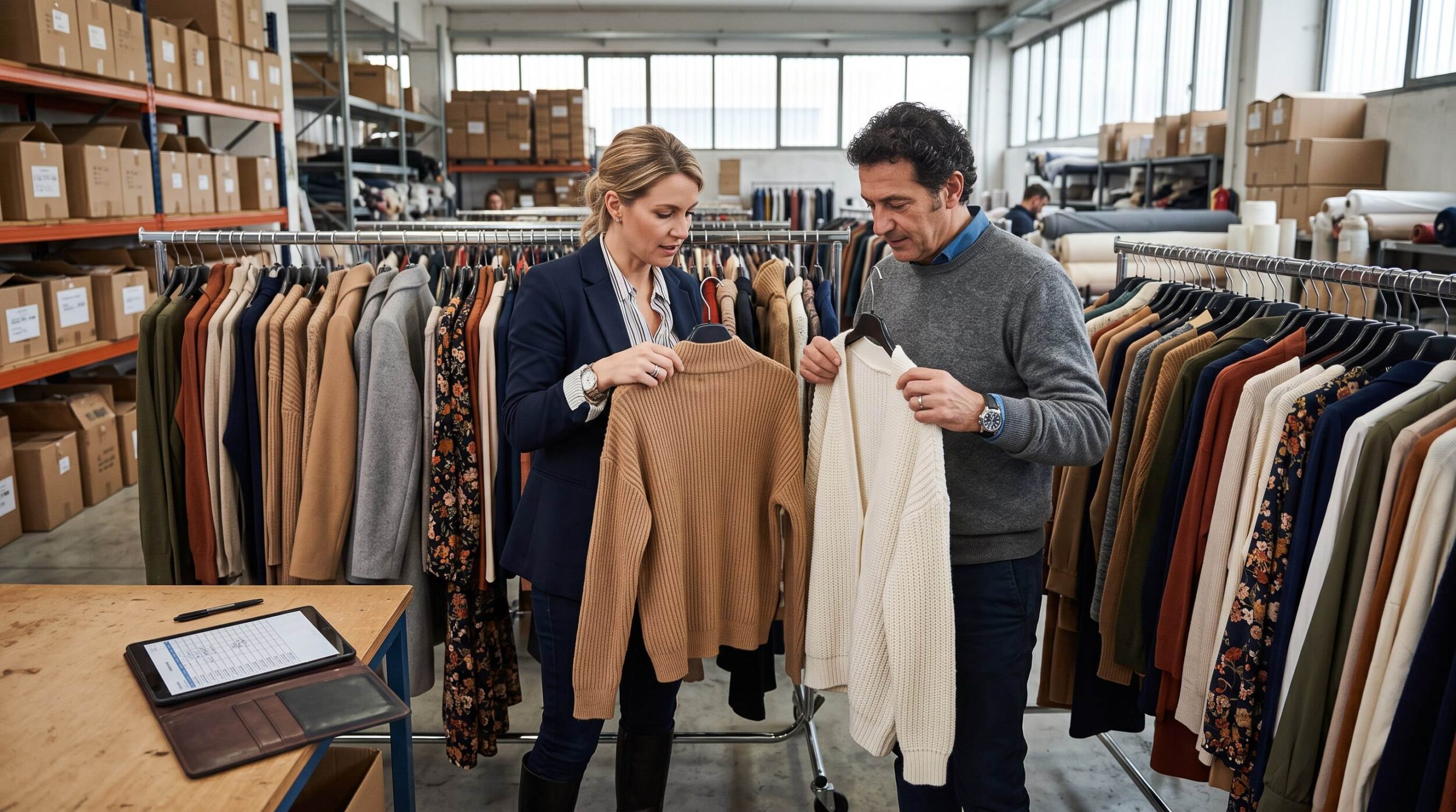
Ready-to-wear wholesale (often called “pronto moda” in Italy) refers to buying pre-made clothing collections from Italian fashion wholesale suppliers. In this model, you select existing garments that are ready to ship and sell – there is no product development on your part. Prato’s pronto moda vendors, for example, constantly have new trendy garments on offer to retailers. These items are produced in advance by Italian clothing suppliers and reflect the latest styles of the season. As a buyer, you can browse many collections (either by visiting showrooms physically or virtually via a video-call buying session) and purchase an assortment of styles in bulk. The wholesale clothing comes with the manufacturer’s label or a generic label, though some boutique owners remove the original tags and replace them with their own.
Ready-to-wear wholesale is essentially a “shop-and-stock” approach. Its biggest advantage is speed and convenience – you can acquire inventory almost immediately from available stock. For instance, Prato’s ready-to-wear system is famous for its rapid production cycles and responsiveness to trends. Boutique buyers can access a vast range of products without waiting for new manufacturing. You might find casual dresses, matching sets, or outerwear in various colors and sizes that are ready to ship within days. Additionally, Italian wholesalers often allow relatively low minimum order quantities (e.g. buying a few pieces per style or a small pre-pack), so you can test different styles with minimal risk. This makes wholesale ready-to-wear an attractive entry point for new boutiques or for existing stores looking to quickly refresh stock.
However, buying ready-made collections means you are limited to the designs and options the suppliers have created. You won’t have exclusivity – the same item could be sold by other boutiques elsewhere. There is also less flexibility to tweak designs; you generally get what’s in stock (though you may choose from available color options or order more units if a style is a hit). In short, ready-to-wear wholesale is about fast access to fashion: it’s quick, often cost-effective upfront, and lets you ride current trends, but it offers less uniqueness for your brand.
What Is Private Label Production?
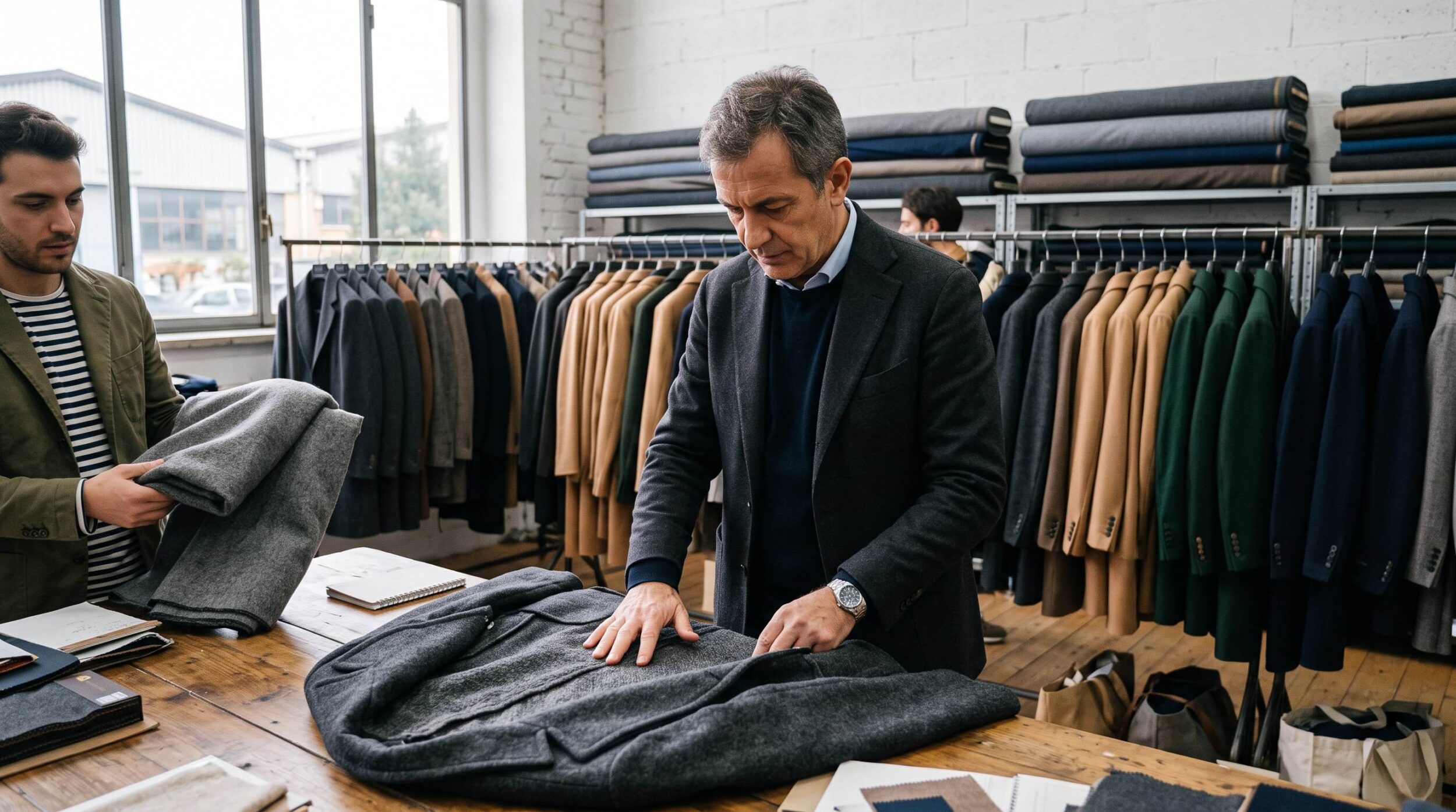
Private label production means creating your own branded products through a manufacturing process. Instead of buying finished stock, you work with a factory or supplier to produce clothing that will carry your boutique’s label. Italy – and Prato in particular – excels in private label manufacturing for small to mid-sized fashion businesses. When you pursue a private label strategy, there are a couple of routes you can take:
- Original design manufacturing: You develop a new product from scratch. This could involve sending your design files (tech packs) or even a sketch or sample to an Italian manufacturer, who will then source materials and create the garment for you. You’ll receive a prototype or sample to approve, and once you’re satisfied, the factory proceeds to bulk production. Thanks to Prato’s integrated supply chain, they can often turn around samples and production quickly. Minimum order quantities for fully custom production runs are usually around 100 pieces per style in Prato – a relatively accessible MOQ compared to Asian factories that might require 500+. The manufacturer can handle all the branding aspects too (sewing in your custom neck labels, hang tags, etc.), delivering a finished product ready for your boutique.
- White-label or modified existing design: If creating a design from scratch sounds daunting or time-consuming, another private label option is to customize an existing ready-to-wear style. In Prato’s wholesale market, if you spot a garment that fits your vision, you can collaborate with the original manufacturer to produce a version under your own label, often with small modifications. For example, you might take a popular dress from a supplier and request it in an exclusive color or print, or add a sleeve, adjust the length, etc. The base pattern already exists, so this process is faster and lower cost than developing a completely new design – yet the end result is unique to your brand. Essentially, you’re piggybacking on a proven style but making it your own. This is a common approach in Italy’s private label scene: boutiques get trendy designs “Made in Italy” with their branding, in a matter of weeks.
With private label production, you gain full control over branding and product details. Your boutique’s name is on the garments, which can greatly enhance your brand identity and exclusivity. You can tailor the styles to your market’s preferences – whether that means specific materials, fit (e.g. catering to plus sizes or modest fashion), or unique design elements. Many boutique owners choose private label to offer something truly distinct that customers can’t find elsewhere.
However, private label requires a higher upfront commitment in both time and money. You need to invest in development (design, sampling) and meet production minimums, which means purchasing a larger volume of a given style than you might if you were just buying a few ready-made pieces. The per-unit cost for small production runs is often higher than buying a single piece wholesale, since you’re paying for the manufacturing setup, customization, and branding touches. For example, making 100 custom dresses will involve the cost of pattern-making, sample creation, and perhaps custom fabrics, all of which are amortized into those units. The timeline is also longer – instead of receiving goods in days, you might wait a few weeks for production to complete (though Italian producers are known for being faster than many overseas manufacturers). In short, private label production is about creating a unique product line: it offers differentiation and control, at the expense of higher initial costs and lead time.
Comparing Cost, Speed, and Flexibility
When weighing ready-to-wear wholesale vs. private label, consider how each strategy fares on three key factors: cost, speed, and flexibility.
- Cost: Ready-to-wear wholesale usually has a lower upfront cost and lower risk. You purchase only the inventory you need, and there are no product development expenses. The unit price you pay to the wholesaler includes their margin, but you avoid costs like sampling or design work. With private label, there are additional costs for development – e.g. creating patterns, prototypes, custom labels – and you typically must order a larger batch of each style. Small-batch manufacturing runs can have higher per-unit costs than ready-made wholesale items, especially when you factor in the lack of economies of scale in a 100-piece order. There’s also a greater risk of leftover stock: if a privately produced style doesn’t sell as expected, you’re stuck with that inventory (hundreds of units, not just a few pieces). In contrast, wholesale buying lets you test styles in small quantities; you can reorder hot sellers and avoid reordering items that didn’t resonate. On the other hand, successful private label products can yield higher profit margins and brand value if customers perceive them as exclusive or premium. Think of it as lower risk vs. higher reward: wholesale is pay-as-you-go, while private label is an investment that can pay off if done right.
- Speed: When it comes to speed, wholesale is the clear winner for getting stock quickly. You’re buying in-stock merchandise, so the only lead time is shipping (and any necessary customs clearance). Many Italian suppliers can dispatch orders within days, meaning you could have new arrivals in your boutique within a week or two. This speed allows you to respond fast to trends or seasonal demands. Private label production, in contrast, takes more time. Even in Prato’s efficient ecosystem, you need to allow time for sample development and production – often a few weeks from start to finish for a small order. If you’re creating something from scratch or waiting on specific fabrics, it could extend to a couple of months. Thus, private label isn’t ideal for last-minute stocking; it requires planning ahead for upcoming seasons. However, considering the fashion calendar, many boutiques plan their private label collections one season in advance. One compromise some retailers use is a hybrid approach (discussed later), where they supplement a slower private label project with quick wholesale buys to keep inventory fresh. Also note that Italy’s geographical proximity (for European boutiques) or reliable logistics (for overseas like USA) can make even custom production relatively swift compared to far-east manufacturing – for example, avoiding months-long shipping by sea. In summary, ready wholesale offers immediate gratification, whereas private label requires patience but yields custom results.
- Flexibility: This factor has two sides: flexibility in product design, and flexibility in operations. Private label wins on design flexibility – you can make almost anything you envision (within technical limits) and aren’t confined to what suppliers have ready. If your boutique has a unique aesthetic or specialized niche, private label gives you the freedom to serve it. Perhaps you want a specific floral print maxi dress in extended plus sizes – if no wholesale supplier offers exactly that, you can manufacture it yourself. You can also control quality choices (fabrics, finishes) to align with your brand’s positioning. On the flip side, ready-to-wear wholesale offers flexibility in operations – you can more easily adapt to market demand by switching up styles in each order, and you don’t have to commit to one design. It’s low-commitment flexibility: since each style is an independent purchase, you can carry a broad variety of looks and change your assortment fluidly. With private label, once you’ve produced a style, you’re tied to it until it sells out. Additionally, wholesale can be more flexible for cash flow – you can spread your buying in smaller chunks, whereas private production may tie up a chunk of your budget in one go. In summary, wholesale gives flexibility to buy a variety of styles on the fly, while private label gives flexibility to shape the product to your vision. The best choice depends on whether your priority is having unique designs or having agility in your buying.
Which Strategy Suits Different Boutique Types?
Every boutique is unique, but there are common scenarios that lend themselves better to one strategy or the other. Here we break down which sourcing approach might fit different types of boutiques:
- New or small-budget boutiques: If you are just starting out or have a limited budget, ready-to-wear wholesale is often the safer bet. It allows you to start small and test what sells in your market without a huge investment. For example, rather than spending thousands on designing a full collection that might not resonate, you can buy a selection of on-trend pieces wholesale and see what your customers like. Wholesale buying minimizes risk – you’re not locked into large quantities, and you can quickly pivot if a particular style isn’t moving. As your boutique gains traction and you learn your best-sellers, you could gradually explore private label for specific items. Many successful brands begin by curating merchandise from various Italian clothing suppliers and building up cash flow before expanding into their own label.
- Boutiques focused on brand identity: If your boutique’s appeal is heavily tied to having a unique brand aesthetic or if you’re building an in-house label, then private label Italy production may suit you best. This is common for more established boutiques or designers who have a clear vision that isn’t fulfilled by off-the-rack styles. For instance, a boutique that wants to be known for exclusively carrying its own designs (and not the same items every other store has) will benefit from creating private label collections. Similarly, if you cater to a niche market – say eco-conscious materials, or a specific cultural style – developing your own product line ensures you can deliver exactly what your clientele expects, with Made in Italy quality. Keep in mind, even brand-focused stores might start wholesale to validate their concept, but as they grow, having original products can set them apart. Private label allows you to control branding, fit, and quality in a way buying wholesale cannot.
- Trend-driven fast-fashion boutiques: Perhaps your boutique thrives on the latest trend drops, constantly rotating new styles on a weekly or monthly basis. In this case, ready-to-wear wholesale from a place like Prato is ideal. Italy’s pronto moda suppliers release fresh designs frequently, which means you can keep your inventory on-trend and exciting. You don’t have to plan far ahead; instead, you react to what’s popular in real time. For trend-driven stores, speed is critical – and you likely carry a wide variety of styles in smaller quantities to test what hits. Wholesale buying lets you do exactly that, sourcing a few packs of the newest prints or silhouettes and then moving on to the next trend cycle. The downside is you might carry some of the same items as other boutiques, but your competitive edge is in timing and styling rather than exclusive design.
- Boutiques with niche sizing or custom requirements: If your boutique specializes in areas that standard wholesale lines don’t cover well – for example, plus-size fashion, petite sizes, or special-occasion wear with very specific detailing – then private label production could be necessary to properly serve your customers. While Italian wholesalers have a huge variety, you might find gaps in certain categories. With private manufacturing, you can produce that perfect fit or unique feature your clients need. This is also true for boutiques requiring their own branding on all products (e.g. a gym apparel store that wants its logo on every piece) – you’d lean toward private label to achieve that consistent branding across the board.
Of course, these are general guidelines. Many boutiques evolve over time: a new shop might start 100% with wholesale items, then gradually introduce a few private label pieces as signature items. Or a design-led boutique might still stock some wholesale basics to complement its in-house line. The key is to assess your store’s concept and customer expectations. Are they coming to you for a curated selection of brands and looks (in which case they may not mind if the item isn’t exclusive to you), or do they come to you for original creations they can’t find elsewhere? Understanding what your boutique is known for will guide whether exclusivity or variety is more important – which in turn informs the ready vs. private label decision.
Hybrid Approach – Mixing Ready and Private Label
It’s not mandatory to choose strictly one path. In fact, many successful boutiques use a hybrid strategy, combining ready-to-wear wholesale with private label production to get the best of both worlds. How might this work in practice? Consider this example inspired by a real client case:
A boutique owner in North America wanted to launch with a distinct collection. She loved certain Italian dress designs she’d seen online, but also needed to stock her store quickly with a range of products. We helped her mix the two strategies – during a remote buying session, she selected some ready-made garments from Italian suppliers for immediate stock, and simultaneously placed a private label order to produce one of the dress styles under her brand. The result: she committed to about 100 custom dresses (in several colors with her own label) and about €300 worth of assorted wholesale clothing (tops and pants) to fill out her inventory. The wholesale items arrived quickly, so she had things to sell right away, while the 100 dresses were finished within a few weeks thereafter – in time for her new collection launch. All pieces were shipped together in one consolidated delivery to Canada, with our team handling the logistics and customs paperwork.
This kind of hybrid approach can be very effective. The ready-to-wear items give you immediate sales and a broad assortment, and the private label items give you unique branded products that can become your boutique’s calling card. You can strategically use wholesale to cover basics, trend pieces, or to test new categories, and use private label for signature pieces or to gradually build your own brand line. Many boutiques, for instance, will private-label a few core styles (like a best-selling dress or a jacket that defines their style) and round out the rest of the store with curated wholesale finds. This way, you manage risk and cash flow – you’re not investing everything in long-term production – yet you still differentiate your shop with some exclusives.
A hybrid strategy also allows seasonal flexibility. You might lean more on wholesale during peak season when you need extra stock fast, and work on private label designs in the off-season when you have time to develop new ideas. Or use private label for a seasonal capsule collection while maintaining regular wholesale inventory for variety. Ultimately, mixing ready and private label can offer a balance of agility and originality. The key is to stay organized (since you’ll be juggling production timelines alongside immediate buying) and possibly to get support from a fashion sourcing partner who can coordinate both efforts seamlessly.
What We Offer at Italian Fashion Sourcing
At Italian Fashion Sourcing, we understand the pros and cons of ready-to-wear vs. private label – and we’re here to help you succeed with either approach (or a blend of both). As a sourcing agency based in Italy, our mission is to connect international fashion buyers with the best Italian clothing suppliers and manufacturers for their needs. Here’s how we support your boutique with our comprehensive Italian fashion services:
- Personalized consultation: We always start with an Initial Interview (consultation call) to learn about your boutique – your brand positioning, target customer, budget, style preferences, and whether you’re interested in wholesale buying, private label, or both. With our deep knowledge of different fashion markets worldwide and what sells in each, we’ll advise you on the optimal strategy. For example, if you’re a boutique in the UAE looking for modest evening wear, we might suggest a particular private label program; if you’re a trendy beach shop in Australia needing quick new stock, we may focus on pronto moda suppliers. The goal is to map out a sourcing plan that maximizes your profit and brand value.
- Access to Prato’s network: Our agency has on-the-ground expertise in the Prato fashion district – the largest textile and fashion hub in Italy. We know the main wholesalers and manufacturers in Prato and Florence, and we stay up-to-date on who offers what (from fast-fashion pieces to high-quality artisanal production). This means we can quickly pinpoint the right partners for you. If you’re going the wholesale route, we’ll identify vendors whose style and price point fit your boutique. If you want private label, we’ll find capable factories for your product type and order size. Crucially, because we speak the language and understand local business culture, we can negotiate and communicate effectively on your behalf – bridging any gaps so you don’t have to worry about misunderstandings.
- Remote buying and sampling made easy: You don’t need to be in Italy to source like a pro. We organize virtual buying sessions for ready-to-wear wholesale, where via video call you can browse live in multiple showrooms in one day. It’s like a personal shopping tour in Prato, guided by us – you’ll see the latest collections in real time and make selections as if you were there in person. For private label projects, we handle sampling and prototyping with the factory and ship the samples to you for approval. Our role is to ensure you get exactly what you’re envisioning, without the headache of having to travel or manage each step yourself.
- Consolidation and logistics: One major advantage of working with Italian Fashion Sourcing is that we streamline the delivery process for you. If you purchase from multiple wholesale suppliers, we consolidate all your items into one shipment and one invoice. If you mix wholesale and custom production, we’ll gather everything and send it together. This saves you from dealing with numerous packages, payments, and customs entries. You make a single payment to us, and we take care of paying all the vendors on our side, then bundling your goods. We also handle all the paperwork for export and customs – from commercial invoices to certificates of origin – making sure your shipment complies with import regulations in your country. Our expertise in international shipping and customs means you avoid common pitfalls and delays. Whether you’re looking to buy Italian fashion wholesale to the USA or anywhere else, we ensure your products arrive smoothly and cost-efficiently.
- Quality control and production oversight: For private label orders, our team doesn’t just set up the production and walk away – we actively oversee the production process on the ground in Prato. We conduct quality checks at various stages (fabric inspection, mid-production checks, final checks) to guarantee the finished goods meet your standards. We’ll also coordinate any additions like labeling, packaging, or special finishes you require, so the products delivered to you are retail-ready. Essentially, we act as your eyes and ears at the factory, which is invaluable when you’re an ocean away. Our clients often tell us this hands-on approach is what gave them the confidence to produce in Italy remotely.
In essence, Italian Fashion Sourcing offers you a comprehensive sourcing service – from the first brainstorm of whether ready or private label is better for you, through finding the right suppliers, all the way to shipping the clothes to your doorstep. Our aim is to leverage the strengths of Italy’s fashion sector for your benefit, whether that’s tapping into pronto moda quick-turnaround styles or crafting a unique private label collection. (Learn more about how the process works in the Prato fashion district and how it works – and why having a local partner is key.)
Conclusion and Call to Action
Deciding between ready-to-wear wholesale and private label production comes down to understanding your boutique’s needs. If you prioritize speed, variety, and lower upfront risk, ready wholesale might be your go-to strategy. If you value brand exclusivity and tailored products – and are prepared to invest time and capital – then private label is a compelling route. Many boutique owners ultimately find a balance: leveraging wholesale to stay agile and private label Italy production to build a unique brand signature. The good news is that sourcing from Italy’s Prato district offers the flexibility to do both, thanks to its mix of immediate wholesale suppliers and small-batch manufacturers.
Whichever path you choose, Italian Fashion Sourcing is here to make the journey smoother. Our practical, consultative approach means we’ll guide you to the strategy that fits your boutique – not a one-size-fits-all solution, but a customized plan for your success. Ready to take the next step? Contact us today or book your Initial Interview to discuss your goals. We’ll help you navigate the world of Italian fashion wholesale and private label production with confidence, acting as your trusted partner on the ground. Let’s work together to source the collections that will make your boutique stand out, delight your customers, and drive your growth.