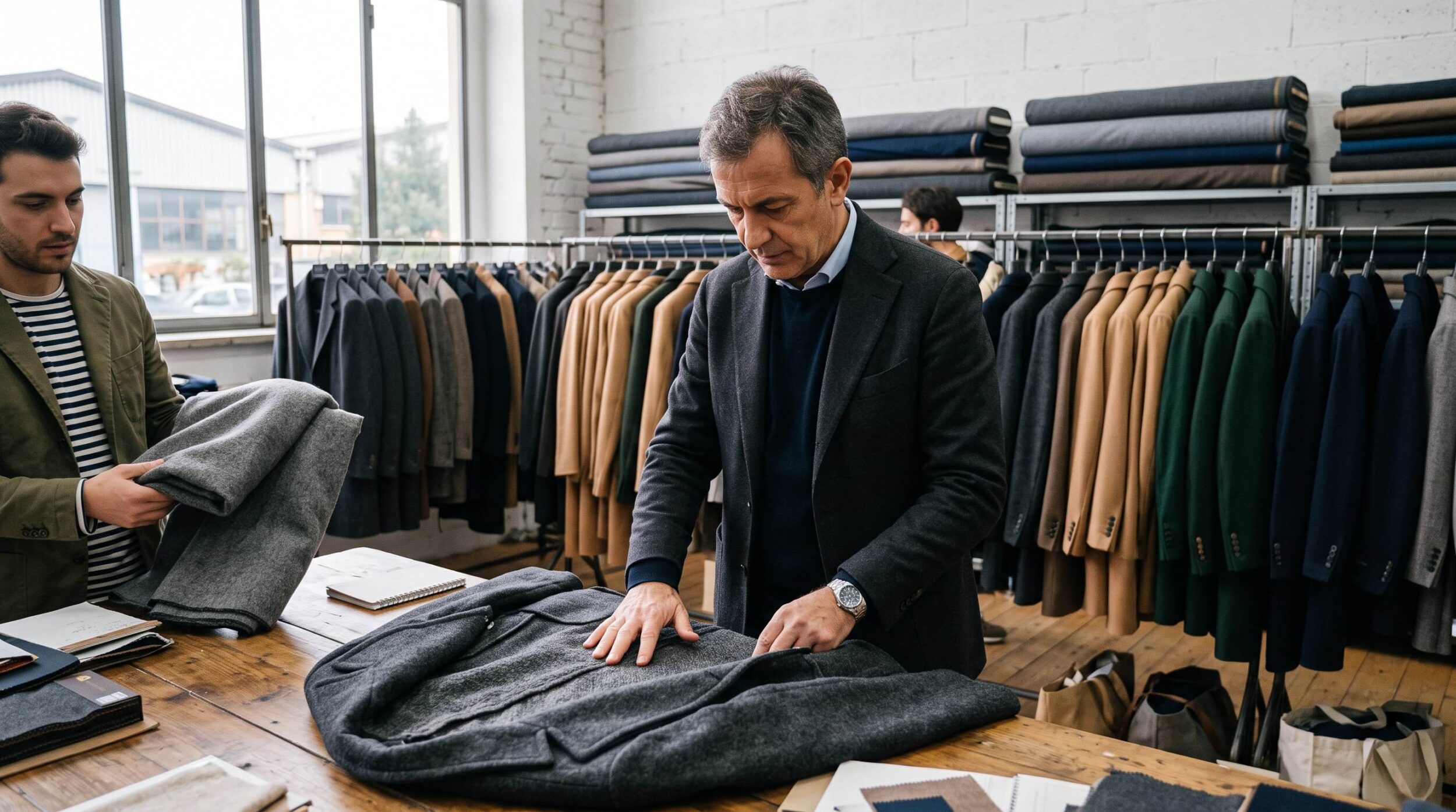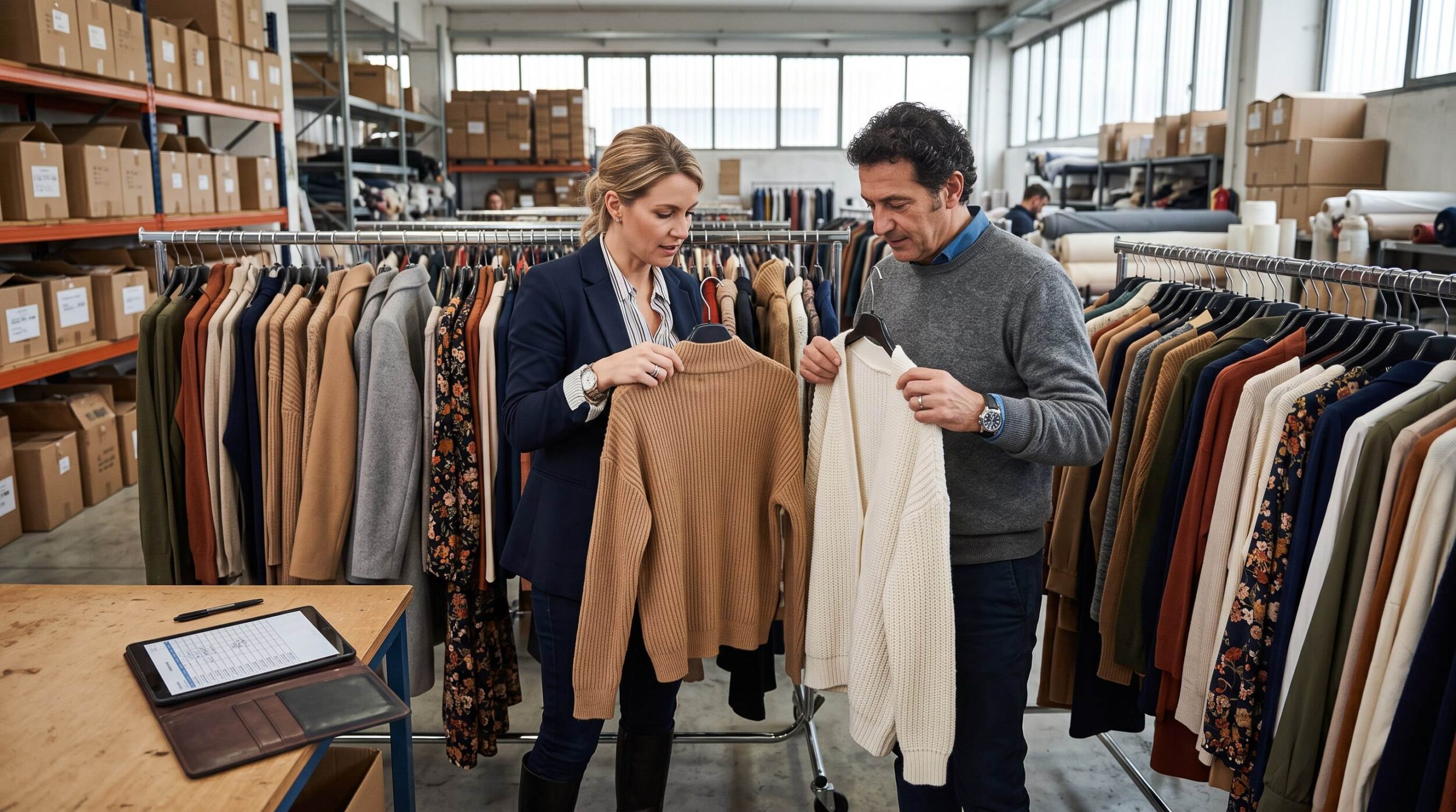

In SS26 womenswear, the commercial opportunity for transition dressing sits in pieces that feel polished indoors and breathable outdoors. Overshirts, lightweight tunics and long shirts cover that gap because they operate as a third piece, and they can be built into repeatable capsules for boutiques and distributors sourcing Made in Italy.
For B2B buyers, these light layers earn their space when the oversized look is controlled. The goal is a relaxed silhouette that still reads smart casual on the hanger, photographs cleanly for drops, and grades predictably across sizes.
Overshirt, tunic, long shirt: define the role before you buy
An overshirt behaves like a soft jacket with shirt codes. It needs a clear shoulder line, a stable collar, and enough sleeve room to sit over a knit top without pulling. A lightweight tunic is a long top designed for coverage and drape, typically worn as the main item rather than an outer layer. A long shirt bridges daywear and travel dressing, often styled open, belted, or layered under a light jacket.
When you build a capsule, keep the functions distinct. Put overshirts in jacket-like fabrics with structure, place tunics in fabrics with movement, and use long shirts as the crisp, polished anchor. That separation avoids the “same item in three lengths” problem on the rail.
Linen and linen blends stay central for SS26, but weight and finishing change everything. For overshirts, a linen blend with cotton or viscose supports a straighter cut because it holds the placket and collar cleanly, and it reduces extreme creasing that can cheapen the look. In construction terms, you can keep interfacing lighter, but you still need stability at collar and cuffs.
For tunics, linen-viscose or linen-lyocell blends are often easier to sell than pure linen when your target is glam-chic smart casual. The blend increases drape, so the silhouette falls closer to the body and moves well over trousers. Because the fabric can grow with steam, request neckline stabilization and check the hang after finishing, not only off the sewing line.
For long shirts, cotton poplin and cotton-silk blends are reliable choices. Poplin supports crisp collar stands, clean button plackets, and sharp cuffs, which is why it reads more “smart” in visual merchandising. Cotton-silk adds a refined surface and softer hand, but it is less forgiving: puckering at seams and hems becomes visible, so the sewing spec and pressing quality matter.
If you are considering eco-viscose or Tencel lyocell, treat stability as a buyer requirement. These fabrics can look premium in a tunic silhouette, yet they expose weak construction because the drape highlights uneven topstitching, shifting hems, and poor button alignment.
Controlled oversized: practical fit parameters you can brief
Oversized becomes a commercial risk when grading is not disciplined. For overshirts, ask the supplier to confirm shoulder drop and sleeve mobility across the full size run, because a sleeve that is too narrow kills layering, while a sleeve that is too wide pushes the piece into casual territory.
For tunics and long shirts, hip ease is the critical point. Excess width at the hip makes the garment swing out and look larger than intended. A small controlling detail, such as a side slit placed at hip level or a curved hem that is shorter in front, improves silhouette without making the fit tight.
Ask for a try-on over a thin jersey top, not only on a bare mannequin. That single check links fit to real styling and helps you avoid size-driven returns.
Construction and finishing signals that protect mid-range margin
In light layers, quality is often felt before it is “seen.” Overshirts need collars that sit flat after wash or steam, which depends on interfacing weight, collar stand balance, and topstitch tension. Lightweight tunics need stable necklines, especially on open collars and V-necks, otherwise the opening grows and the fit changes.
Long shirts depend on placket execution. A concealed placket can elevate the style, but only if the fold is crisp and stitching is consistent. If your positioning is glam-chic, consider refined buttons such as matte mother-of-pearl, tonal corozo, or horn-look resin, aligned and reinforced so the garment does not gape.
Cross-merchandising logic for boutiques and distributors
Light layers sell best as outfit builders. An overshirt should be merchandised with a fitted base top and a coordinated trouser or skirt, so the customer understands it as a third piece with add-on value. Tunics are easier to convert when styled with slim trousers or a clean maxi skirt that balances volume. Long shirts work as a bridge item, sitting near tailored pants, elevated denim, and soft blazers.
For capsule drops, keep overshirts in carryover neutrals and mineral tones, then use tunics for lighter shades or subtle prints. That approach supports multi-buy while keeping reorders practical, because you are not chasing novelty for the core volume piece.
B2B micro-scenarios: MOQs, timing, and reorder strategy
Scenario 1, boutique group with weekly drops. You build a three-item story: a poplin long shirt as the hero, a linen-blend overshirt as the high-margin add-on, and a drapey tunic for coverage. You negotiate MOQs so the overshirt and long shirt can be reordered independently, then you ask whether the supplier can hold fabric or guarantee a repeat dye lot for a fast top-up.
Scenario 2, distributor serving multiple doors. You keep one overshirt pattern and tier it by fabric: washed cotton for entry, linen blend for core, cotton-silk for premium. The construction spec stays consistent, production is efficient, and your margin logic is supported by a clear value ladder. Reorder depends on mill continuity, so confirm early whether shades can be repeated without visible variation.
Scenario 3, private label boutique with limited rail space. You focus on one tunic and one long shirt that can both be worn open as a layer. You plan capsule drops every three weeks, each with one new color plus a restock of the core neutral, so your sell-through stays steady without SKU overload. Our fabric buyers often benchmark breathable summer fabrics for SS26 before locking their layering program, because the base textile drives both fit and perceived value.
Operationally, align timing across sampling, trims, labeling, and packing so the reorder is truly repeatable. When planning the buy, many teams reference timing SS26 fabric buys for maximum impact to secure mill availability before the best articles are allocated elsewhere.
Visual merchandising: simple rules that increase conversion
Merchandise light layers by function, then by fabric feel. Build a rail that moves from crisp poplin to drapey blends, and steam the hero pieces so collars and plackets read sharp. Keep display sizes consistent so oversized silhouettes look intentional, then backfill other sizes behind the hero units.
Supplier brief essentials for Made in Italy SS26 light layers
Your brief should connect textile to silhouette and finishing. State the garment role, target weights, desired handfeel, and required construction points, including seam finish, topstitch gauge, collar interfacing, button choice, and wash requirement. Request one fit sample for balance and grading, and one sales sample for finishing and packing checks.
If you need private label production Italy support on supplier selection and production coordination, the Fashion Sourcing & Purchasing service can be used to align fabrics, MOQs and timelines for Made in Italy womenswear.
If you are building an SS26 capsule around overshirts, lightweight tunics and long shirts, request a quotation for development and production, or book a sourcing call to validate fabrics, MOQs and reorder timelines against your retail calendar.