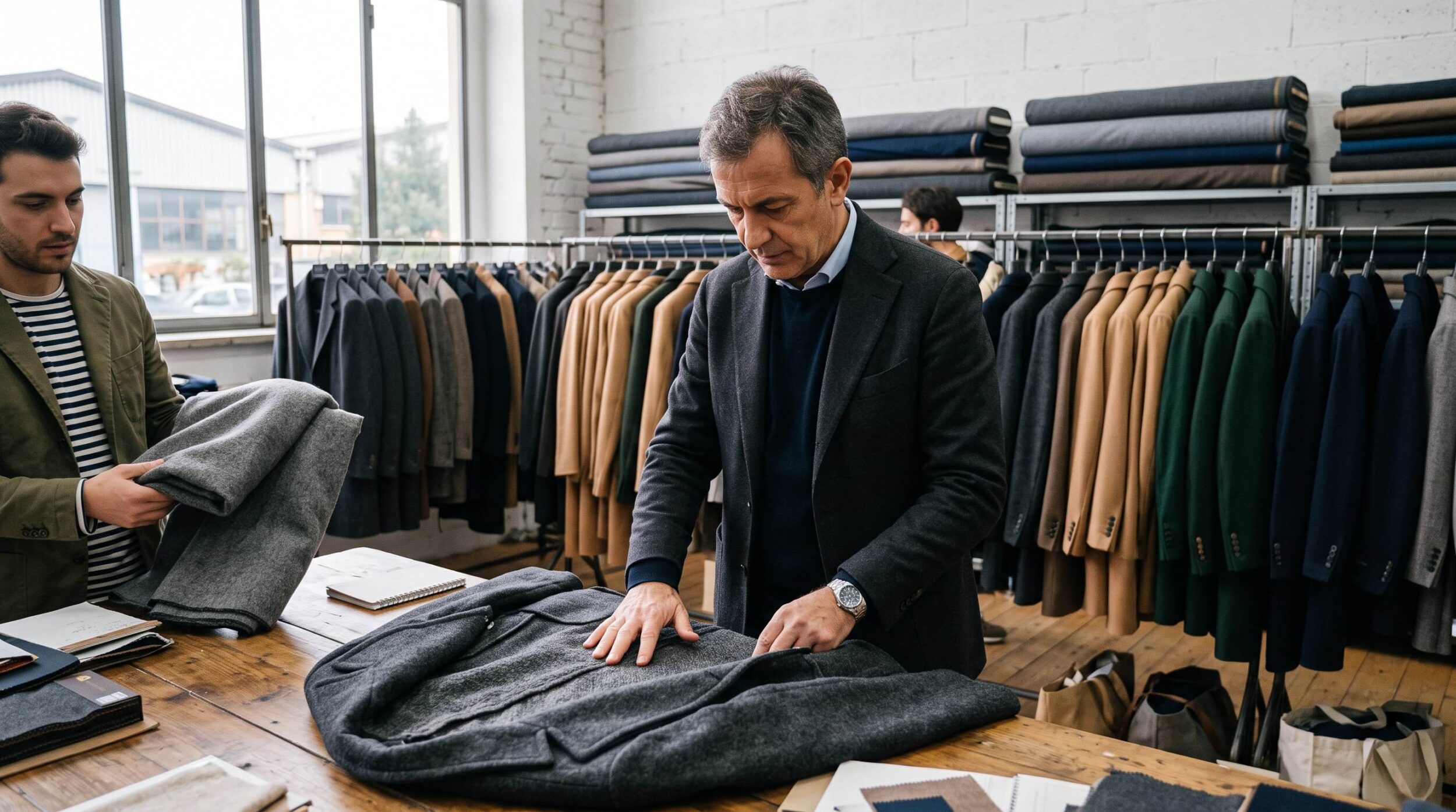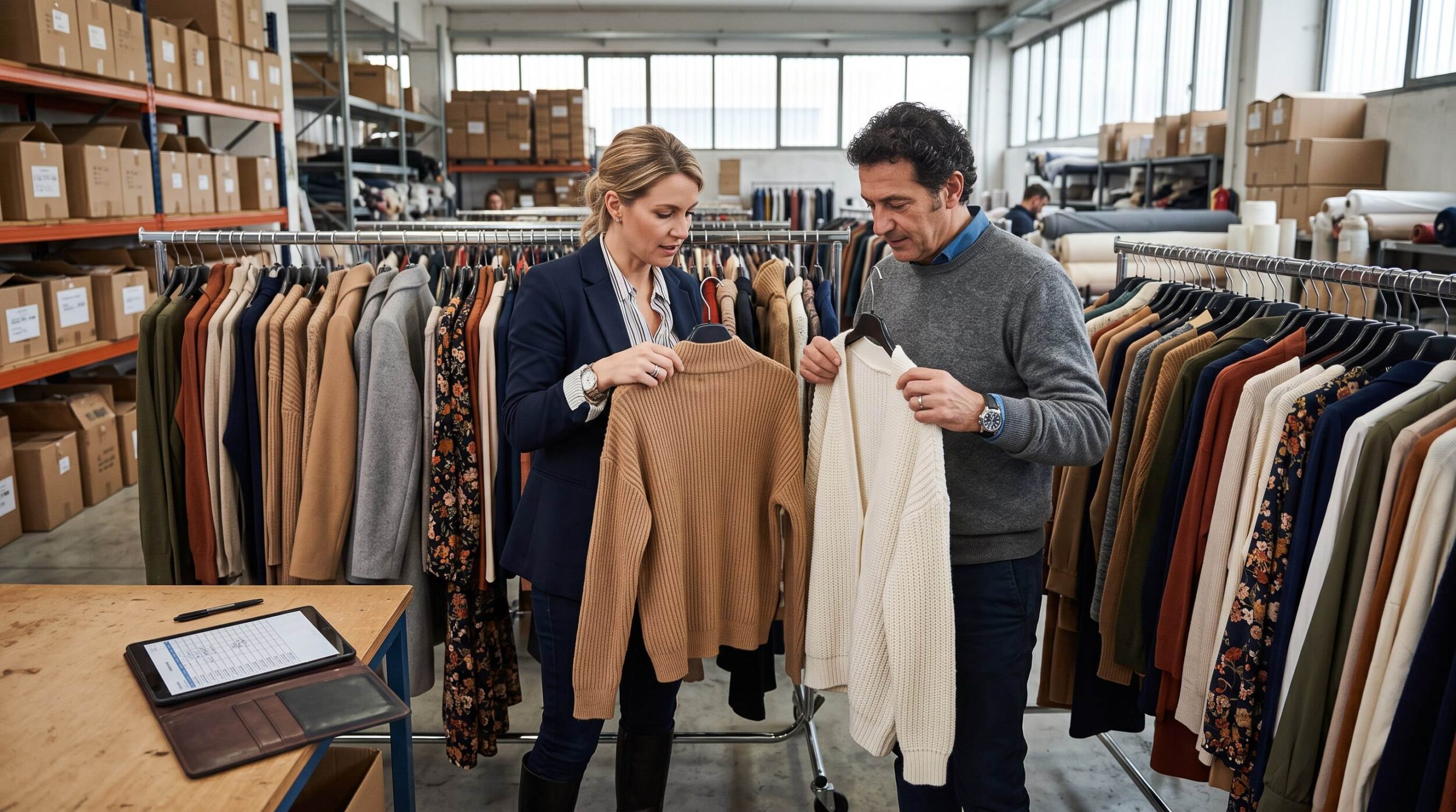

Because seasons are reversed, your peak sourcing season is June–January rather than December–May. Italian suppliers are fresh with new spring/summer collections right now. By sourcing in Prato between January and July, you can lock in summer capsules in time for pre-season merchandising. Putting orders in now means production and shipping can be scheduled so goods arrive for your August–October spring/summer launch. Delay too long and your choices vanish: by late summer Italian showrooms switch to heavier fabrics and Fall/Winter samples. In short, January–July in Prato = your summer collection window.
Strategic B2B Sourcing Details
MOQ Expectations: Italian manufacturers are surprisingly flexible. Many factories in Prato handle production runs as small as ~100 pieces per style – accessible for independent brands. Wholesale prêt-à-porter vendors often sell in packs or even by the single garment. In practice, we’ve seen vendors accept orders of just 2–12 pieces per style. This low MOQ makes it easy to test new silhouettes or mix-and-match capsule items.
Capsule Planning: Focus on a tight assortment of key pieces that work together. For example, build a capsule with 3–5 core silhouettes (a statement dress, a tunic top, a lightweight jacket, a tailored trouser or skirt, etc.). Use a mix of neutrals (core basics) and one or two prints or accent colors to boost style appeal. As one strategy suggests, keep overshirts or outer layers in versatile neutrals and let tunics or dresses carry subtle prints. This way customers can mix-and-match easily (encouraging multiple purchases), yet you keep SKUs manageable. In practical terms, buy at least two colors of each core style – one neutral and one seasonal hue – so you have a solid foundation without chasing endless novelties.
Reorder Strategy: Plan to top up best sellers rather than buying every style in depth. Start with conservative quantities to test demand, then reorder winning items. For instance, a Melbourne boutique might introduce a capsule of one printed midi-dress, one solid tunic-top and one light jacket, ordering only a few dozen pieces of each. If the dress colorway sells out quickly, you can reorder that print alone rather than maintain large stock of slower-movers. This approach turns a development exercise into a capacity/timing exercise: once a style is proven, subsequent orders are simply about scaling production on a clear timetable. (This “repeatable pattern” strategy improves margins by focusing on hits.) Always confirm that your supplier can secure the same fabric or dye-lot for reorders to avoid surprises.
Timing & Calendar: Work backwards from your launch date. In practice, that means locking in orders by early-mid summer to hit retailers by September. Italian Fashion Sourcing’s SS26 guide emphasizes starting months in advance. Build a schedule that includes sample approvals (2–4 weeks), production (4–6 weeks), and shipping (several weeks). Many Italian factories slow down in August for holidays, so it’s wise to have orders on file before July. In short: begin sourcing in January/February, finalize choices by April, and place production orders by late spring to avoid delays.
Visual Merchandising: Plan your in-store presentation now. When your shipment arrives, style outfits on mannequins or racks to maximize appeal. A simple rule: showcase an outfit from “top to bottom”. For example, put a featured dress or printed top on the front mannequin, and cross-merch it with a coordinating jacket and trousers behind. Our sourcing experts often advise displaying crisp styles (shirt-dresses or blouses) alongside their layers (overshirt or blazer) and bottoms to inspire multi-item purchases. Also, steam key pieces and keep display sizes consistent so that oversized silhouettes look intentional. Tell a coherent story with each rack: the customer should instantly see a wearable outfit. (See a related Journal piece on Overshirts & Lightweight Tunics: Italian Light Layers for SS26 for more merchandising tips.
)
Pricing & Margins: Italian ready-to-wear allows premium positioning. Customers expect “Made in Italy” quality, so boutiques typically mark up these pieces 2–2.5× (50–60% gross margin is common in fashion retail). Your margin is protected by construction details and finishing: flat collars, clean topstitching and quality hardware turn upmarket. For example, a shirt or jacket with a crisp, flat collar and a neatly stitched placket reads as a higher-end piece. Inspect details: reinforced buttonholes, consistent hemming, secure seams – these ease returns and ensure garments look polished. In sum, a well-executed Italian garment sells as a premium basic or capsule wardrobe staple, giving you room on price.
Key Summer Styles (Cuts and Silhouettes)
Southern customers will see Prato’s stock full of the season’s favored shapes. Think flowy silhouettes and light layers. Expect:
Shirt Dresses & Tunic Tops: Midi-length dresses or tunics remain winners. Ideal shirt-dress cuts have a slightly A-line sweep and controlled volume – for example, a midi shirt-dress with a subtle front pleat or side slits for ease. These sell as statement pieces without complex tailoring. Pair them with a thin belt or wear them loose; either way, keep the fit intentional (avoid uncontrolled ballooning at hips). For tunic tops, ensure drape: a soft V-neck tunic with a curved hem (shorter front, longer back) or subtle side vents keeps the silhouette flattering and reduces bagginess. (One source suggests asking for small design details like a side slit at hip level or a curved hem to refine fit.)
Light Jackets & Overshirts: Summer can still get breezy. Cropped utility jackets, chore-style overshirts and unstructured blazers in light-weave fabrics are top layers. These should have a clear shoulder line and stable collar so they sit well over a base layer (e.g. a cami or blouse). Patch pockets and functional topstitching add polish. In visual terms, think of them as the “third piece” that turns a dress into an outfit or layers over a cami-and-trousers set. For a capsule strategy, keep these layers mostly neutral (navy, beige, black) or in seasonal solids, so they underline the look without competing with prints.
Maxi & Wide-Leg Bottoms: Breezy trousers and skirts in wide, straight or relaxed cuts are in demand. High-waist paperbag trousers or culottes in a clean fabric (no frills) let customers pair them with your tunics or tops. A flowing A-line skirt (midi-to-maxi length) works equally well. The key is a simple silhouette: even a plain black wide-leg pant can become a staple if cut and finish are elegant. These bottoms keep the overall outfit balanced and are easy to mix with the layers above.
Finishing & Fit: Check each style’s details: collars should lie flat after laundering (sturdy interfacing helps this), sleeve openings need enough room to move (avoid too-tight cuffs), and plackets/buttons should lie straight. A concealed or crisp fold-placket on a shirt can elevate it – just ensure the stitching is even so it doesn’t gape. In short, inspect the sample for clean seams and secure stitching. A well-finished piece not only fits better on the body but also resists showing wear, which translates to happier customers and fewer returns.
Illustrative Buyer Scenarios
To bring this to life, here are some practical examples:
Boutique Capsule Drops: Imagine a Melbourne boutique that curates small capsule “drops” every few weeks. They pick a hero piece (say, a lightweight shirt-dress in a bold print) and pair it with a neutral overshirt and a sleek trouser. They negotiate with suppliers so each item can be reordered individually if needed (even requesting the same fabric lot). An approach like this – one new colorway plus restocks of core neutrals in each mini-drop – keeps sales steady without crowding the floor.
Distributor Tiered Assortment: A fashion distributor in Auckland might focus on one overshirt pattern but offer it in three quality tiers: an entry-level cotton, a mid-range linen blend, and a premium twill. The shape and construction remain the same, so the clothes stack nicely in the showroom. This ladder strategy lets them cover different price points and simplify reorders: they just need to ensure each colorway can be repeated by the mill. The consistent design means customers at various budgets recognize it as a “signature” garment.
Seasonal Reordering: A retailer in Rio de Janeiro might arrange two bulk shipments: one for January and one for March. They place an initial order of, say, 100 overshirts and 150 skirts in January. By March they gauge sales, then top up with best-selling colors (the “winning prints”) to catch the late spring market, much like planning an early spring top-up and a late-season travel boost.
These scenarios all underscore the same principle: start small, watch performance, then reorder your hits. This minimizes risk and optimizes inventory turns, important in unpredictable markets.
Acting Now: Production Orders and Logistics
Time is of the essence. If you want more than a one-off purchase, consider placing a production order through our service. We offer a Fashion Sourcing & Purchasing package that coordinates everything: live showroom sessions (in person or video), order consolidation, logistics and customs. For example, we often combine multiple suppliers into one shipment and invoice, dramatically cutting delivery costs. This means you can buy dresses from Vendor A and blouses from Vendor B in one go, saving you from juggling separate exports.
Our team will also lay out a clear production calendar: we can lock in factory start dates (often after sample approval), track progress in real time, and schedule sea or air freight so garments land in time. Private label projects (small-scale manufacturing) are common in Prato: as noted, factories routinely accept runs of ~100 pieces per style. We handle garment tech-packs, labelling, quality checks and even help with packaging design if needed. Understanding the Italian fashion sourcing process makes the reverse-season approach seamless.
Don’t wait until the end of July – once showrooms close their summer lines, you’ll have only leftovers. Start interviews and showroom dates now, and place orders by mid-year. That way your boutique or import business will launch spring/summer collections confidently and stay ahead of the trend curve.
For expert assistance with Prato sourcing and production orders, consider our Fashion Sourcing & Purchasing service. We handle sample approvals, MOQ negotiations, and global shipping so you can focus on retail. Contact us to arrange your buying session or production quote today.