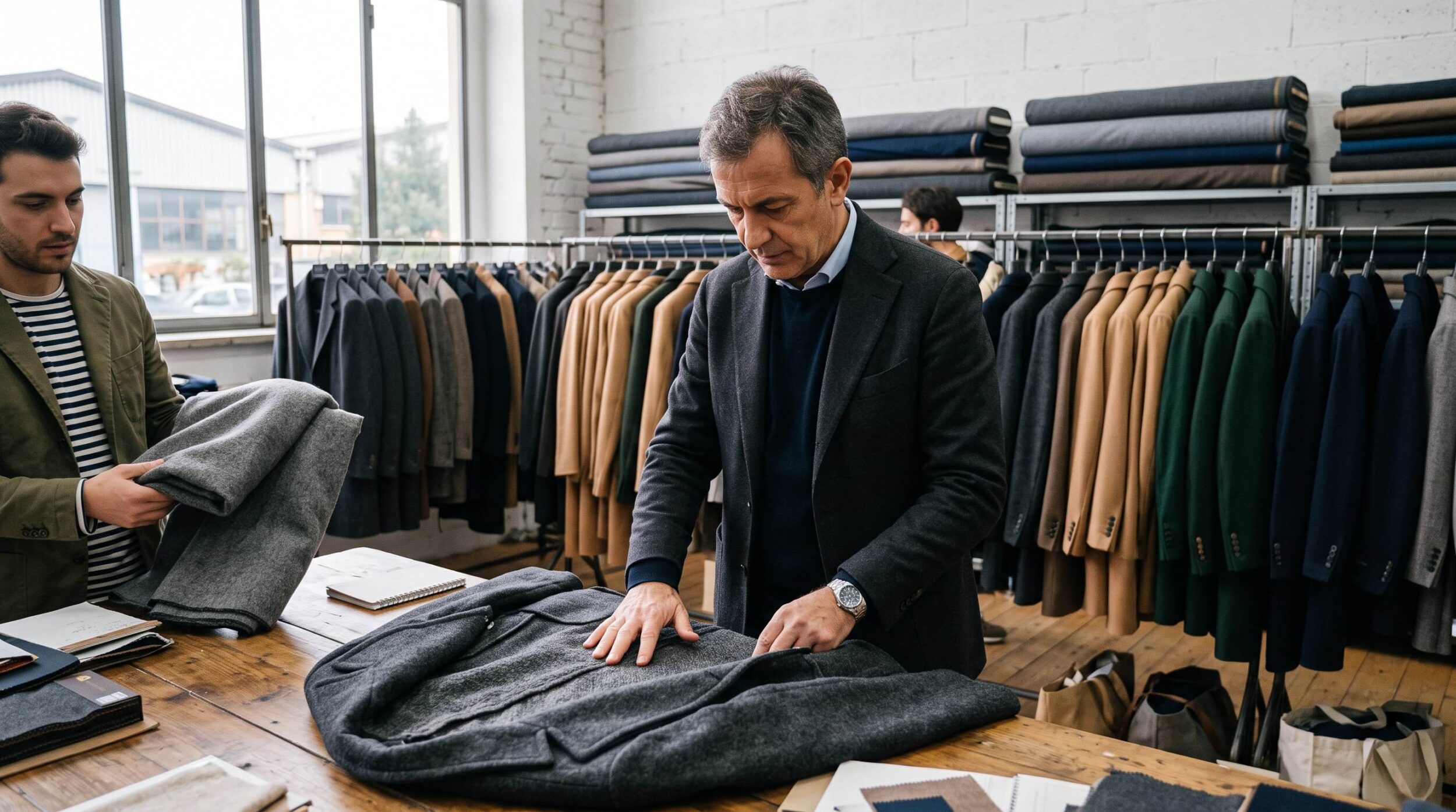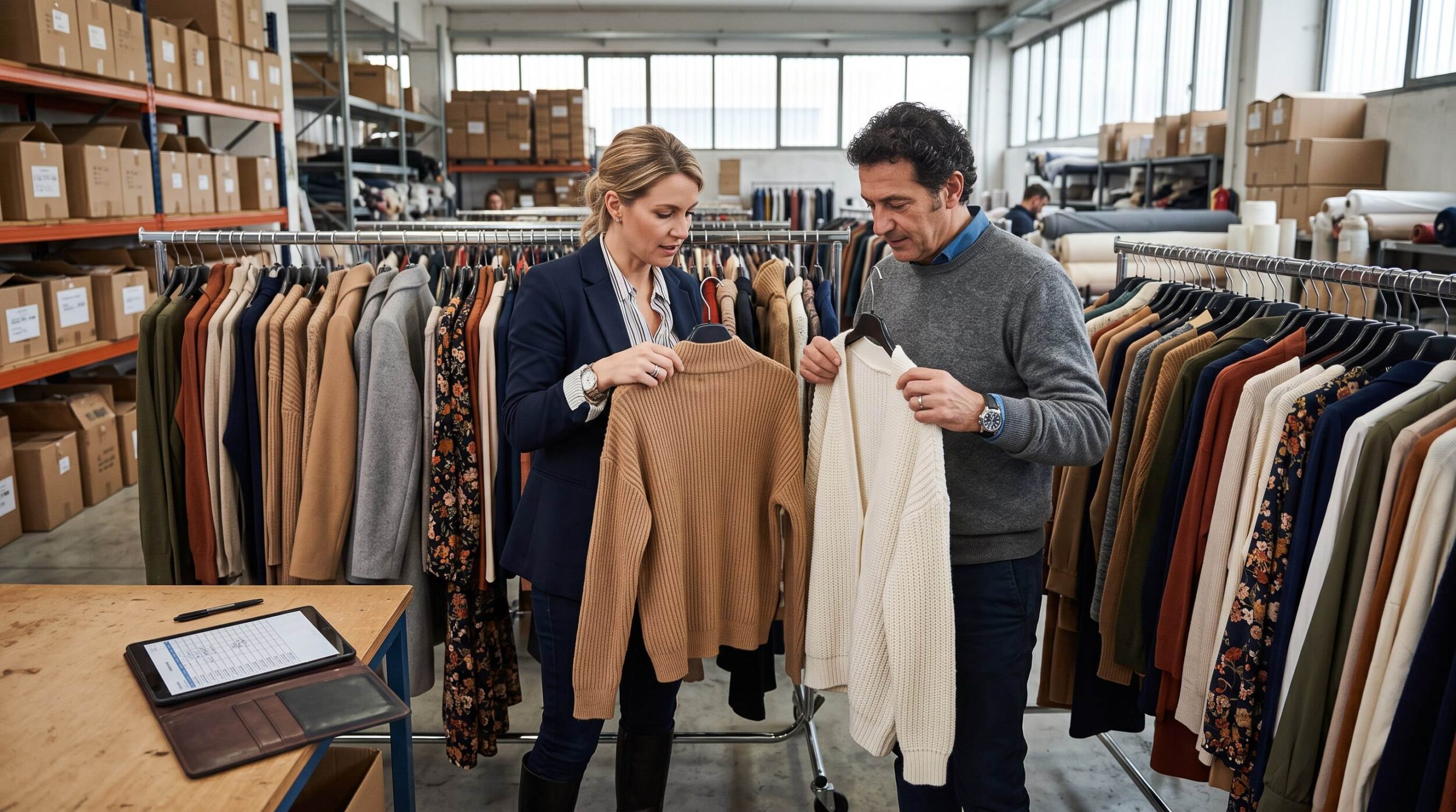

The Tariff Shift That Changed the Calculation
For years, American and Canadian buyers sourced fashion from South and Southeast Asia on a single premise: lower unit costs meant higher margins. Bangladesh, Vietnam, Cambodia, these countries built entire export industries around price-per-garment advantages that made Italian manufacturing seem, by comparison, a luxury reserved for premium brands with premium budgets. That premise is now structurally weaker than it has been in decades.
The new US tariff schedules introduced in 2025 and extended into 2026 have imposed import duties ranging from 37% to 49% on fashion goods from the region’s major sourcing hubs. Bangladesh sits at 37%, Vietnam at 46%, Cambodia at 49%. These are not provisional figures. They reflect a deliberate policy shift, one with long-term supply chain consequences that North American buyers are only beginning to price into their wholesale strategies.
Italy, by contrast, falls under EU trade frameworks. Current applicable duties on apparel imports from the EU to the US sit between 15% and 20% depending on product category and fabric content. The gap that once made Asian sourcing an obvious default has narrowed dramatically, and in some product segments, when you account for the full picture, it has effectively closed.
Understanding Total Landed Cost, Not Just the Tag Price
The error most buyers make when comparing sourcing origins is anchoring on the ex-works price: what a supplier charges before shipping, insurance, duties, and logistics are added. That number is real, but it is not the number that determines your actual cost of goods. Total landed cost is.
When you source from a Vietnamese manufacturer at €8 per unit and apply a 46% import tariff, your duty alone adds €3.68 to that unit. Add sea freight from Ho Chi Minh City to Los Angeles, typically 25 to 35 days at sea, with current freight rates, plus customs brokerage, insurance, and inland transport, and your actual landed cost climbs well past €15 per piece. Factor in the quality inconsistencies, the communication overhead, the sampling rounds across time zones, and the hidden cost of occasional rejects, and the arithmetic looks different than the original quote suggested.
An Italian garment priced at €14 ex-works, shipped from Prato with a 15–18% import duty, arrives at a landed cost in the €18–20 range, often comparable, sometimes lower, with significantly reduced complexity. This is not a theoretical exercise. It is the calculation an increasing number of mid-market boutiques and multi-brand retailers in North America are running right now, and arriving at conclusions that would have surprised them two years ago.
A Comparative Look at Current Tariff Rates
The table below summarises approximate US import duty rates currently applied to womenswear apparel (HS Chapter 61–62) from the principal sourcing origins. These figures reflect 2025–2026 tariff schedules and should be verified against the applicable HTS code for each product.
| Country of Origin | US Import Duty (approx., womenswear) |
| Bangladesh | 37% |
| Vietnam | 46% |
| Cambodia | 49% |
| China | 54%+ |
| India | 26–28% |
| Italy / EU | 15–20% |
| Portugal / EU | 15–20% |
| Turkey | 32% |
The compression between Asian and European duty rates has altered the competitive landscape in a way that is structural, not cyclical. Even if freight costs shift or currency fluctuations move ex-works prices, the tariff differential operates as a floor. It will not disappear without a formal renegotiation of trade agreements, a process that takes years.
Why Made in Italy Offers More Than Price Parity
Arguing that Italian sourcing has become price-competitive on total landed cost terms is necessary but not sufficient. Price parity is a floor, not a ceiling. What Italian fashion wholesale online, and the Prato district in particular, actually delivers to international buyers goes well beyond the corrected arithmetic.
The pronto moda system in Prato operates on a rhythm that is fundamentally different from Asian production models. Goods are available in-stock or in short-run production cycles. Lead times range from days to a few weeks, not the 90-to-120-day horizon that long-haul Asian manufacturing requires. For buyers planning SS26 or AW26 reorders, or managing open-to-buy budgets with limited forward visibility, that agility is a tangible operational advantage.
Fabric quality, construction standards, and the breadth of seasonal design within a single district also remain genuinely differentiated. An independent buyer working with a sourcing specialist has access to hundreds of vendors across womenswear, knitwear, outerwear, and accessories, all within a concentrated geographic area, all producing to standards that support a retail premium in the North American market. The label ‘Made in Italy’ continues to perform as a commercial signal for boutique customers; its conversion value at retail is measurable.
The Role of a Sourcing Partner in This New Environment
Understanding that Italian sourcing now makes economic sense is one thing. Accessing it effectively, without the language barriers, the supplier vetting risk, the logistical complexity, is another. This is where the structure of the engagement matters as much as the tariff calculation.
North American buyers who attempt direct sourcing from Prato without local representation consistently encounter the same friction points: minimum order requirements that are difficult to meet across multiple vendors, payment terms that require established relationships, and a showroom ecosystem that moves quickly and rewards buyers who are physically present or properly represented on the ground. Without that representation, the efficiency gains that make Italian sourcing attractive in theory tend to erode in practice.
A fashion sourcing and purchasing service built around the Prato district addresses these friction points directly. The model, pre-session scouting, live video purchasing sessions with multiple vendors, consolidated shipping, and full customs documentation, is designed for buyers who cannot or do not want to travel to Italy for every season but need the same quality of access as if they were there in person. It is the infrastructure piece that makes the tariff calculation actionable.
Practical Implications for SS26 and AW26 Buying
For buyers currently planning their SS26 reorders or beginning to think about AW26 open-to-buy, the timing matters. Italian pronto moda stock for SS26 is available now in Prato; the window for early-season reorders at the best selection depth typically closes by mid-spring. AW26 collections begin arriving in showrooms from late April through June.
The practical recommendation is straightforward. If you have been sourcing from Asia and absorbing tariff costs that have quietly compressed your margins over the past year, run the total landed cost comparison for your actual product mix, not a hypothetical average, but your specific categories, volumes, and duty codes. Then model the same purchase against Italian wholesale prices with EU duty rates applied.
As the guide to importing Italian fashion outlines, the operational mechanics of sourcing from Italy are not as complex as many North American buyers assume, particularly when working through an established local partner. The customs documentation, export invoicing, and logistics consolidation that used to represent genuine barriers have become standardised parts of the process for buyers who set up the right workflows.
The buyers who will gain the most from this tariff environment are not necessarily those with the largest budgets. They are the ones who do the arithmetic early, adjust their sourcing mix before the season rather than after, and treat the new duty landscape not as a disruption but as a structural opportunity that their competitors may be slower to recognise.
What to Do Next
The most effective first step is not a spreadsheet model. It is a conversation with someone who has current, ground-level visibility into what is actually available in Prato right now, what price points are realistic for your product categories, what minimum order thresholds look like across different vendor types, and how consolidated shipping affects your landed cost in your specific market.
If you have been watching the tariff news and wondering whether Italian wholesale has finally crossed the threshold of commercial viability for your business, the answer, for an increasing number of North American buyers, is yes. The question is not whether the numbers work. The question is whether you are moving quickly enough to act on them before the season moves on without you. The comparison between Italian and Asian supply chain models has always involved trade-offs; what has changed in 2026 is which side of that trade-off the tariffs sit on.
For buyers ready to explore this new landscape, understanding the italian fashion sourcing process or considering private label production italy options can provide the foundation needed to capitalise on the current tariff environment.