
The Commercial Case for Light Layers in a Summer Wholesale Assortment
Light layering pieces are among the most frequently underbudgeted categories in the mid-market boutique wholesale buying plan, which represents a persistent commercial opportunity for buyers who recognise their actual margin contribution. The conventional wisdom in summer buying treats the dress or the coordinate set as the primary revenue driver and layering pieces as secondary add-ons, an afterthought that fills gaps in the assortment rather than a deliberate investment. The sell-through data from boutiques that have inverted this logic, treating light layers as a core category with dedicated budget allocation, consistently tells a different story: overshirts, kimonos and tunics generate higher margin-per-unit than most anchor dress categories, convert reliably because the perceived-value-to-cost relationship is strong in the customer’s mind, and extend the boutique’s selling window into shoulder season months when the core summer range is already marked down.
The functional logic of the light layer is also a commercial one. In most of the markets where mid-market boutiques operate, Northern Europe, North America, air-conditioned urban environments globally, a customer who wants to wear a summer dress or lightweight separates needs a covering option for the transition between outdoor warmth and indoor cold. Overshirts and kimonos solve this problem elegantly, and boutiques that merchandise them alongside their dress and coordinate range consistently report increased basket values on those transactions. The layering piece is a natural add-on sale that the customer herself initiates once she sees the combination presented on the floor.
Overshirts: The Versatile Workhorse of Summer Layering
The overshirt is the highest-volume format in the summer light layers category and the piece with the broadest customer appeal across style preferences and age demographics. In Italian pronto moda production for SS26, overshirts are available in a range of constructions that span the full spectrum from casual beach-adjacent to smart casual office-appropriate: printed viscose in boho-influenced patterns at the relaxed end, linen-cotton in plain or tonal stripe at the structured end, with a range of cotton gauze, dobby weave and linen-viscose constructions occupying the commercial middle ground. The specific design directions Italian producers are pursuing in overshirts and lightweight tunics for SS26 provide useful pre-session context on what to expect when visiting Prato showrooms in this category.
For wholesale buyers, the selection criteria for overshirts centre on three commercially relevant factors: fabric weight relative to intended use, print or colour direction relative to the assortment it needs to complement, and construction quality at stress points. Fabric weight determines whether a piece functions best as a beach-to-lunch cover-up, an office-to-terrace transitional layer, or an early spring outer layer, each of these use contexts maps to a different retail customer and a different price positioning. Print and colour decisions should be made with the existing assortment in mind: overshirts that coordinate with core dress and trouser purchases amplify their own commercial performance by increasing the likelihood of a multi-piece transaction.
Kimonos: High Perceived Value, Strong Margin Performance
The kimono-format layer is the highest perceived-value piece in the summer light layers category, and the format where Italian production quality creates the most tangible commercial advantage over lower-cost alternatives. A well-constructed kimono in printed viscose or embroidered linen from an Italian pronto moda supplier communicates quality signals, fabric drape, print resolution, edge finishing, that translate directly into customer willingness to pay at retail. The investment in sourcing this piece from Italy rather than from a comparable-price-point alternative supply chain is typically recovered within the first few units sold, because the retail price achievable on an Italian-made kimono at mid-market positioning is meaningfully higher than what the same customer would accept for a visually similar piece without the production provenance. The complementary category of Italian overshirts and shirt dresses as light layers for SS26 covers adjacent formats that share the same commercial logic and can be sourced in the same Prato session alongside kimonos.
In Italian wholesale production for SS26, kimonos are available in two primary construction types. The first is the printed viscose or viscose-linen blend format, flowing, lightweight, print-forward, suited to the boho, beach-adjacent and resort styling contexts. The second is the embroidered or embellished format, more structured, with textile decoration at the collar, cuffs or border, suited to a smart casual or occasion-adjacent styling context. Each of these formats has a distinct customer and occasion profile, and boutiques that carry both are able to address a broader range of the layering opportunity rather than restricting themselves to a single styling register.
Tunics: The Crossover Piece That Spans Multiple Summer Contexts
The tunic occupies a unique position in the summer light layers category because it functions simultaneously as a standalone top, a beach cover-up and a light layer over trousers or leggings, a three-context versatility that very few other garment formats can match. In Italian pronto moda production for SS26, tunics are available in constructions that span the boho, beach and smart casual aesthetic registers, with the most commercially versatile formats being those in natural linen or linen-cotton that can read as casual beach cover-up when worn alone and as a structured casual top when belted or tucked. The design details that define Italian tunic production, V-neck or mandarin collar constructions, quality button detail, considered sleeve length and hem finishing, add the design intentionality that distinguishes a considered purchase from a commodity item.
For wholesale buyers, tunics represent a strong opportunity to increase average order value without proportionally increasing the complexity of the sourcing brief. They complement rather than compete with the core dress and coordinate categories, they have a long seasonal window that spans from early spring through late summer, and they are typically available from Prato suppliers at wholesale price points that allow comfortable retail keystoning. Depth decisions for tunics should reflect the breadth of their customer appeal: because the piece works for multiple styling contexts and a wide customer age range, slightly more depth per style is commercially justified compared to more narrowly styled pieces in the same price tier.
Building Light Layers Into a Coherent Summer Assortment
The most commercially effective approach to including light layers in a summer wholesale order treats them as a deliberate assortment layer with specific merchandising intent rather than as individual filler pieces. This means thinking in terms of layering stories on the shop floor: which overshirt pairs with which dress, which kimono completes the resort set, which tunic extends the wearability of the core trouser or jeans purchase. These layering combinations are the retail selling moments that generate the highest transaction values, and they are only possible if the sourcing brief has specified them in advance, selecting pieces with deliberate pairing logic rather than selecting each piece in isolation.
In practice, this means a summer assortment that includes light layers should be sourced with three to four specific layering combinations planned before the sourcing session begins. Each combination functions as a floor display unit: a hero piece (usually a dress or coordinate set) supported by a complementary layering piece in a coordinating fabric or colour. The light layer does not need to match the hero piece exactly, tonal coordination or complementary print relationships are often more commercially effective than exact matching, but the relationship between the two pieces needs to be legible to the boutique team and communicable to the customer in a thirty-second conversation at the till.
Sourcing Light Layers from Prato: Practical Guidance for B2B Buyers
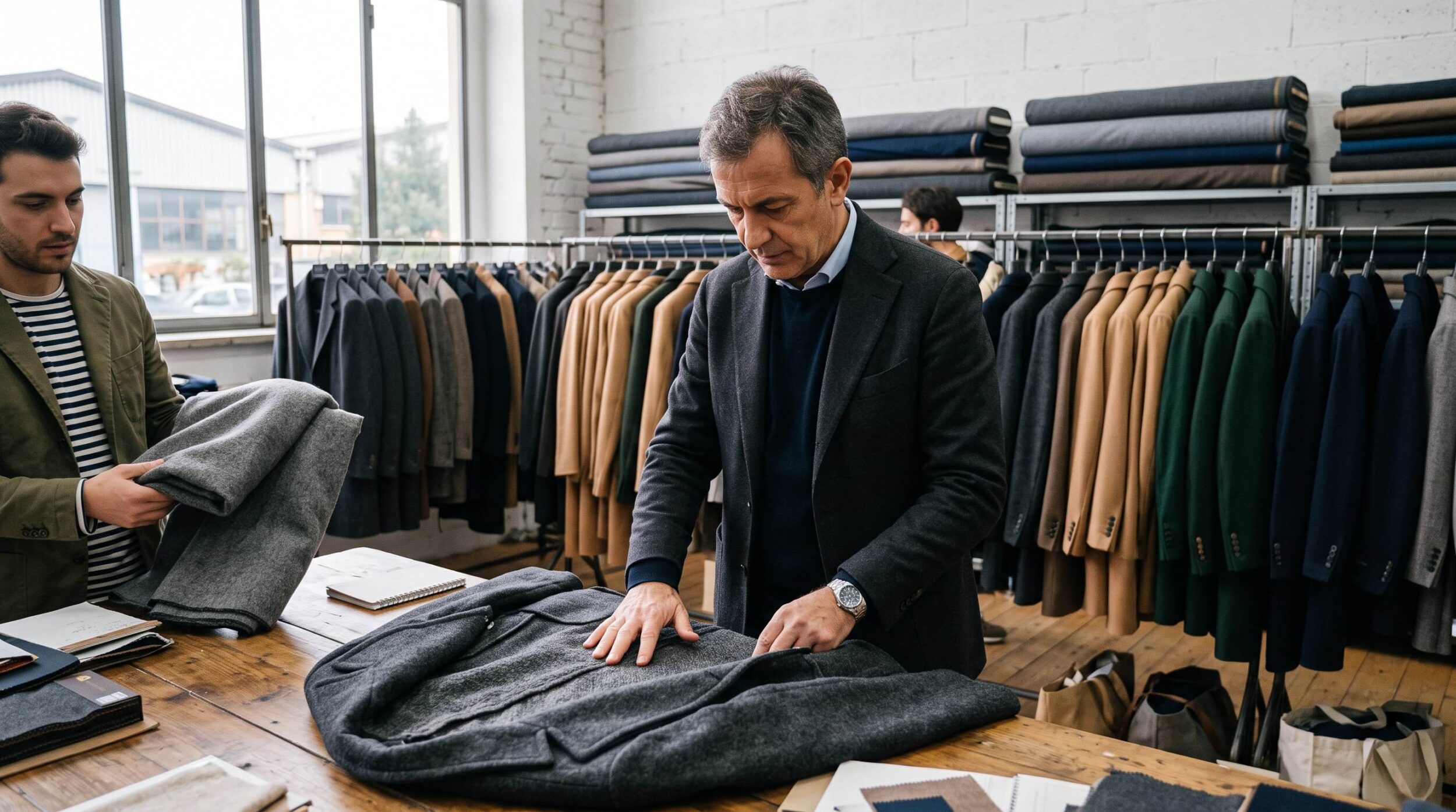
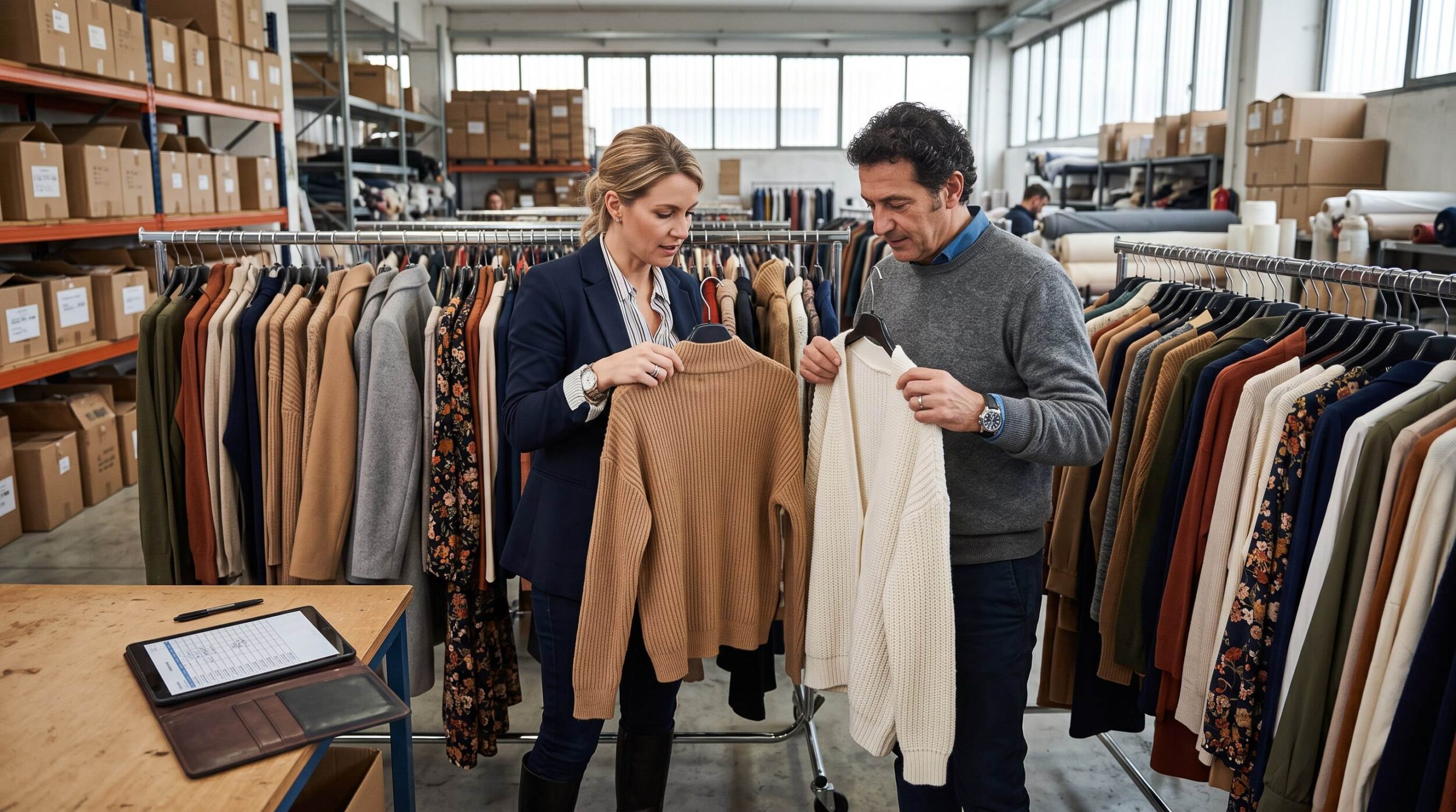
Light layers from Italian pronto moda suppliers are among the most accessible categories to source effectively in Prato, because the pieces are well-represented across a wide range of warehouses and the quality-tier differences between suppliers are relatively easy to evaluate on inspection. The key sourcing parameters to specify in advance are fabric type and weight, print or colour direction relative to the existing assortment, and the styling context, beach, boho, smart casual, that each piece is intended to serve. A sourcing partner who has pre-screened suppliers against these parameters can structure a fashion sourcing purchasing session that covers multiple light layers warehouses efficiently without time lost in showrooms that don’t match the brief. Understanding how the Italian Fashion Sourcing live session and logistics workflow operates gives buyers a clear picture of how pre-screening and session structure translate into a more productive buying outcome.
Minimum order quantities for light layers in Prato’s pronto moda circuit typically range from two to twelve units per style, consistent with the broader wholesale structure and well-suited to the category, where buyers often want variety across print directions rather than depth in a single style. Consolidated logistics across multiple light layers suppliers, combined with core dress and coordinate orders in the same session, keeps per-unit freight costs proportionate and simplifies the export documentation process. The result is a complete summer assortment, anchor pieces, coordinates and layering pieces, sourced, invoiced and shipped as a single, coherent buy.
If you’re adding light layers to your SS26 summer assortment and want access to pre-screened Prato suppliers in overshirts, kimonos and tunics, Italian Fashion Sourcing works with a limited number of international boutiques each season. The process starts with a brief initial interview to establish your buying brief, apply at italianfashionsourcing.com/interview/.