Skip to content

1. Prioritize Premium Flax Fiber and Certifications
Quality linen garments start with high-grade flax fiber. Italy’s top mills spin yarn from premium European flax, giving the fabric a strength and luster that customers can instantly feel. Look for suppliers who source flax from reputable origins (France, Belgium, Italy) and who carry certifications like Masters of Linen®, which guarantees the linen was 100% grown and processed in Europe. This traceability label ensures strict quality control at every step, from field to finished fabric. By choosing linen with such credentials, boutique owners signal to their customers that the garments are made of the finest fiber with verified heritage.
Buyer Tip: Ask suppliers about their flax source and any certifications. For example, Masters of Linen® or OEKO-TEX® labels indicate a commitment to quality and safety in the fabric’s production. High-quality fiber may cost more per yard, but it pays off in durability, hand feel, and customer confidence in your “Made in Italy” collection.
2. Value Italian Craftsmanship & Finishing
One major advantage of sourcing from Italy is the craftsmanship and textile expertise built over centuries. In Tuscany’s Prato district – Italy’s renowned textile hub – local mills blend artisanal skill with modern innovation to produce linen fabrics of exceptional quality. They spin and weave with precision, then apply advanced finishing techniques that set Italian linen apart. Many Prato finishers use proprietary processes to overcome linen’s natural stiffness – enzyme washes, air tumbling, and other mechanical softening – resulting in a linen that feels unexpectedly supple and luxe. These techniques can also enhance the fabric’s natural luster and drape without compromising strength.
Italian manufacturers are known to “marry artisanal skill with modern eco-friendly techniques,” producing linens that are not only luxurious but responsibly made. For instance, local dye houses in Prato have adopted low-impact plant-based dyes and water-saving finishing processes that achieve rich colors and softness minus the harsh chemicals. When you source from such suppliers, you’re investing in both quality and story – garments that carry the prestige of Italian craftsmanship and align with today’s values of sustainability and authenticity.
Buyer Tip: Tour suppliers’ capabilities (virtually or in person) or request fabric swatches. The touch-test often reveals Italian linen’s edge: a slightly heavier handfeel and smoothness that signal careful finishing. Your customers will notice the difference – a crisp linen shirt that’s soft, not scratchy, or a dress that drapes elegantly thanks to superior finishing.
3. Choose the Right Linen Weights & Blends for SS26 Styles
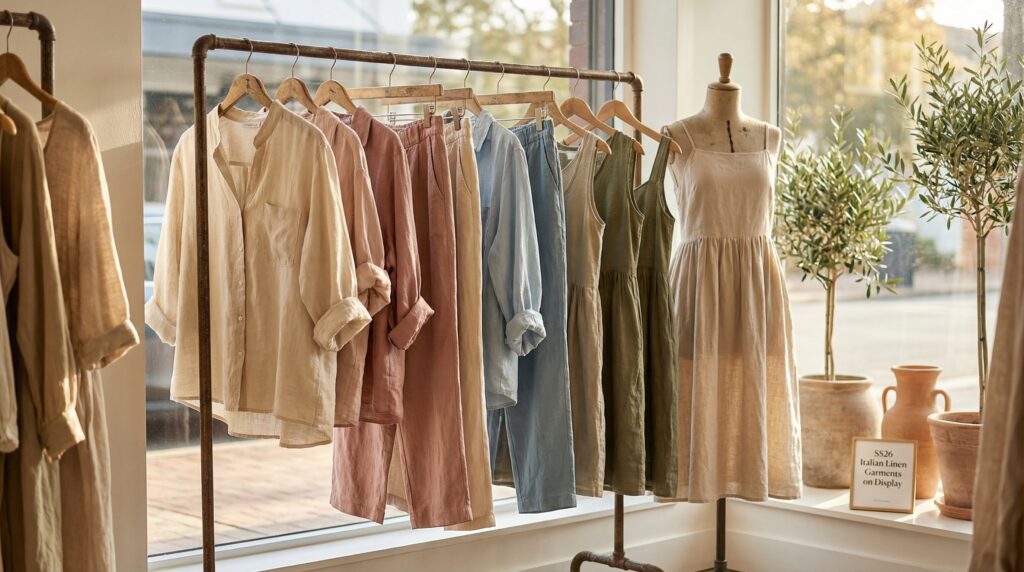
Not all linen is the same – it comes in various weights, weaves, and blends. Selecting the appropriate type is key to both quality and value because it ensures the garment performs well for its purpose. For Spring/Summer 2026, lightweight linens (typically 120–180 GSM) are ideal for breezy blouses, unlined dresses, and resort wear, offering maximum airflow and cooling comfort. Mid-weight linens (~200 GSM) work beautifully for pants or structured shirting, balancing drape and opacity. Heavier linens can add structure for jackets but may be less breathable – use them sparingly for summer collections.
Italy’s mills provide an extensive palette of linen fabrics to match any SS26 trend. Prato suppliers, for example, stock everything from fine high-thread-count linen shirting (light, smooth fabrics perfect for tailored shirts) to rustic, nubby linen canvases that add texture to skirts or outerwear. They also excel in blends: consider linen-cotton blends for casual co-ords (added softness and fewer wrinkles), linen-viscose for flowy trousers with enhanced drape, or linen-silk blends that bring a subtle sheen to evening pieces. These innovative blends retain linen’s natural appeal while addressing its downsides (like excessive creasing or translucency). The result is garments that feel luxurious yet practical for everyday wear.
Buyer Tip: Match fabric to function. For a linen suit set or co-ord (a major SS26 trend), a linen-cotton or linen-silk blend will hold shape better and elevate the look. For beachy resort-wear tunics, stick to 100% linen gauze or jersey for that breathable, effortless vibe. By choosing fabrics suited to each silhouette, you ensure customers get the best of both worlds – the breathability and chic texture of linen, with the appropriate weight and finish for comfort and longevity.
4. Leverage Small-Batch Production & Smart Sourcing
Achieving value isn’t just about the fabric – it’s also how you source. A huge benefit of working with Italian suppliers is their flexibility in order size and speed. Unlike many mass producers, Prato’s network caters to boutique-scale orders, a legacy of Italy’s pronto moda culture. This means you can access top-quality linen garments without committing to enormous quantities. In fact, many Italian wholesalers offer surprisingly low minimum order quantities (MOQs) – sometimes just a few dozen pieces per style. For example, you might order 20–30 linen shirts or dresses in assorted colors and meet the supplier’s requirements. Such small-batch options empower you to test new linen styles without overstocking or straining cash flow.
Working in smaller runs also lets you stay nimble with trends. If a particular linen sundress becomes a bestseller, Italian makers can often replenish stock within weeks, thanks to nearby fabric sources and in-house production teams. Quick turnaround on reorders means you won’t miss sales opportunities during the peak of SS26. On the flip side, if a style underperforms, you haven’t sunk huge costs into excess inventory. This agile approach – “buy less, buy smarter” – boosts your profit margins and reduces risk.
To maximize cost-effectiveness, also consider timing and negotiation. Placing orders off-peak (e.g. late summer for spring goods) or consolidating shipments across vendors can trim expenses. Many Italian suppliers are open to developing an ongoing relationship where they offer loyalty pricing or early looks at new linen collections. The key is to communicate your needs clearly and build trust – either directly or via a sourcing agent who can advocate on your behalf.
Buyer Tip: Take advantage of Italy’s boutique-friendly sourcing model. Don’t hesitate to ask, “What’s your MOQ?” or “Can we split colors/sizes in that quantity?” Often, you’ll find far more flexibility in Italy than in other production hubs. This means you can carry a wider variety of linen styles in smaller volumes, giving your customers choice without tying up all your capital in one SKU.
5. Balance Trend Appeal with Lasting Value (Partner with Experts)
Finally, ensure that the Italian linen pieces you source offer value beyond one season. Linen is famously timeless, and SS26’s trend spotlight on linen is as much about classic appeal as it is about current fashion. Opt for designs that marry trendiness with versatility: for example, a SS26 sage-green linen co-ord that can be mixed and matched, or a natural beige linen dress that customers will wear for many summers to come. By selecting on-trend colors and silhouettes that also have enduring charm, you maximize sell-through in the short term and build a reputation for quality in the long term. Remember, a well-made linen piece can be a wardrobe staple – that’s a selling point you can highlight to justify a premium price, reinforcing the value proposition to your buyers.
Equally important is leveraging local expertise to get the best quality-to-cost ratio. If navigating the Italian market feels daunting, consider working with a specialized fashion sourcing & purchasing partner. An on-the-ground service can connect you directly with vetted linen suppliers and handle the legwork of price negotiation, quality checks, and logistics. Through our Fashion Sourcing & Purchasing service, you gain a personal buying partner in Italy, with one-on-one guidance from initial consultation to final delivery. In practice, this means you tap into insider knowledge of who offers the best Italian linen at your target price point, and you avoid costly pitfalls by purchasing through a seasoned negotiator. As the Italian Fashion Sourcing team notes, it’s about providing “direct access to Italian wholesale clothing with tailored consultancy and simplified logistics” for international buyers. By partnering with experts who understand both the heritage and the business of Italian textiles, boutique owners can ensure they’re getting maximum value – top-notch linen garments at competitive wholesale prices, delivered smoothly to their doorstep.
Buyer Tip: Emphasize the narrative behind your linen collection. Italian linen carries a cachet – talk about the heritage of Prato’s mills, the eco-friendly dyes, or the hand-finished details when marketing to customers. This storytelling adds perceived value and helps justify your pricing. Plus, shoppers today love knowing their clothes have a story beyond fast fashion. When you source intelligently and communicate what makes Italian linen special, you’re not just selling clothes – you’re offering quality, authenticity, and value all woven into each garment.