Skip to content


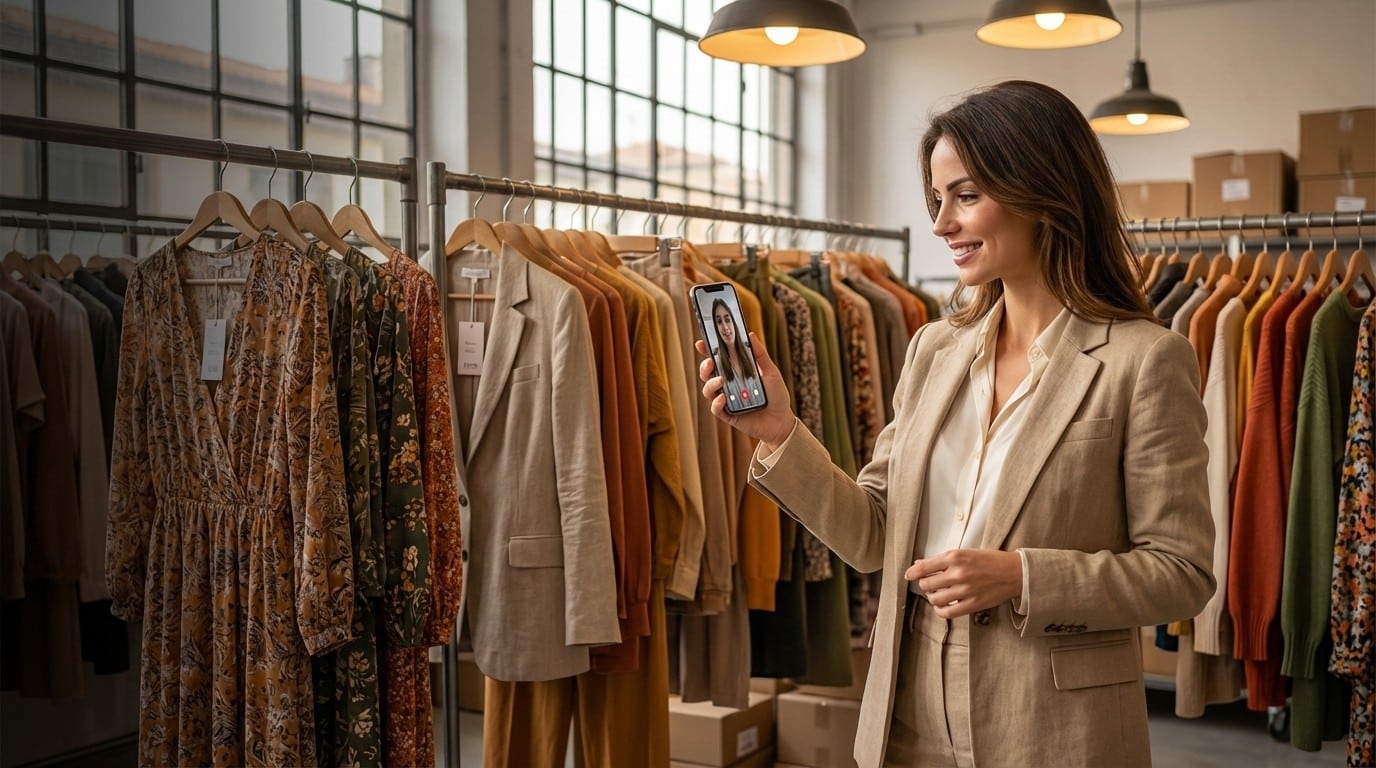
Linen womenswear for SS26 is not a trend — it is the backbone of the Prato wholesale offer this season. Walk through any showroom in the district and you will find racks dominated by linen and linen-blend pieces across every price bracket, construction level and colour palette. The question boutique buyers actually need answered is not whether to invest in linen womenswear SS26, but which product categories justify the investment and which to approach with more caution. Four garment types stand out — linen midi and maxi dresses, coord sets, overshirt-style tunics and wide-leg trousers — each for different reasons, each with specific things to evaluate when sourcing from Italian suppliers.
Understanding what drives the sell-through of each category, how it presents to the end customer, and what to look for in terms of construction and finishing can save a boutique from costly buying mistakes. The following breakdown is grounded in what actually moves at retail and what distinguishes a well-made Prato linen piece from one that will generate complaints after two washes.
Linen Midi and Maxi Dresses: The Category That Anchors the Linen Floor
The linen dress remains the single highest-volume linen category for independent boutiques working with Italian wholesale. Midi lengths — landing between the knee and mid-calf — are the dominant silhouette in the Prato SS26 offer, while maxi lengths perform well for resort-adjacent and Mediterranean market customers. The reason both sell is practical: a linen midi dress reads as a complete outfit, requires no additional styling effort from the customer, and sits at a price point — typically €60–130 at retail — that triggers impulse-adjacent decisions without requiring the same deliberation as a higher-ticket purchase.
In-store, the linen dress presents best on a hanger with full length visible. Narrow display rails and folded presentation both kill the silhouette. The category works across a wide customer demographic, which is why it anchors the floor rather than living in a corner. Buyers should prioritise styles with a defined waistline detail — a tie belt, a subtle seam, a smocked panel — over fully shapeless cuts, which are harder to sell outside of a very specific aesthetic context.
When sourcing linen dresses from Prato, the critical construction checks are: seam allowance width (anything under 1 cm on a linen garment will fray through the season), the quality of the armhole finish on sleeveless styles, and whether buttons on shirt-dress versions are sewn with a thread shank. Fabric weight is equally important — 150–180 gsm is the sweet spot for a dress that drapes without being stiff. Heavier weights read as autumn product; lighter weights can feel insubstantial. Finally, check whether the print registration is consistent across multiple units of the same size — a known weak point in faster-production linen lines. The article on linen dress sourcing and versatility for SS26 covers silhouette selection in further detail.
Linen Coord Sets: Why Matching Separates Outperform Individual Pieces
Coord sets — a top and bottom in the same linen fabric, often the same colourway or a deliberate tonal contrast — have become one of the most commercially reliable formats in the Italian wholesale offer for SS26. The format works for boutiques for a structural reason: it sells as a set, prices accordingly, and removes the coordination challenge from the customer entirely. A linen coord set retailing at €130–180 for both pieces outperforms the same two pieces sold individually, because the customer understands the value proposition immediately.
The combinations that move best in Prato showrooms this season pair a relaxed linen blazer or overshirt with wide-leg or straight-cut trousers, and — in a separate tier — a cropped or fitted top with a midi or wide-leg bottom. The blazer-and-trouser format appeals to a slightly older boutique customer looking for smart-casual occasion dressing; the crop-top format skews younger and performs especially well in markets with a strong resort or warm-weather segment. The editorial and sourcing logic behind linen coords as a smart-casual summer wardrobe solution has been covered in depth in a related piece.
The construction details to verify on coord sets are more demanding than for individual pieces, because fabric consistency across two separate garments matters — the dye lot must match, the texture must be identical, and the weight must be the same. In production, this is straightforward; in warehouse wholesale where pieces may have been manufactured in separate runs, it is not guaranteed. When buying from a Prato showroom, always request both pieces from the same production batch and check the label information before placing an order. Linen fabric with any elastane content — even 2–3% — will behave and launder differently from pure linen, which creates problems if the top and bottom are not from the same blend specification.
Linen Overshirts and Tunics: The Light Layer That Works Across the Season
The overshirt-tunic category sits at an intersection that few other garment types occupy: it is genuinely versatile enough to sell from early spring through to late summer, works over both trousers and leggings as well as standalone with wide-leg bottoms, and has a unit cost that allows boutiques to maintain healthy margins. In the Prato SS26 offer, linen overshirts and tunics appear in a wide range of lengths — from hip-grazing to mid-thigh — and in both solid and printed executions, making them one of the most flexible categories for boutique buying.
From a retail mechanics perspective, the light layer occupies a distinctive role: it is often the piece the customer picks up alongside a hero purchase. A boutique that has a strong linen dress offer should stock linen overshirts as a natural companion, because the customer who spends €120 on a dress will frequently add a €65–80 overshirt to the basket when presented with one that complements the palette. This cross-sell dynamic makes the category commercially valuable beyond its standalone sell-through rate.
Construction priorities for this category are concentrated in three areas. First, the collar and placket finish: on an overshirt, the collar must lie flat without curling, which depends on interfacing quality. Many lower-cost linen overshirts in the Prato market use a fusible interfacing that separates after washing — check by manipulating the collar firmly between the fingers to feel whether the layers are securely bonded. Second, button placement: for tunics worn open as a layer, button spacing is less critical; for overshirts intended to be worn closed, verify that button placement sits correctly across chest and waist. Third, side split depth on longer tunics — a split that extends too high restricts the garment to styling over trousers only, reducing versatility. Italian Fashion Sourcing’s fashion sourcing and purchasing service includes quality assessment during the live sourcing session, covering exactly these construction checks before any order is placed.
Wide-Leg Linen Trousers: High Volume, High Margin, High Return Risk
Wide-leg linen trousers are among the most visible pieces in the Prato SS26 offer and, for boutiques that buy them correctly, among the most profitable. The silhouette has broad demographic appeal — it works across sizes, reads as both casual and smart depending on styling, and has established itself firmly enough in the mainstream market that boutique customers are actively seeking it rather than needing to be educated on how to wear it. Wide-leg linen trousers at retail between €70 and €120 represent a straightforward conversion for boutiques serving a customer who already owns linen separates.
The performance caveat is returns and complaints. Linen trousers require accurate sizing, and the wide-leg silhouette is particularly unforgiving of length errors — a trouser that grazes the floor on a 168 cm customer will trip a 158 cm one. Boutiques buying from Prato wholesale need to assess whether the supplier offers multiple length options or whether the standard inseam works for their specific customer base. This is a practical point that is easy to overlook during a fast-moving sourcing session but generates disproportionate after-sales friction when ignored.
On the construction side, the waistband is the critical point. Elastic waistbands — dominant in the Prato fast-fashion tier — need to be wide enough to distribute tension without folding, and the casing must be neatly finished on the inside. A narrow elastic waistband in a pure linen fabric will roll and distort through the season. Waistbands with a partial elastic at the back and a flat front in a button-and-zip configuration hold their shape better but require more precise sizing from the customer. Fabric weight matters here as much as for dresses: 160–185 gsm gives the trouser enough body to hold the wide-leg silhouette without collapsing, while remaining breathable for summer wear. Below 150 gsm and the leg tends to cling; above 190 gsm and the garment edges toward transitional-weight.
Sourcing These Categories from Prato: What to Prioritise Across the Four
Across all four categories, the most consequential variable when sourcing linen womenswear from Prato is not price but consistency — consistency of fabric weight across units, of colour across garments within a set, of sizing across a size run. Prato wholesale operates on tight production cycles and high throughput, which creates competitive price points but also means that quality control is not uniform across all showrooms or suppliers. Buyers who source without a clear checklist, or without local expertise to guide the selection, regularly receive shipments with discrepancies that are not apparent from the sample.
The practical implication for boutique buyers is that the sourcing session itself — the moment of selection — is where quality outcomes are determined, not during post-shipment QC. Checking seam allowances, manipulating fabric at stress points, verifying that units across the size run correspond to the sample, and confirming production batch consistency for coord pieces: these are checks that require hands-on access to the product in the showroom, not remote assessment from a catalogue image.
The four categories identified here — linen dresses, coord sets, overshirts and tunics, and wide-leg trousers — are not equally demanding in terms of sourcing diligence. Dresses are relatively forgiving; coord sets and trousers require the most careful batch and consistency verification. Understanding this before entering a sourcing session allows a buyer to allocate time and attention appropriately, rather than spending equal effort on every garment type and missing the checks that matter most.
If you are planning your SS26 linen buy and want to source from Prato with proper quality assessment built into the session, Italian Fashion Sourcing works with boutiques and retailers as a dedicated local buyer — managing showroom selection, construction checks and order consolidation from start to shipment. The process starts with a short interview to understand your customer profile and budget before anything is booked. You can apply directly at italianfashionsourcing.com/interview