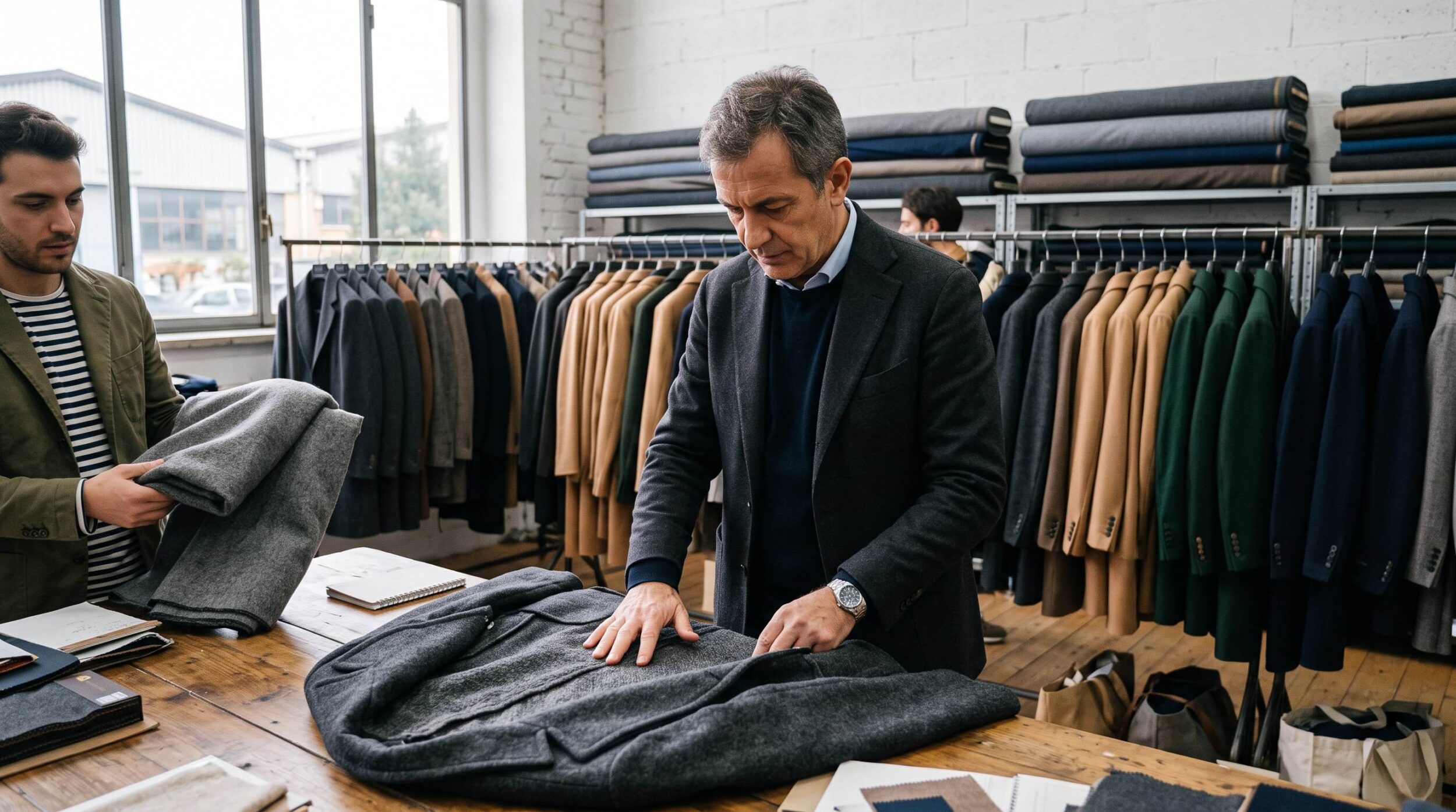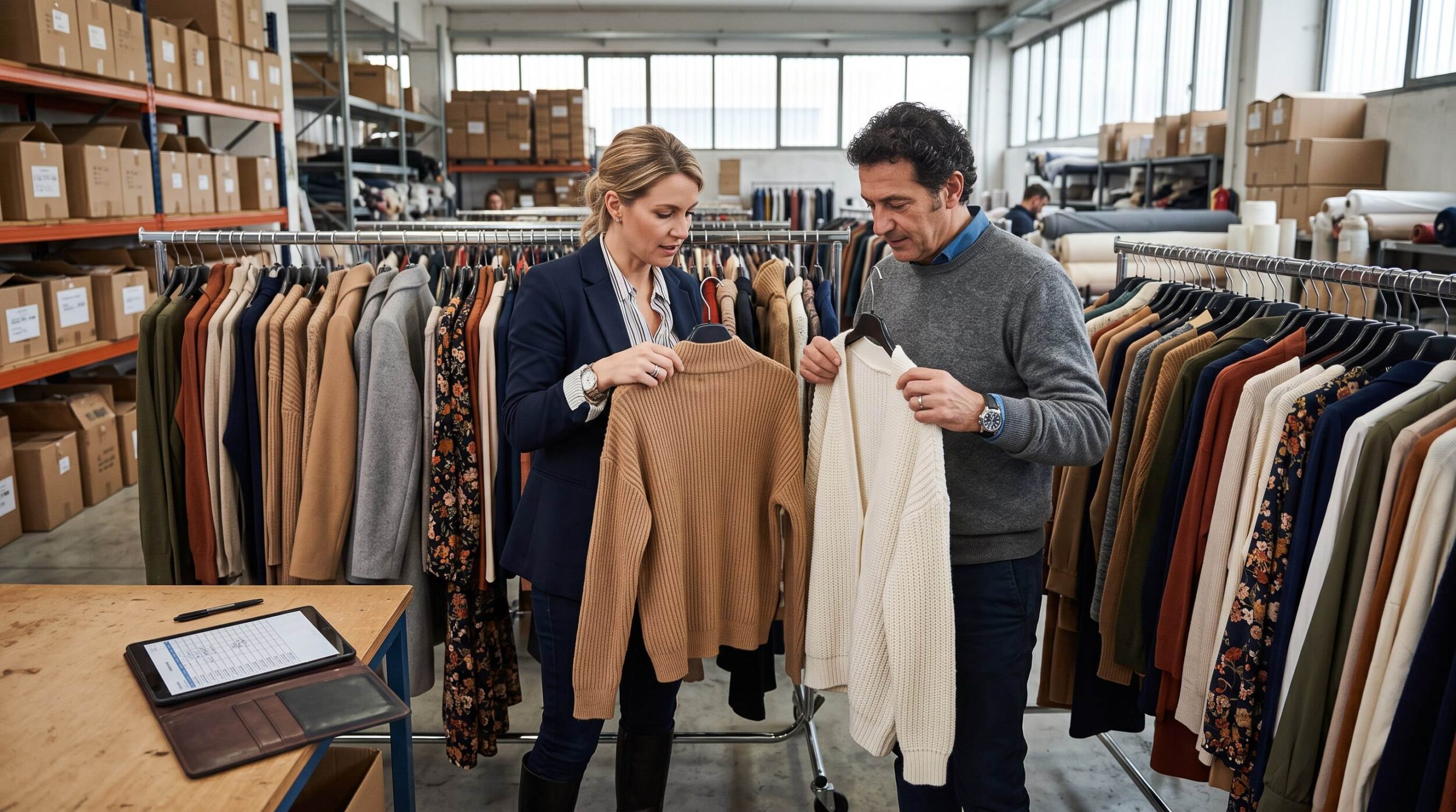

Italian wholesale fashion offers two structurally different sourcing models, and the choice between them is one of the most consequential decisions a boutique buyer or brand founder makes in their early seasons. The first is pronto moda ready-to-wear: purchasing existing stock from Prato showrooms with immediate availability, low minimum orders and no production risk. The second is private label production: commissioning Made in Italy garments manufactured to the buyer’s own specifications, carrying the buyer’s label, with full design control and brand exclusivity. The decision between them is not primarily aesthetic, it is operational and financial.
Italian Ready-to-War e Wholesale: The Operational Case
Ready-to-wear wholesale from the Prato pronto moda market is the lower-friction, lower-risk entry point into Italian wholesale sourcing. The product exists, it can be assessed visually before purchase, it ships within days of an order being placed, and the minimum investment per session is manageable, typically €3,000 to €10,000 for a well-structured buying session. There is no production risk: if a style underperforms on the shop floor, the buyer’s downside is the inventory cost of that specific purchase, not the sunk cost of a production run. The operational guide to how Italian fashion wholesale works across showrooms, sessions and minimums is the right starting point for buyers who are earlier in their journey.
Italian Private Label Production: The Operational Case
Private label production from Italian manufacturers gives the buyer a garment that carries their label, is exclusive to their brand, and can be specified to their own design standards. The operational requirements are more demanding. Private label production starts with a minimum order value of €5,000 per production run and a minimum of 100 pieces per style. The timeline is longer: from design brief to approved sample to production to delivery, a typical private label run takes ten to fourteen weeks. The buyer carries production risk, if the sample is approved and the run is placed, the full cost is committed before any units are sold.
Comparing Timelines: When Each Italian Wholesale Model Works for Your Season
Timeline is one of the most decisive variables in the ready-to-wear versus private label decision. Ready-to-wear wholesale from Prato can be purchased and delivered within two to three weeks of a buying session. Private label production operates on a ten to fourteen week lead time from design approval to delivery. For a boutique targeting a June SS season opening, a private label production run must be commissioned no later than February. For the same opening date, a pronto moda buying session can be placed in late April or early May and still arrive in time.
Investment and Risk Profile: Ready-to-Wear vs Private Label
Ready-to-wear wholesale requires lower minimum investment, carries lower production risk, and offers faster capital recovery. Private label requires higher minimum investment (€5,000 per run minimum), commits capital earlier in the process, carries production risk at the sample and run approval stages, and has a longer capital recovery timeline. The risk-adjusted case for starting with ready-to-wear and graduating to private label as the business scales is strong for most boutiques. For buyers who are already at the stage where private label makes sense, the detailed overview of Italian private label production services and timelines covers the production process from design brief to delivery.
How to Decide: A Framework for Choosing Between Italian Wholesale Models
Choose Italian ready-to-wear wholesale if: your sourcing budget per season is below €10,000; you need product within four weeks; you are in your first two to three seasons of fashion sourcing purchasing; your boutique’s value proposition is built on curation rather than label ownership. Choose Italian private label production if: your sourcing budget supports a minimum €5,000 production run per style; you have a four to five month planning lead time; you are building a named brand where label exclusivity is commercially important. For many stores, the practical answer is both, using private label for hero pieces and pronto moda wholesale to fill category gaps. Italian Fashion Sourcing operates both services. The intake interview at italianfashionsourcing.com/interview/ is where the conversation about model fit begins.