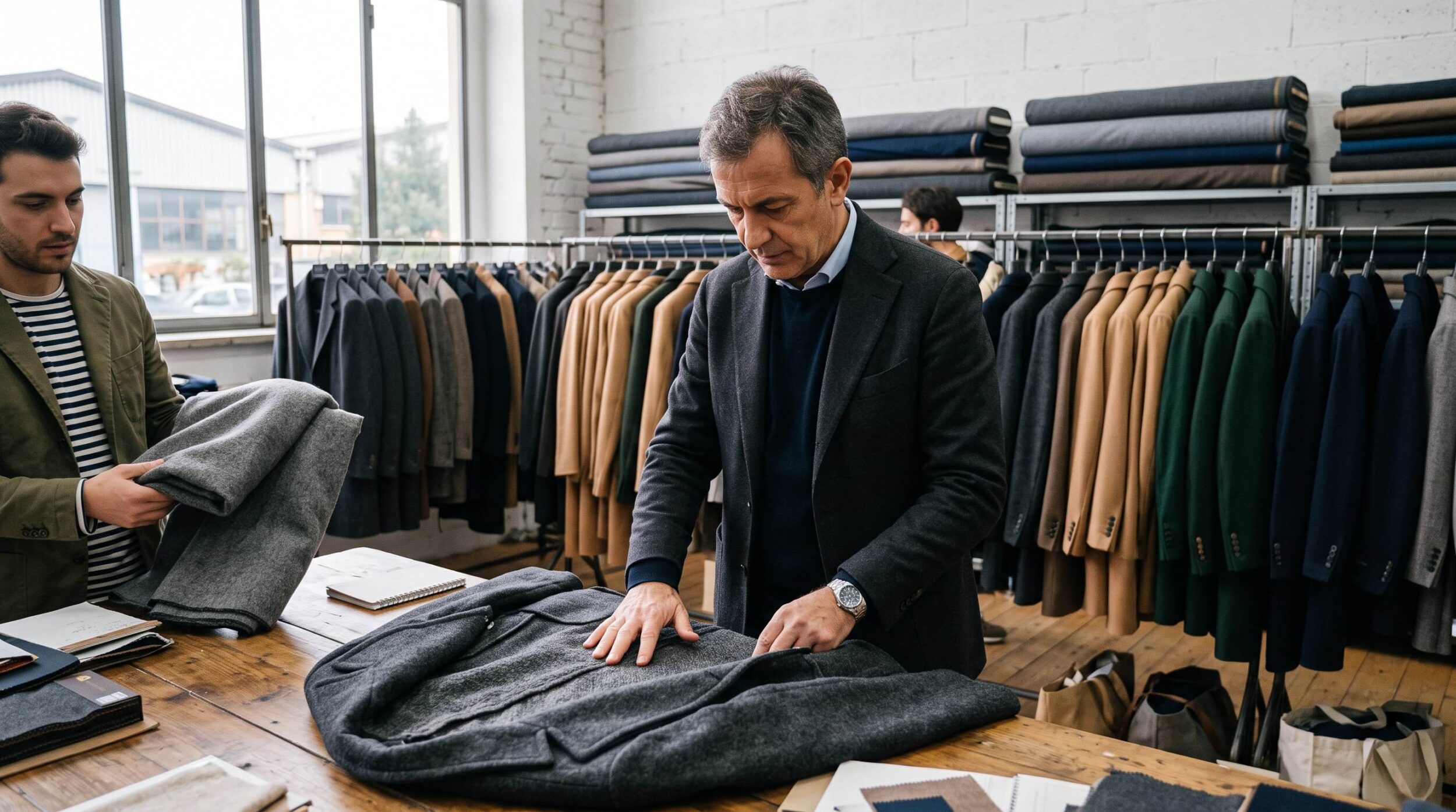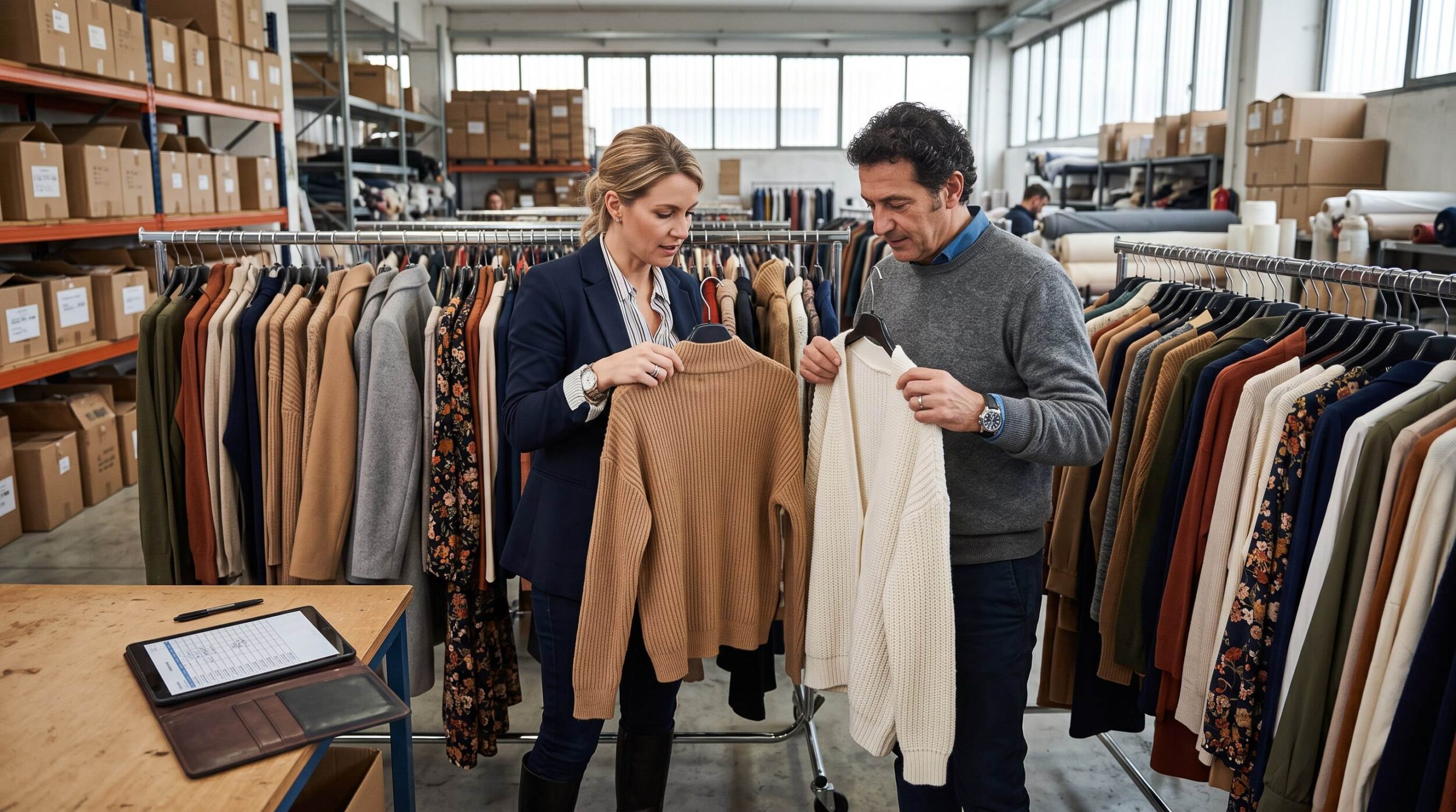

Minimum order quantities in Italian fashion wholesale are structured differently from most manufacturing-based wholesale markets. Italian pronto moda operates from existing stock rather than made-to-order production, which means minimum order requirements are set to cover the operational cost of processing a transaction, not to ensure a viable production run. This structural difference has a direct practical implication: minimums in Prato are lower than in garment manufacturing markets, and flexibility is higher, because the supplier is selling from stock it has already produced. The key is understanding the two levels at which minimums apply: the per-supplier minimum and the per-style minimum.
Per-Supplier Minimums in Prato Fashion Wholesale: Typical Ranges
The per-supplier minimum in a typical Prato wholesale showroom runs between €300 and €500 per visit. This threshold is not a formal contractual requirement in most cases, it is a practical operating norm that reflects the margin math of the showroom. Some larger showrooms operate with lower minimums, as little as €150 to €200, while more specialised operators may have higher thresholds, occasionally reaching €800 to €1,000 for a first-time buyer. A buyer with a total session budget of €3,000 spread across eight showrooms has €375 average per showroom, workable at most Prato operators, but tight at the upper end of the range.
Per-Style Minimums in Italian Fashion Wholesale: What the Numbers Mean
Per-style minimums in Prato pronto moda wholesale typically run from 2 to 12 pieces, with most standard garment categories sitting in the 3 to 6 piece range. For buyers managing size curve across a boutique context, per-style minimums at 3 to 6 pieces typically allow reasonable size distribution. The guide to building a profitable boutique buy from Italian wholesale covers the size curve and style depth logic in the context of assortment planning.
How Flexibility Works in the Prato Wholesale Market
Flexibility on minimums in Italian pronto moda wholesale is real but not uniformly distributed. Long-term relationships between buyers and specific showrooms create informal flexibility, a supplier who has worked with the same buyer for three or four seasons may allow occasional below-minimum orders on specific styles. First-time buyers have less negotiating room. The most effective approach to managing minimums as a new buyer is not negotiation but selection: focusing each showroom visit on pieces that genuinely fit the assortment plan and buying at the minimum on each selected style.
Managing Italian Fashion Wholesale MOQs Across a Multi-Supplier Session
The practical challenge of MOQ management for boutique buyers is distributing a finite total budget across multiple showrooms in a way that meets each supplier’s threshold without over-concentrating inventory in any one category. A session structured across six showrooms with an average €400 minimum requires a floor investment of €2,400 in product before logistics. The optimal session structure for a first-time buyer is typically four to six showrooms, with higher budget concentration at the two or three suppliers most central to the assortment plan. Italian Fashion Sourcing builds this allocation logic into the scouting phase, alongside comprehensive Italian fashion services including fashion sourcing purchasing and private label production in Italy.
What Italian Fashion Wholesale MOQs Mean for Different Boutique Sizes
The minimum order structure of Italian pronto moda wholesale is well suited to independent boutiques operating in the €3,000 to €15,000 per-session buying range. Below €3,000, the number of showrooms that can be viably included in a single session is limited to three or four. For buyers researching the full operational picture before their first session, the complete overview of how Italian fashion wholesale works across sourcing, session and shipping covers the end-to-end process. The intake interview at italianfashionsourcing.com/interview/ is where budget and session structure are worked out.