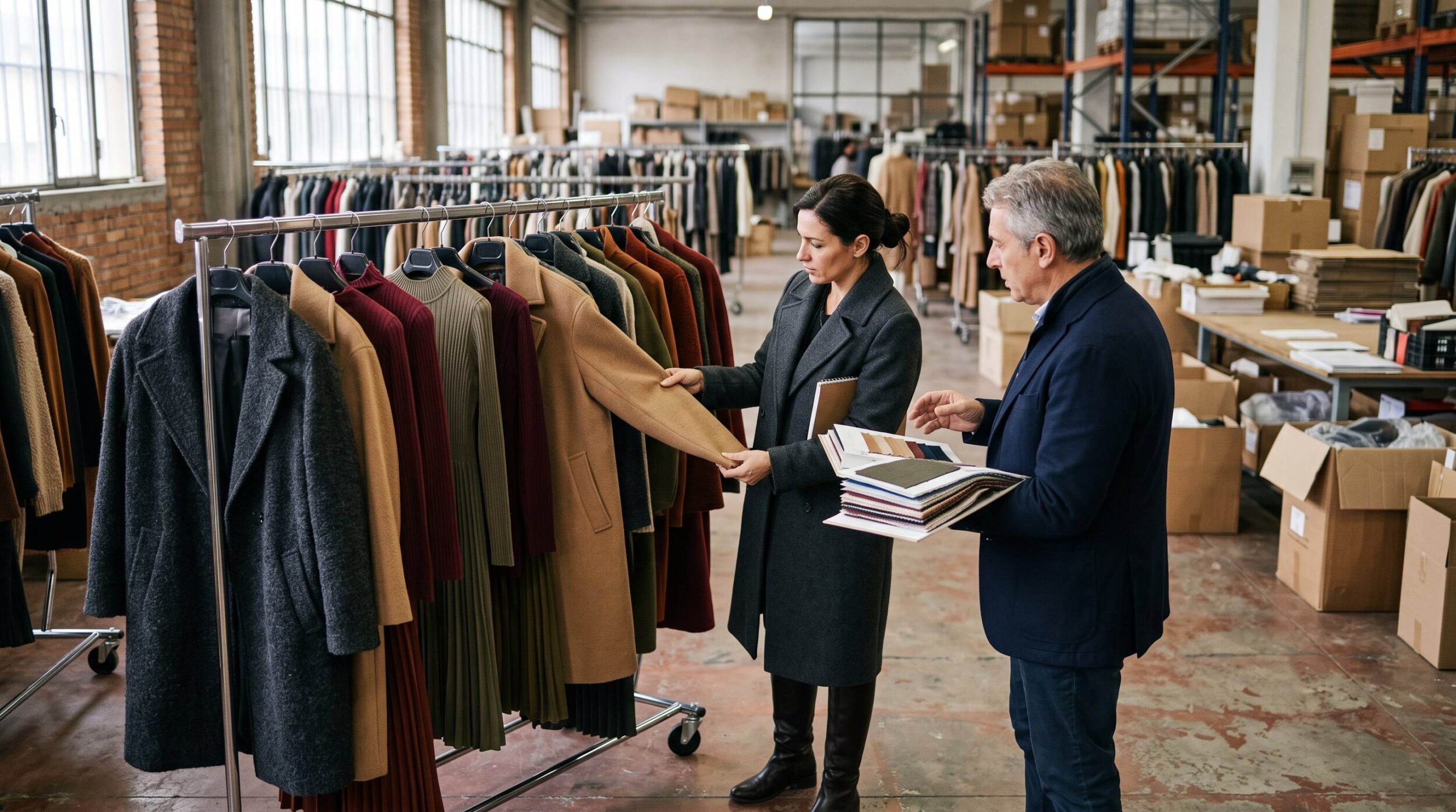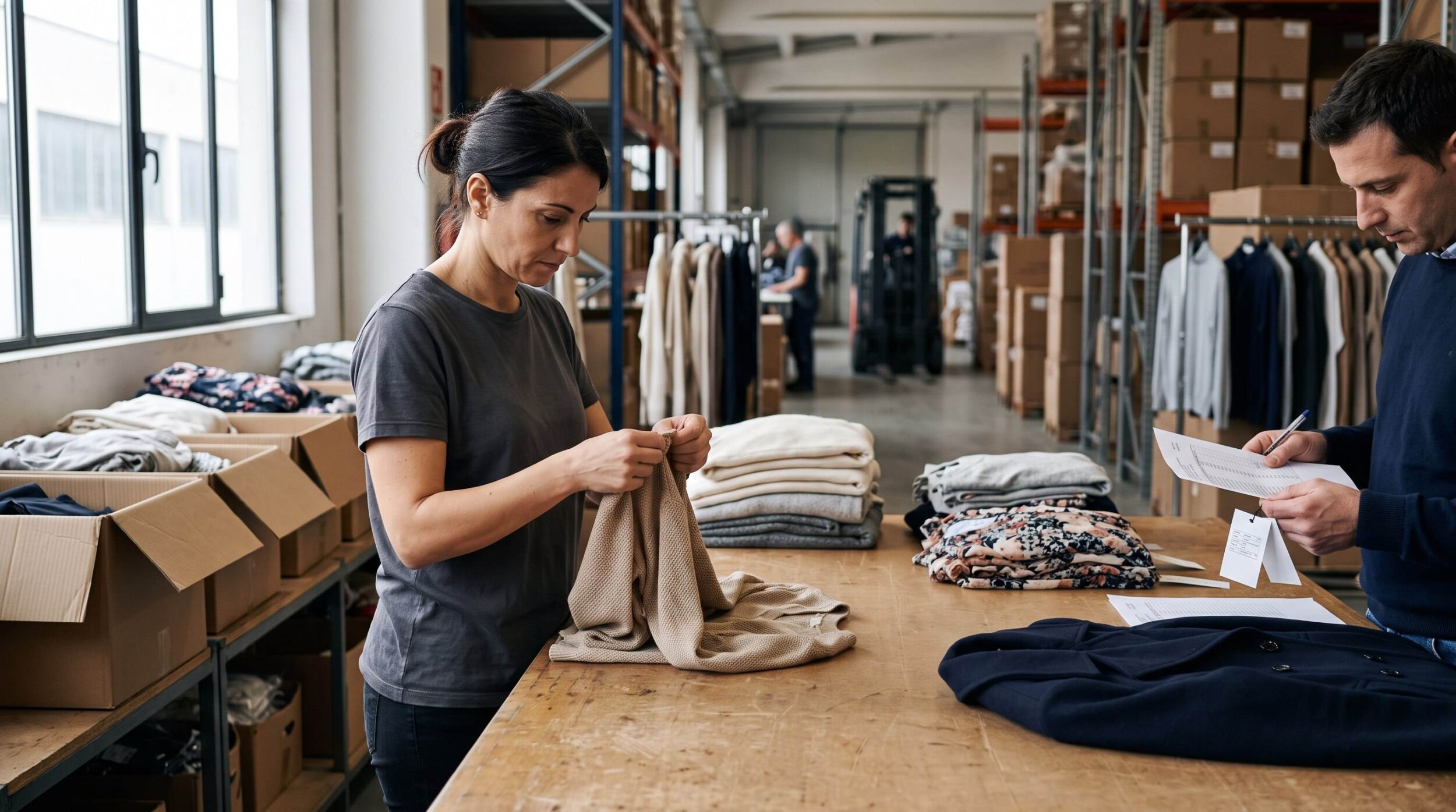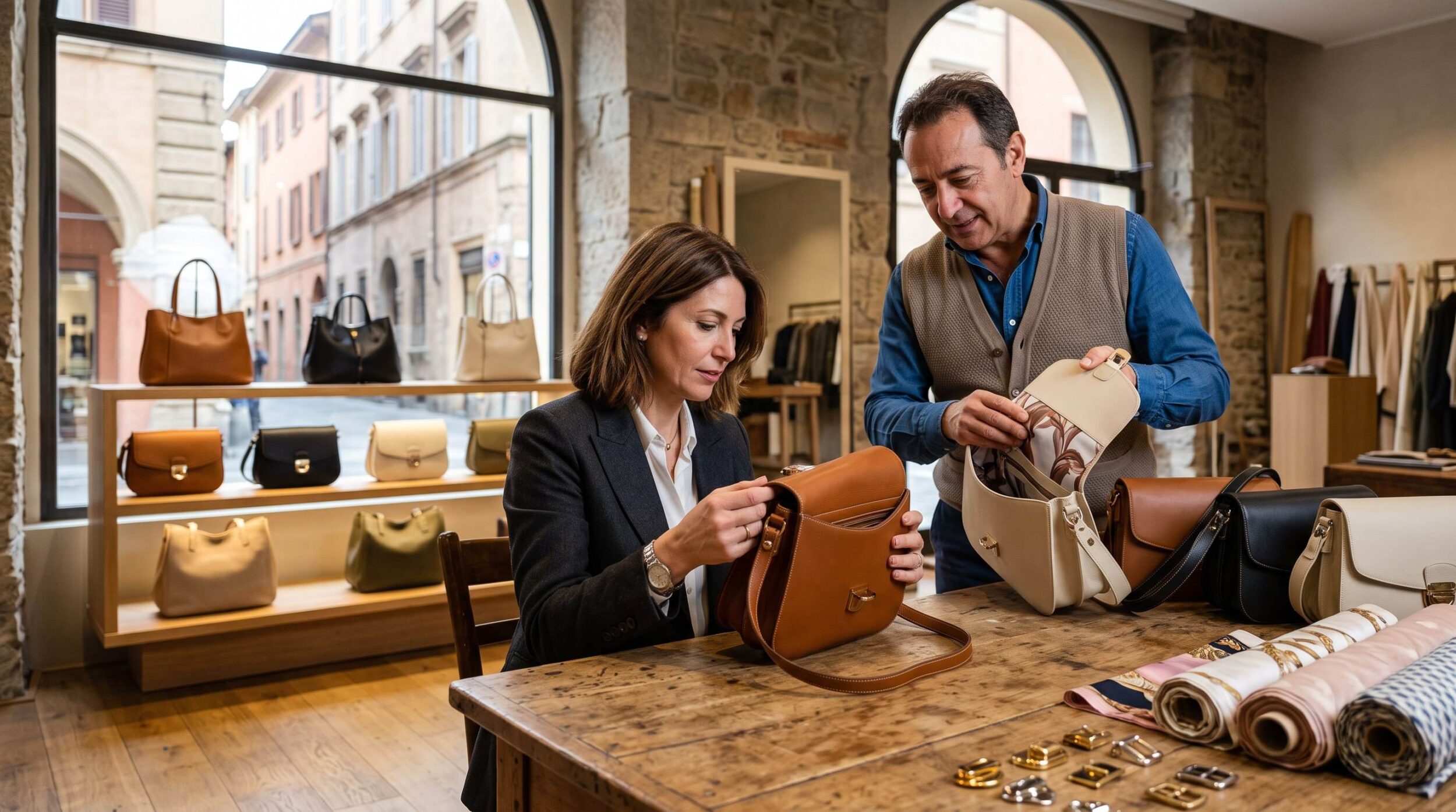
Padded jackets and heavyweight wool coats are emerging as the AW26/27 italian fashion wholesale category boutiques most consistently underestimate when planning their winter order, and Prato manufacturers are flagging earlier-than-usual demand from buyers who serve customers in genuinely cold climates. Unlike the structured tailoring driving this season’s lighter outerwear, this category is built around technical performance first, with silhouette and colour treated as secondary to actual warmth and durability.
For boutiques selling into markets with real winter weather, this distinction matters more than it might appear from a showroom visit alone. A camel coat that photographs beautifully but lacks proper insulation will disappoint a customer the first time temperatures drop below freezing, and the resulting return or complaint costs a retailer more in goodwill than the margin gained from a cheaper, lighter alternative.
Why heavyweight outerwear needs separate sourcing logic
Padded jackets and heavyweight coats are produced using different fabric weights, fill materials and construction techniques than the structured tailoring covered elsewhere in this season’s AW26/27 conversation, which means buyers need to evaluate them against a different set of quality criteria entirely. A supplier strong in fitted wool blazers is not automatically the right source for technical padded outerwear, and the two categories often come from entirely separate manufacturing specialisations within the Prato district.
This specialisation split is worth understanding before a buyer starts a sourcing session, since asking a tailoring-focused showroom to produce genuinely warm winter outerwear usually results in a compromise piece that looks right but underperforms in actual cold weather use.
Padded jackets: fill quality determines real performance
Down and synthetic fill quality is the single most important variable in padded jacket performance, and it is also the easiest thing for a buyer to overlook when comparing samples primarily by look and price. Higher fill power down provides more warmth per gram of material, which affects both the jacket’s weight and its actual insulating performance in genuinely cold conditions.
Synthetic fill alternatives have improved significantly in recent seasons and now offer a reasonable middle ground for buyers wanting strong warmth performance without the price premium of high fill power down, particularly for boutiques serving customers who prioritise practicality over premium positioning. A buyer should always ask a supplier directly about fill type and fill power rather than assuming visual puffiness correlates reliably with warmth.
Weight per square metre of the outer shell fabric is another figure worth requesting directly from a supplier, since a lightweight outer shell paired with high fill power down produces a noticeably different garment from a heavier shell with the same fill, even though both might be marketed under similar warmth claims.
Heavyweight wool coats for serious cold weather
Heavyweight wool coats sit at the more traditional end of this category, typically using a denser, higher gram-weight wool fabric than the structured coats covered elsewhere in this season’s outerwear conversation. These pieces are built for actual insulation rather than primarily for silhouette, which usually means a fuller cut that accommodates layering underneath rather than the closely fitted shape driving this season’s tailored coat trend.
Prato manufacturers producing genuinely heavyweight wool coats are concentrated among a smaller group of specialists than the broader outerwear supplier base, since sourcing and working with denser wool fabric requires different equipment and expertise than standard mid-weight production. Buyers serious about this category benefit from confirming a supplier’s specific experience with heavyweight construction rather than assuming any wool coat manufacturer can deliver equivalent warmth.
Lining quality matters as much as the outer wool fabric in this category, since a heavy coat with a thin or poorly fitted lining loses much of its practical warmth advantage despite looking equivalent to a properly lined alternative from the outside.
Why colour works differently in technical outerwear
The cobalt, camel and charcoal direction driving most of this season’s AW26/27 colour story applies less rigidly to padded jackets and heavyweight coats, where practical considerations like staining resistance and the ability to coordinate with multiple base layers often outweigh pure trend alignment. Charcoal and other dark neutrals tend to perform better commercially in this category than brighter shades, simply because customers buying genuinely functional winter outerwear are typically prioritising versatility over making a single bold style statement.
That said, several Prato manufacturers are still offering camel and even cobalt options within padded jacket lines, generally as a smaller proportion of total production than the dark neutral options, which gives buyers some flexibility to include a few statement pieces without overcommitting budget to colours that may underperform in this specific category.
Construction details that separate genuine quality from surface appeal
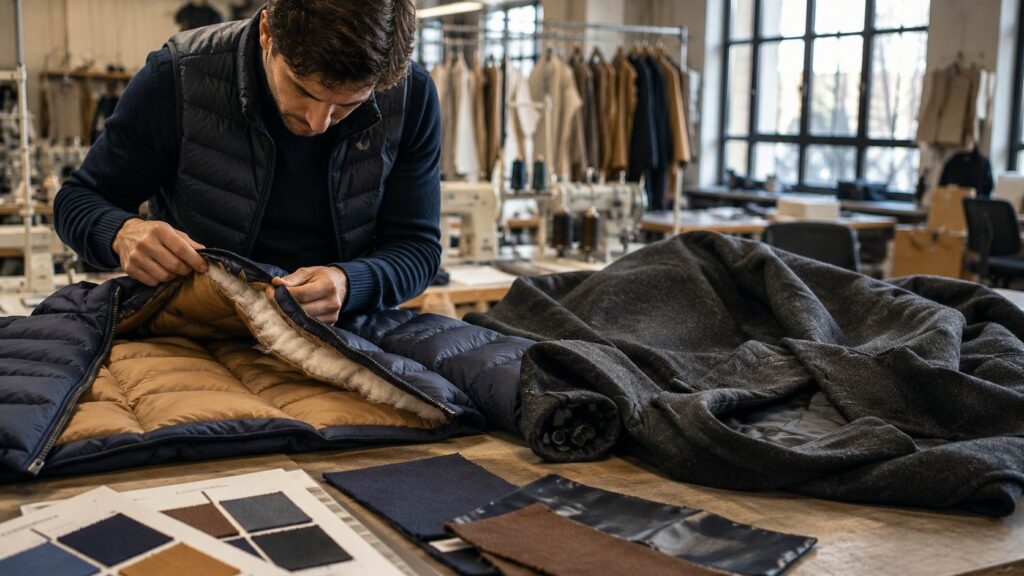
Seam sealing and zipper quality are two details that rarely show up in product photography but directly determine whether a padded jacket actually performs in wet winter conditions, which matters significantly for boutiques in climates with regular winter rain or snow rather than simply cold, dry air. A buyer evaluating samples in person should check seam construction at the shoulder and underarm specifically, since these are the areas most prone to water penetration in lower-quality production.
Baffle construction, meaning how the fill material is divided into sections within the jacket, also affects long-term performance, since poorly designed baffles allow fill to shift and clump over time, creating cold spots that customers notice within a single season of regular wear. This is another area where physically handling a sample garment reveals far more than a written specification or a photograph ever could.
Buyers comparing multiple suppliers should also ask specifically about water-resistant or water-repellent shell treatments, since this single feature often separates genuinely functional winter outerwear from pieces that look similar but were designed primarily for milder, drier conditions.
How this category fits into the season’s broader material strategy
Heavyweight outerwear connects to the same broader material conversation already underway this season, where wool, velvet and jersey pieces moving through Italian wholesale are increasingly produced as part of coordinated seasonal capsules. The heavier wool weights anchoring this category often come from the same supplier relationships producing the season’s knitwear and lighter outerwear, even when the finished garments serve very different functional purposes.
A buyer planning a full AW26/27 order benefits from treating heavyweight outerwear as a distinct but connected piece of the same sourcing strategy, rather than an entirely separate purchasing exercise handled in isolation from the rest of the season’s planning.
Lead times run longer for technical outerwear than for tailoring
Padded jackets and heavyweight coats typically require longer production lead times than structured tailoring, since technical construction elements like fill insertion, seam sealing and quality testing add steps that simpler garment types do not require. Buyers underestimating this timing difference often find themselves choosing from a narrower range of options if they delay ordering into late summer.
Moving through an AW26 sourcing session in Prato earlier in the season gives a buyer meaningfully better access to the specialist manufacturers producing genuine heavyweight outerwear, since these suppliers tend to have smaller production capacity overall and fill their calendars faster than the broader outerwear supplier base serving the structured tailoring side of the category.
Sizing this category correctly within a full AW26/27 order
Heavyweight outerwear typically represents a smaller unit count but a meaningful budget share within a well-balanced AW26/27 order, since these are higher-ticket items aimed at a more specific customer need than everyday tailoring. A reasonable starting allocation for boutiques in genuinely cold climates is treating this category as roughly fifteen to twenty percent of total outerwear spend, concentrated in fewer styles but deeper size runs per style.
Boutiques in milder climates should approach this category more cautiously, since the practical need for genuinely heavyweight outerwear is lower and the risk of overstocking technical pieces that do not match local weather patterns is correspondingly higher. In these markets, a small, carefully chosen selection usually outperforms a broad assortment across this specific category.
Reordering capacity also differs meaningfully from lighter outerwear categories, since specialist heavyweight manufacturers often cannot accommodate fast mid-season top-up orders the way simpler garment producers can, making the initial order size decision more consequential than it would be for easier-to-reproduce styles.
Conclusion
For boutiques serving customers who experience real winter weather, heavyweight coats and padded jackets deserve dedicated sourcing attention rather than being treated as an extension of the season’s structured tailoring conversation. The manufacturers producing genuinely high-performing technical outerwear in Prato are fewer in number and book up earlier than the broader outerwear supplier base, which makes early commitment the deciding factor in whether a boutique secures the right partners for this specific, functionally demanding category of the AW26/27 order.
Get Started
If your AW26/27 assortment needs genuinely warm, technical outerwear rather than primarily decorative coats, a live buying session lets you check fill quality, seam construction and shell weight directly with specialist Prato manufacturers before committing. Start with a short interview at italianfashionsourcing.com/interview/ and we will pre-scout the suppliers with genuine heavyweight outerwear capacity still open for this season.