
Why Fabric Choice Determines AW26 Margin More Than Design
The same silhouette in two different fabric qualities at the same retail price can produce radically different margin outcomes. This is true in every season, but autumn-winter is where the gap is most visible. The fabrics are heavier, the price points are higher, and customers handle the garment more carefully before buying. The version in the better fabric sells at full price. The other one generates returns, markdown pressure, and customer complaints that compound through the season.
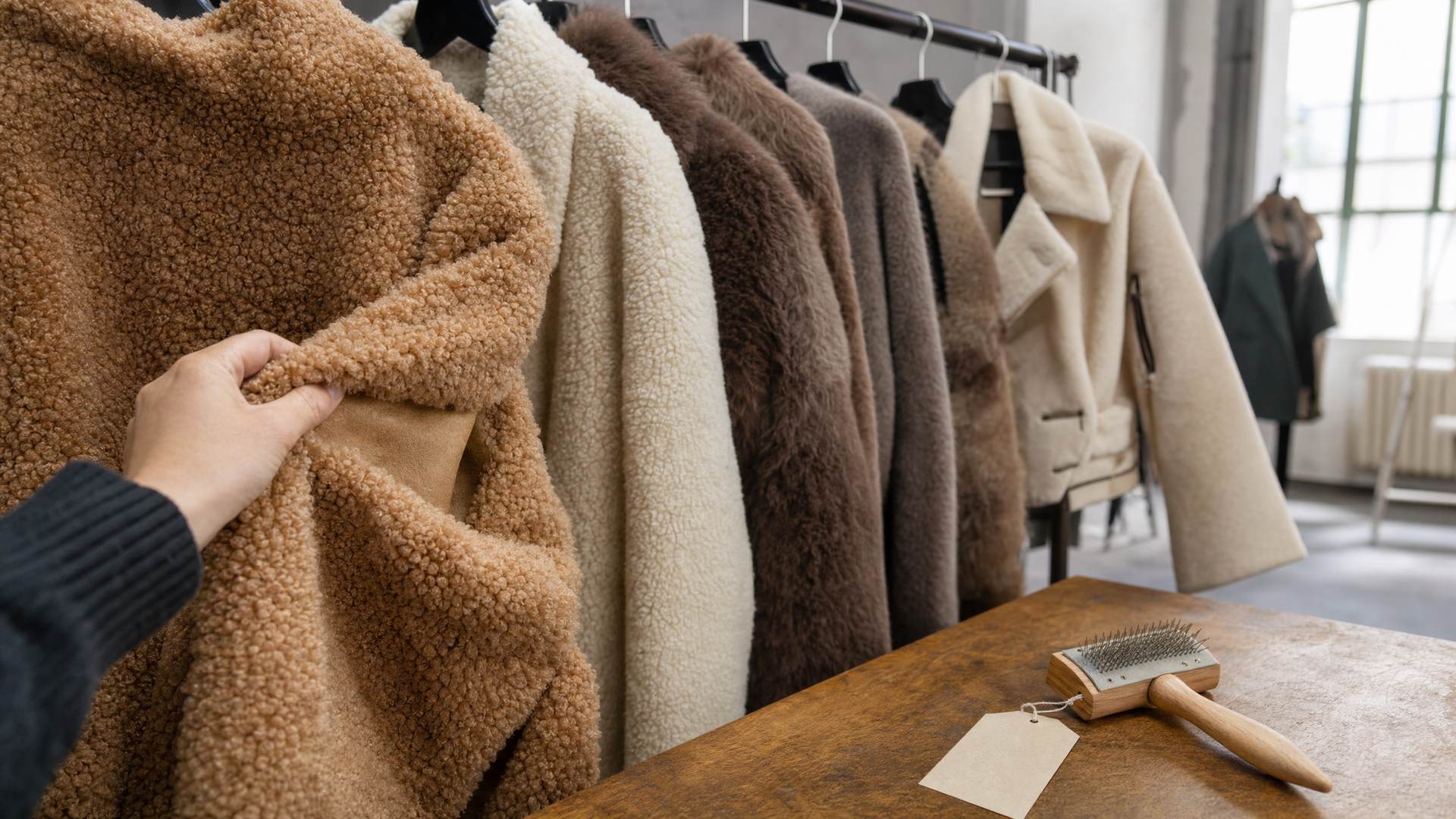
The commercial logic of autumn buying therefore prioritises fabric selection over design novelty. A well-constructed pair of wide-leg trousers in a 200 g/m2 lightweight wool-viscose blend will outsell a more fashion-forward silhouette in a cheaper polyester-wool at the same retail price point, in most boutique markets, most of the time. The customer who buys AW26 product from an independent boutique expects a fabric quality that justifies the premium over fast fashion — and the boutiques that deliver that consistently build the loyal customer base that supports healthy margins. These fabrics carry many of the looks described in our report on winter fashion trends for 2026 and 2027.
For Prato pronto moda buyers, the challenge is that the district offers both quality levels in most fabric categories, and the visual difference between a good wool-viscose blend and a cheaper equivalent is not always obvious from a showroom sample or a lookbook image. Understanding what the quality indicators are in each of the three key AW26 fabric categories is the starting point for making buying decisions that produce the right margin outcomes at retail.
Lightweight Wool Blends: The AW26 Category With the Widest Commercial Range
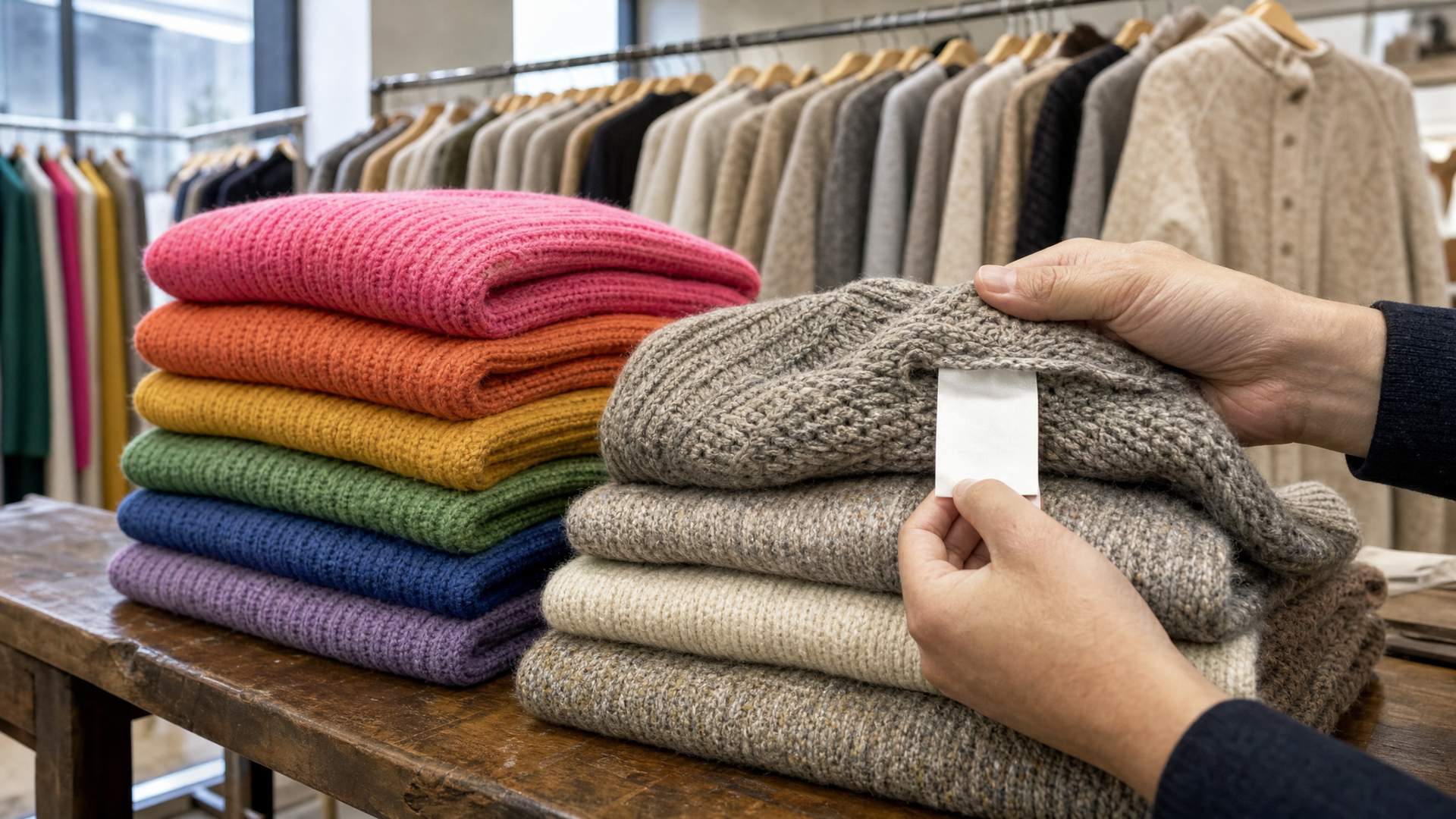
Lightweight wool blends — typically wool combined with viscose, polyester, or modal in ratios that vary from 20–30 percent wool to 60–70 percent wool — are the AW26 fabric category with the widest commercial range in the pronto moda segment. At the lower end, a 20 percent wool blend with polyester feels and performs significantly differently from a 50 percent wool-viscose blend. The two fabrics may arrive at similar wholesale prices in a Prato showroom but will produce very different outcomes at retail.
The quality indicators for lightweight wool blends are: the fabric’s behaviour when warmed against the hand (a higher wool content will feel noticeably warmer faster than a low-content blend), the surface texture after gentle manipulation (good wool blends recover with minimal pilling or surface disruption; cheaper blends show immediate surface wear), and the weight relative to apparent warmth (a lightweight wool-viscose at 220 g/m2 that feels genuinely warm has a better fibre composition than a heavier fabric at 280 g/m2 that feels colder by comparison — the warmth-to-weight ratio is a reliable quality signal).
The garment formats where lightweight wool blends are performing best in early AW26 Prato production are wide-leg and straight-leg trousers, midi-length skirts, and the soft blazer category. The coordinate format is particularly relevant here: a trouser-and-blazer wool blend coordinate at a wholesale price of €55–75 per set retails comfortably at €160–220 in most independent boutique markets, delivering a retail multiple that supports the category’s margin contribution. Understanding how fabric composition affects retail performance across seasons helps buyers develop the evaluation discipline needed to distinguish the commercial wool blends from the less reliable alternatives.
Velvet in AW26: The Category That’s Earning Its Place Back
Velvet had a difficult couple of seasons. The crushed and stretch velvet formats that ran through AW23 and AW24 were everywhere, mostly because they were cheap to produce and easy to make up. Customer fatigue with those versions left a residual sense that velvet had peaked. The AW26 Prato production arriving this summer tells a different story. Velvet is back — but in a format that is genuinely different from the iterations that wore out their welcome.
The velvet arriving in AW26 Prato production is predominantly smooth, mid-pile in construction — a fabric with physical weight and surface richness that the stretch and crushed versions didn’t have. The pile height is moderate: enough to create genuine depth and colour saturation, not so deep that the fabric reads as costume or special occasion only. The colour palette is in the deep earths and forest greens that dominate the AW26 direction — these tones work particularly well in velvet because the pile creates tonal variation within a single colour that reads as more complex and interesting than the same colour in a flat woven fabric.
The garment formats where this velvet quality is working commercially in early samples are trouser formats, coordinated jacket styles, and slip dress constructions for occasion wear. The trouser format is the most commercially viable for mid-market boutiques: a wide-leg or straight-leg velvet trouser at €28–38 wholesale retails at €90–130 and competes in the smart-casual evening segment where boutiques often have limited good-quality options. The key quality check for velvet is pile consistency across the fabric panel — uneven pile density creates a mottled surface under retail lighting that photographs poorly and reads as lower quality to the customer.
Premium Jersey in AW26: The Foundation Category
Jersey has always been a Prato strength, and AW26 is not changing that. What is changing is the finishing and fabric character of the best jersey arriving in the autumn range. The plain, smooth ponte and interlock jersey that has been a staple of multiple seasons is being joined by a newer category of textured and brushed jersey constructions that carry more physical interest without losing the easy-wear practicality that makes jersey foundational for boutique buying.
The brushed and peached jersey versions have a specific retail advantage: they read as a more premium product on the floor while maintaining the easy-care, easy-wear characteristics that make jersey accessible to a wide customer base. A customer who might hesitate at a €125 retail price for a jersey blazer in plain ponte will often accept the same price more readily when the fabric surface has visible tactile interest — the perceived value aligns with the physical experience of handling the garment.
The Italian jersey advantage in AW26 is most visible in the coordinate formats. Jersey is the one fabric where a complete coordinate set — trouser, blazer, and sometimes a layering top — can be produced at a wholesale price that works for mid-market retail without compromising on construction quality. The Prato manufacturers who specialise in jersey have refined their coordinate production over multiple seasons, and the best versions arriving in AW26 are the result of accumulated technical refinement rather than seasonal novelty. Italian jersey’s commercial strength in SS26 carries directly into autumn: the same customer confidence in the fabric type, applied to warmer constructions.
Comparing Quality Levels at the Wholesale Price Point
One of the most practically useful skills in AW26 buying from Prato is the ability to compare fabric quality across suppliers at the same wholesale price point. Two different manufacturers can offer what appears to be the same product — a lightweight wool-blend trouser, a velvet coordinate, a brushed jersey blazer — at the same wholesale price, and the quality difference between them can be significant. The buyers who identify the better product at the same price consistently outperform those who treat price as the primary filter.
The comparison methodology varies slightly by fabric category, but the general principle is consistent: evaluate the fabric under multiple conditions rather than a single assessment. For wool blends, feel the weight distribution across the panel, check the seam behaviour under gentle tension, and assess the fabric’s recovery after compression. For velvet, run a finger across the pile in multiple directions and check for consistency; look at how the colour reads under different light angles. For jersey, stretch a small section gently and watch how it recovers — good jersey returns to its original dimensions without distortion; cheaper constructions show permanent deformation at the stretch point.
These physical evaluations are only possible in a session where the buyer has direct access to the product. The live purchasing session model at Italian Fashion Sourcing is built around exactly this kind of hands-on evaluation — the buyer sees, handles, and compares product in real time, with an agent who can provide context on production quality and supplier track record. For AW26 fabric-heavy categories where quality variation is significant, this evaluation access is the most reliable safeguard against ordering product that underperforms at retail.
If wool blends, velvet, or premium jersey are categories you want to include in your AW26 buy, Italian Fashion Sourcing can identify the Prato suppliers producing the best quality at your target price point and set up a session that covers direct comparison across the options. Book the introduction call at italianfashionsourcing.com/interview/ to start the process.