Boutique buyers planning their AW26/27 italian fashion wholesale order are asking sharper pricing questions this season than in previous years, largely because the heavier fabric weights and more structured tailoring driving this season’s collections carry different cost implications than the lighter SS26 pieces most buyers sourced earlier in the year. Understanding how pricing and minimum order quantities actually work across Prato suppliers helps a buyer plan a realistic budget rather than discovering cost surprises midway through a sourcing session.
This article walks through the specific pricing structures relevant to an AW26/27 order, from how sourcing sessions are priced to supplier-level minimums and the separate cost logic that applies if a brand is considering private label production rather than ready-to-wear purchasing.
How an italian fashion wholesale sourcing session is priced
A guided sourcing session connecting a boutique buyer with multiple Prato showrooms is priced as a service fee based on the value of what a buyer actually purchases during the session, covering consulting, supplier scouting, the live buying session itself, and order consolidation through to export documentation. There is no minimum order value or quantity required simply to book a sourcing session, which means a buyer testing the AW26/27 market for the first time can start with a modest order and scale up in future seasons once they have direct experience with specific suppliers.
This structure differs meaningfully from working directly with individual showrooms without guidance, where a buyer navigating supplier minimums and language barriers alone often ends up either overcommitting to meet a minimum or missing suppliers entirely because the right introductions were never made.
Supplier-level minimums for AW26/27 ready-to-wear pieces
Individual Prato showrooms typically set their own minimums per warehouse visit and per style, and these vary supplier by supplier rather than following a single fixed rule across the district. A buyer combining purchases across several showrooms during one sourcing session generally finds it easier to meet these individual minimums than someone trying to work with a single supplier alone, since the consolidated order spans multiple style categories.
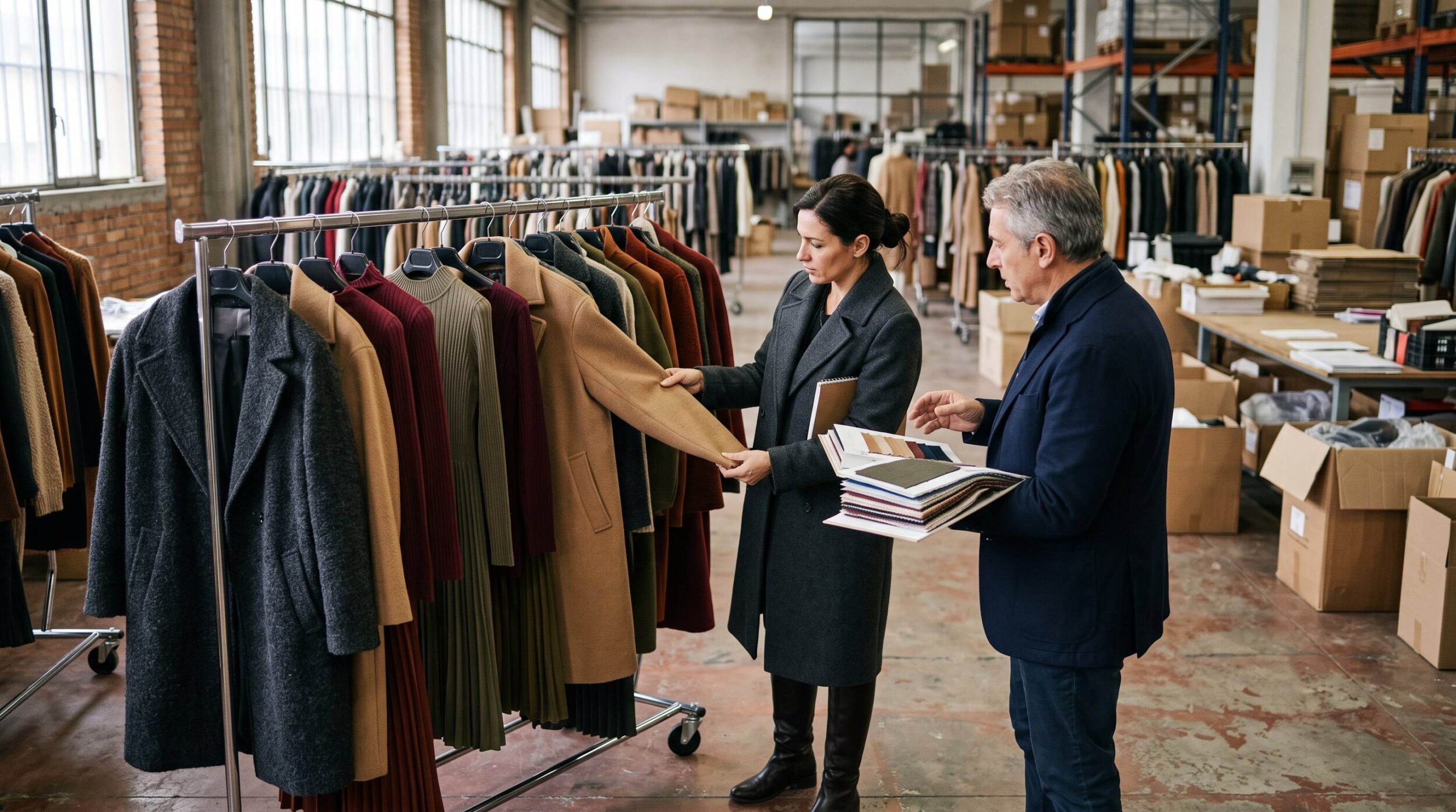
This season’s heavier outerwear and structured tailoring pieces tend to carry a higher per-unit wholesale price than the SS26 linen and cotton garments most buyers sourced earlier in the year, simply because the fabric and construction requirements are more involved. A buyer setting a budget for AW26/27 should expect this category shift to affect total spend even if the unit count in the order stays similar to a previous season’s purchase.
Buyers new to the district sometimes assume minimums are uniform across all suppliers, but in practice they vary enough that a sourcing session covering several showrooms in one visit gives meaningfully more flexibility than committing to a single supplier relationship before understanding the full range of options available.
Typical price ranges across this season’s key categories
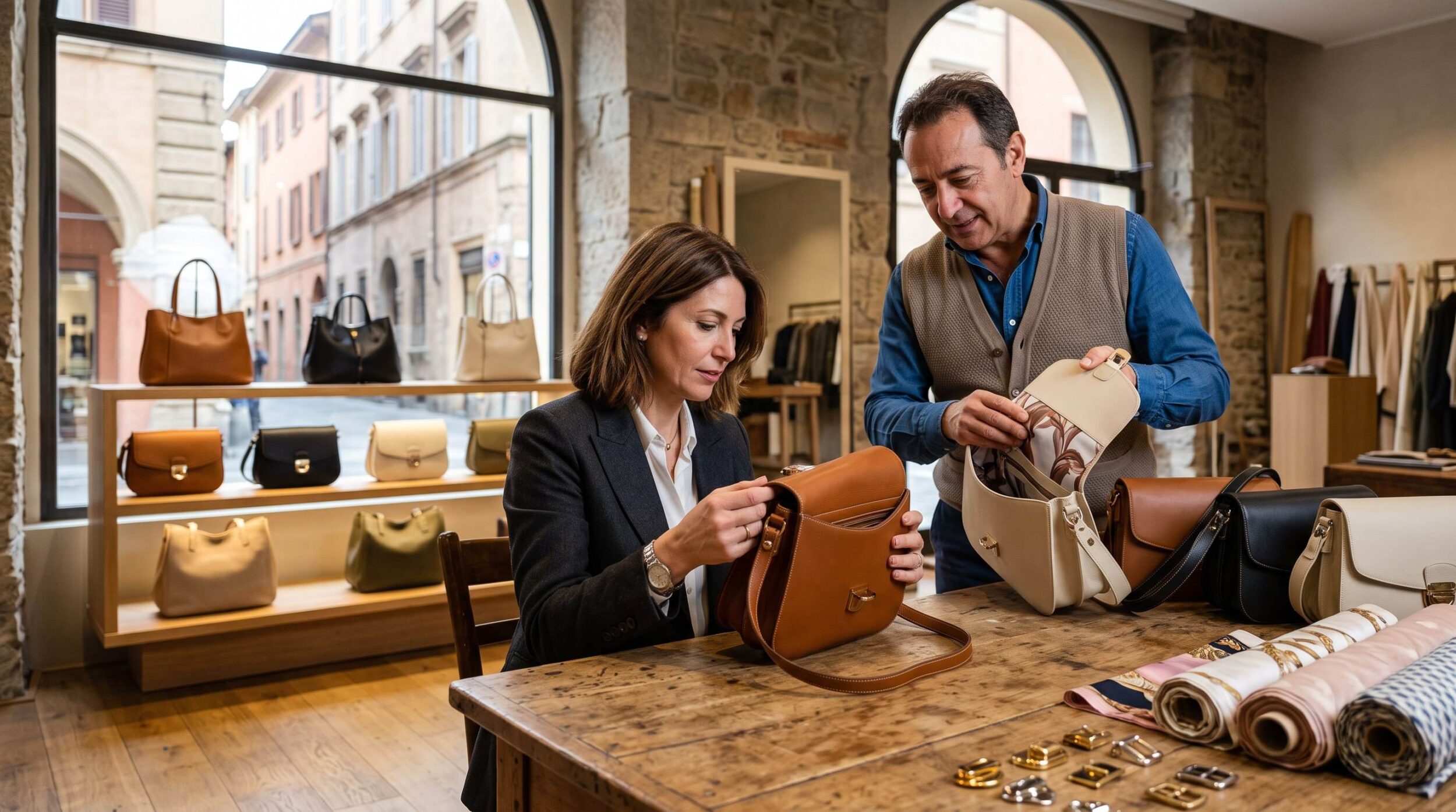
Wholesale pricing on most Italian pronto moda garments generally falls within a familiar range across categories, with simpler knitwear and denim pieces sitting toward the lower end and structured outerwear, heavyweight coats and leather accessories commanding meaningfully higher per-unit pricing given the additional materials and construction time involved. Special, more elaborate pieces within any category can run higher still, though these tend to represent a smaller share of a typical AW26/27 order rather than the bulk of it.
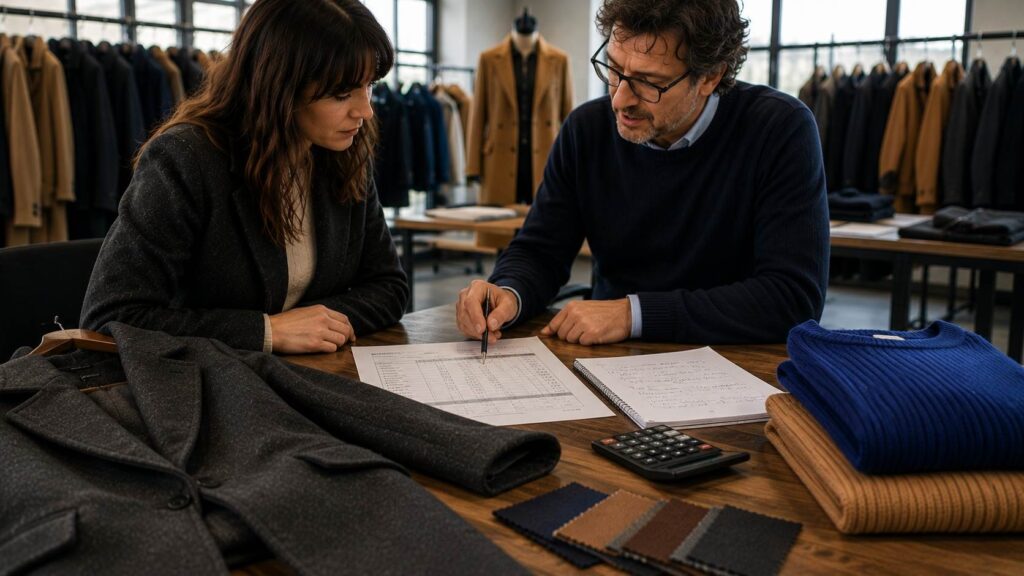
Buyers should treat these ranges as a planning guide rather than a fixed quote, since actual pricing depends on the specific supplier, fabric quality and construction details of each style, which is exactly why comparing multiple showrooms directly during a live session gives a more accurate budget picture than relying on general price expectations alone.
Private label pricing follows a different structure entirely
Brands considering a private label AW26/27 line work within a separate pricing and minimum structure than ready-to-wear buyers, since private label production requires a manufacturer to dedicate a full production run to one client’s branded line. This typically means a minimum order value alongside a minimum quantity per style, both of which apply regardless of how the rest of a brand’s purchasing plan is structured.
This minimum order threshold is considerably higher than the per-style minimums common in ready-to-wear sourcing, which reflects the dedicated production capacity and the prototype and sample approval work involved before bulk manufacturing even begins. Brands planning a smaller AW26/27 private label launch should factor this minimum into early planning rather than discovering it only once a prototype is already underway.
On-site escort costs for buyers visiting Prato in person
Buyers who want to visit Prato showrooms in person rather than working entirely through a remote sourcing session can arrange an in-person escort day, priced differently for the first day compared with any additional consecutive days, which generally makes a multi-day visit more cost-efficient per day than a single standalone visit. This option suits buyers wanting to physically handle fabric and garment samples themselves, particularly relevant this season given how much texture and fit verification matters for structured outerwear and technical winter pieces.
Buyers choosing between an in-person visit and a remote live video session should weigh travel cost and time against the specific verification needs of their AW26/27 order, since categories like heavyweight outerwear benefit significantly from physical handling, while simpler categories like basic knitwear in familiar colourways may not require the same level of in-person scrutiny.
The cost difference between the first day and subsequent days reflects the upfront logistics and introductions required to begin a showroom visit, which do not need to be repeated on a second or third consecutive day with the same buyer, making a longer visit a more efficient choice for buyers planning a substantial AW26/27 order across multiple categories.
Why AW26/27 budgets need more buffer than SS26
A buyer building an AW26/27 budget directly from a previous SS26 order total risks underestimating total spend, given how much higher per-unit pricing runs across this season’s heavier outerwear and structured tailoring compared with lighter linen and cotton categories. Building in a meaningful buffer above a direct SS26 comparison, particularly if heavyweight coats or technical outerwear are part of the planned assortment, helps avoid a mid-session budget shortfall.
This budget planning connects directly to the timing pressure already described in the AW26 boutique buying calendar, since a buyer who underestimates budget and needs to scale back an order mid-session loses access to some of the styles and suppliers already committed to other buyers earlier in the season.
Comparing pricing across multiple suppliers efficiently
A live AW26 sourcing session in Prato gives a buyer the clearest picture of real pricing variation across the AW26/27 market, since comparing structured coats, knitwear and accessories from several suppliers in a single session reveals price differences driven by genuine quality and construction variation rather than relying on catalogue prices that do not account for fabric weight, lining quality or finishing details.
This direct comparison is more valuable for AW26/27 specifically than it might be for a simpler season, given how much variation exists this year in fill quality for padded jackets, leather grade for accessories, and fabric weight for structured tailoring, all factors covered in earlier articles in this season’s sourcing series. Pricing decisions made without this comparison risk either overpaying for comparable quality or underpaying for a piece that underperforms once it reaches the shop floor.
Setting a realistic AW26/27 budget across categories
A workable approach for a first AW26/27 budget is allocating spend roughly in proportion to how each category has been covered throughout this season’s sourcing planning: a meaningful share toward structured outerwear and knitwear as the categories anchoring the season, a smaller but deliberate allocation toward denim and texture pieces, and a modest accessories budget layered on top. Private label brands should treat their production budget as entirely separate from any ready-to-wear purchasing, given the different minimum and pricing structure involved.
Buyers working with a fixed total budget should prioritise committing early to the categories with the longest production lead times, particularly heavyweight outerwear and any private label prototype work, since these are the areas where late budget adjustments are hardest to accommodate once a supplier’s calendar has filled.
Conclusion
For boutiques and brands finalising their AW26/27 italian fashion wholesale budget this summer, understanding how sourcing session fees, supplier minimums and private label pricing actually work prevents the kind of mid-process budget surprises that force last-minute compromises on style or quantity. Comparing real pricing across multiple Prato suppliers in a single session remains the most reliable way to set an accurate AW26/27 budget, particularly this year given how much variation exists in quality and pricing across this season’s heavier, more construction-intensive categories.
Get Started
If you want a clear, accurate picture of AW26/27 pricing before committing your budget, a live buying session lets you compare real pricing across multiple Prato suppliers in a single visit, with no minimum order required just to begin. Start with a short interview at italianfashionsourcing.com/interview/ to outline your budget and we will scout the suppliers offering the strongest value for this season’s key categories.