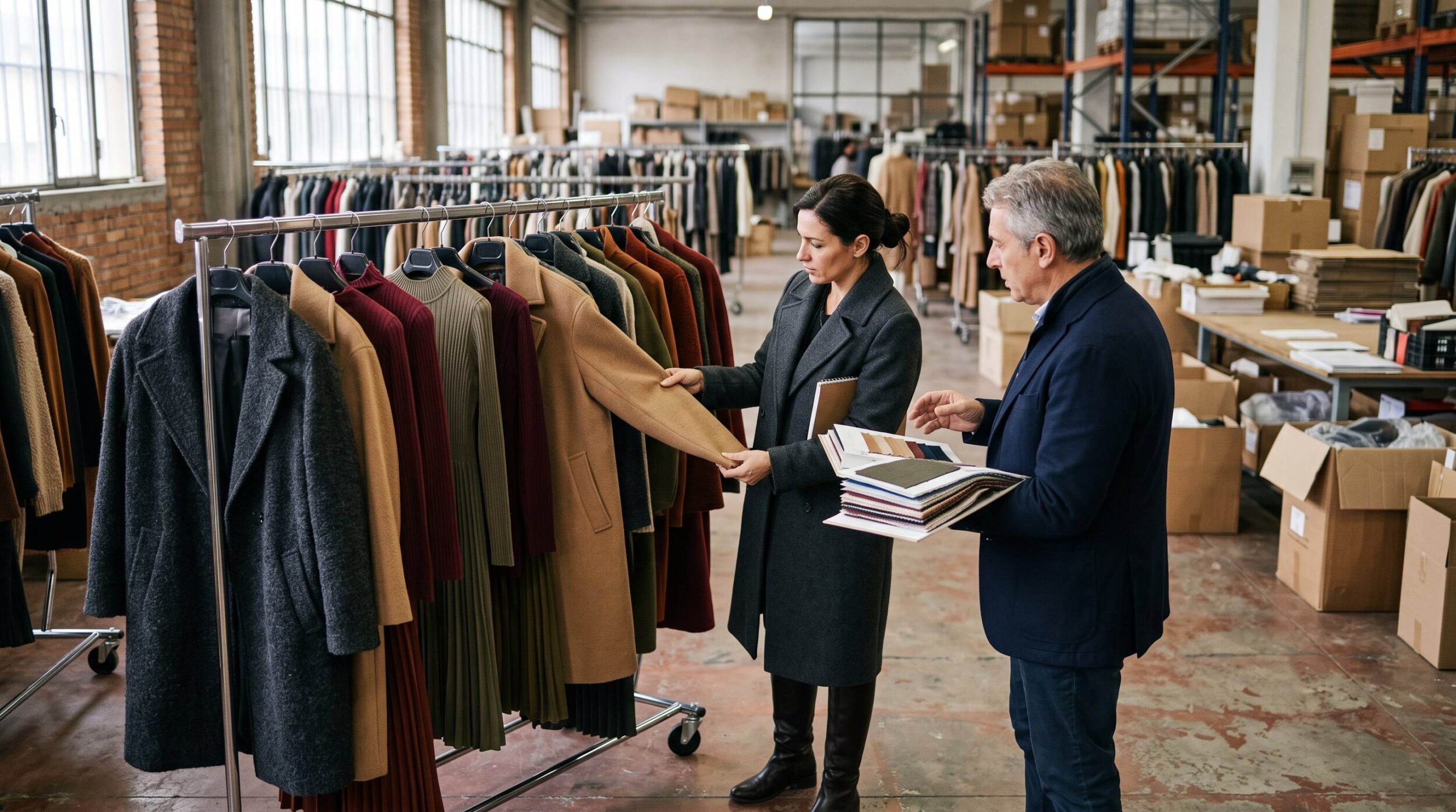
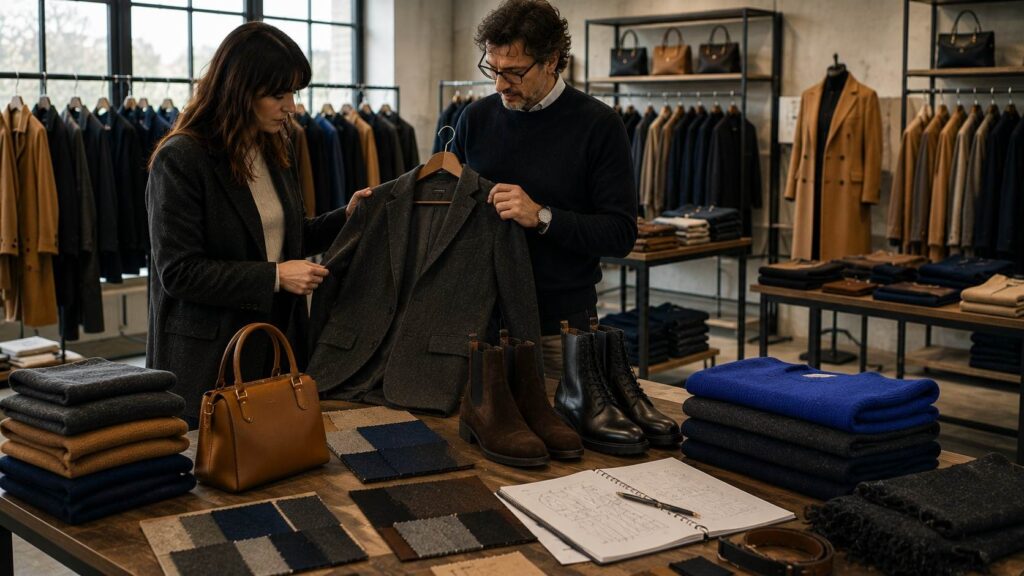
Shipping AW26/27 italian fashion wholesale orders involves a meaningfully different volumetric weight calculation than the SS26 linen and cotton pieces most boutiques sourced earlier in the year, and buyers who plan shipping costs using last season’s figures often underestimate their actual landed cost once heavier winter garments are packed and weighed. Structured coats, padded jackets and wool knitwear all take up more physical volume per unit than lightweight summer fabrics, which directly affects how shipping is calculated and priced.
This matters for boutique buyers finalising an AW26/27 budget this summer, since shipping is calculated on volumetric weight rather than a flat per-order estimate, and the seasonal shift toward bulkier garments means a buyer cannot simply carry forward a previous season’s shipping cost assumption without adjustment.
Why volumetric weight changes for AW26/27 orders
Shipping costs for italian fashion wholesale orders are calculated on volumetric weight, meaning the physical space a shipment occupies rather than its actual mass alone, which becomes particularly relevant once an order shifts from lightweight SS26 linen pieces to the bulkier coats, padded jackets and knitwear anchoring this season’s AW26/27 collections. A structured wool coat or a padded jacket occupies considerably more packed volume than a folded linen shirt, even when the actual weight difference between the two pieces is less dramatic than the volume difference suggests.
Buyers should expect this volumetric effect to meaningfully change their per-unit shipping cost compared with a similarly sized SS26 order, and building this into an AW26/27 budget early avoids an unwelcome surprise once a shipment is actually packed and weighed ahead of dispatch.
Regional shipping cost differences relevant to AW26/27 buyers
Shipping rates vary by destination region, with European deliveries generally costing less per kilogram than shipments to North America, and South America, Africa and Australia typically representing the higher end of the cost range given the longer transit distances involved. Buyers planning a heavier AW26/27 order should factor their specific destination region into early budget planning, since the volumetric weight increase from bulkier winter garments compounds differently depending on the base shipping rate for that particular market.
A boutique in a market with already higher base shipping rates per kilogram will see a more pronounced total cost increase from this season’s bulkier garments than a boutique shipping within Europe, which is worth modelling explicitly rather than assuming the percentage increase will be the same regardless of destination.
A buyer who sourced primarily SS26 linen and cotton pieces in a single, relatively lightweight shipment last season should not assume the same shipping line item this year, since both the volumetric increase and any rate changes since the previous season can compound into a noticeably different total figure than what was budgeted for the previous winter order.
Why packing cannot be estimated before the order is finalised
Shipping cost for any italian fashion wholesale order can only be confirmed accurately once the actual garments are packed and weighed, since volumetric calculations depend on the real dimensions of the finished shipment rather than a theoretical estimate based on unit count alone. This is particularly true for AW26/27 orders mixing categories with very different packed volumes, such as bulky padded jackets alongside more compact knitwear and accessories.
Buyers should treat any pre-order shipping estimate as a rough planning guide rather than a fixed figure, and build a reasonable buffer into their total AW26/27 budget to account for the actual packed volume potentially running higher than an early estimate suggested, particularly if heavyweight outerwear makes up a meaningful share of the order.
This uncertainty is exactly why working with an agent who consolidates and weighs the full shipment before finalising cost, rather than relying on a rough quote provided before any garments are actually packed, gives a buyer a more accurate final figure to work with when closing out the season’s overall budget.
Timing shipments to arrive ahead of peak winter selling
AW26/27 orders need to arrive with enough buffer before peak winter selling season for a boutique to receive, process and display new stock before customer demand for winter pieces is already at its strongest. Working backward from a desired in-store date, factoring in production lead time, transit time and customs clearance, gives a buyer a more realistic ordering deadline than simply placing an order and hoping it arrives in time.
This timing pressure compounds with the production lead times already described in the AW26 boutique buying calendar, since a buyer who delays placing an order loses time on both ends of the process: longer production waits and a narrower shipping window before the start of peak season.
Buyers in markets with longer transit times, particularly those shipping to North America, South America, Africa or Australia, need to start this backward planning earlier in the calendar than boutiques shipping within Europe, simply because the transit portion of the total timeline takes up a larger share of the available window before peak season begins.
Customs documentation specific to winter wholesale shipments
Customs documentation requirements remain broadly consistent across seasons, but the higher per-unit value typical of AW26/27 structured outerwear and leather accessories means accurate declared values matter more for this particular order than they might for a lower-value SS26 linen shipment. Underdeclaring value to reduce duties carries real legal and customs risk, and the consolidated invoice and export documentation process exists specifically to keep this part of the process compliant and straightforward for the buyer.
A single consolidated shipment covering an entire AW26/27 order, rather than multiple separate shipments from individual suppliers, simplifies customs processing considerably and is one of the practical advantages of sourcing through a single coordinated process rather than managing logistics with each Prato supplier independently.
How shipment consolidation affects total AW26/27 cost
Consolidating purchases from multiple Prato suppliers into a single shipment, rather than receiving separate deliveries from each showroom, generally produces a better overall shipping cost than paying for several smaller shipments individually, since volumetric shipping rates typically improve at higher consolidated volumes. This is particularly relevant for AW26/27 orders spanning several categories already covered in this season’s sourcing series, from structured outerwear and knitwear through to denim, texture pieces and accessories.
Buyers building an order across many of these categories in a single sourcing session benefit directly from this consolidation effect, which is one of the practical reasons a coordinated buying session tends to produce better total landed cost than sourcing each category as an entirely separate transaction with a different supplier and a different shipment.
This advantage is one of the less visible benefits of working through a single coordinated sourcing process rather than negotiating logistics separately with each individual supplier, since the cost savings from consolidation are not always obvious to a buyer until they compare the total landed cost against what several independent shipments would have cost combined.
Connecting shipping planning to the broader AW26/27 sourcing process
Buyers moving through an AW26 sourcing session in Prato benefit from discussing shipping and consolidation early in the process rather than treating it as an afterthought once purchasing decisions are already finalised, since the order composition itself affects how efficiently a shipment can be consolidated and packed.
A buyer who plans their category mix with shipping efficiency in mind from the outset, rather than purely optimising each category purchase in isolation, often ends up with a more cost-effective total landed price than one who only considers shipping logistics after every purchasing decision has already been made independently.
Building shipping cost into a realistic AW26/27 budget
Given that volumetric weight cannot be confirmed precisely before an order is packed, buyers should build a meaningful shipping buffer into their total AW26/27 budget rather than working from a tight, best-case estimate. This buffer matters more this season than for a lighter SS26 order, given how much bulkier this year’s structured outerwear and padded jackets are compared with the linen and cotton pieces driving most of the previous season’s volume.
Buyers should also confirm their specific destination region’s shipping rate early in the planning process, since this single variable affects the buffer size more than almost any other factor in the overall AW26/27 budget calculation, and planning around an inaccurate regional rate assumption is one of the more common sources of budget overrun in international wholesale sourcing.
Conclusion
For boutiques finalising their AW26/27 italian fashion wholesale order this summer, shipping deserves the same early planning attention as production timing and pricing, given how much the volumetric weight calculation shifts once bulkier winter garments replace the lighter SS26 pieces most buyers are used to budgeting around. Consolidating purchases across multiple Prato suppliers into a single coordinated shipment remains the most reliable way to manage this cost increase, and buyers who factor regional shipping rates and a realistic buffer into their planning avoid the kind of late-stage budget surprises that can derail an otherwise well-planned winter order.
Get Started
If you want an accurate landed cost picture before committing to your AW26/27 order, a guided sourcing session includes order consolidation and full export documentation as part of the process, not as a separate cost to plan around afterward. Start with a short interview at italianfashionsourcing.com/interview/ and we will help you plan a delivery timeline that lands well ahead of peak winter selling.