
What the Prato District Actually Does in Summer
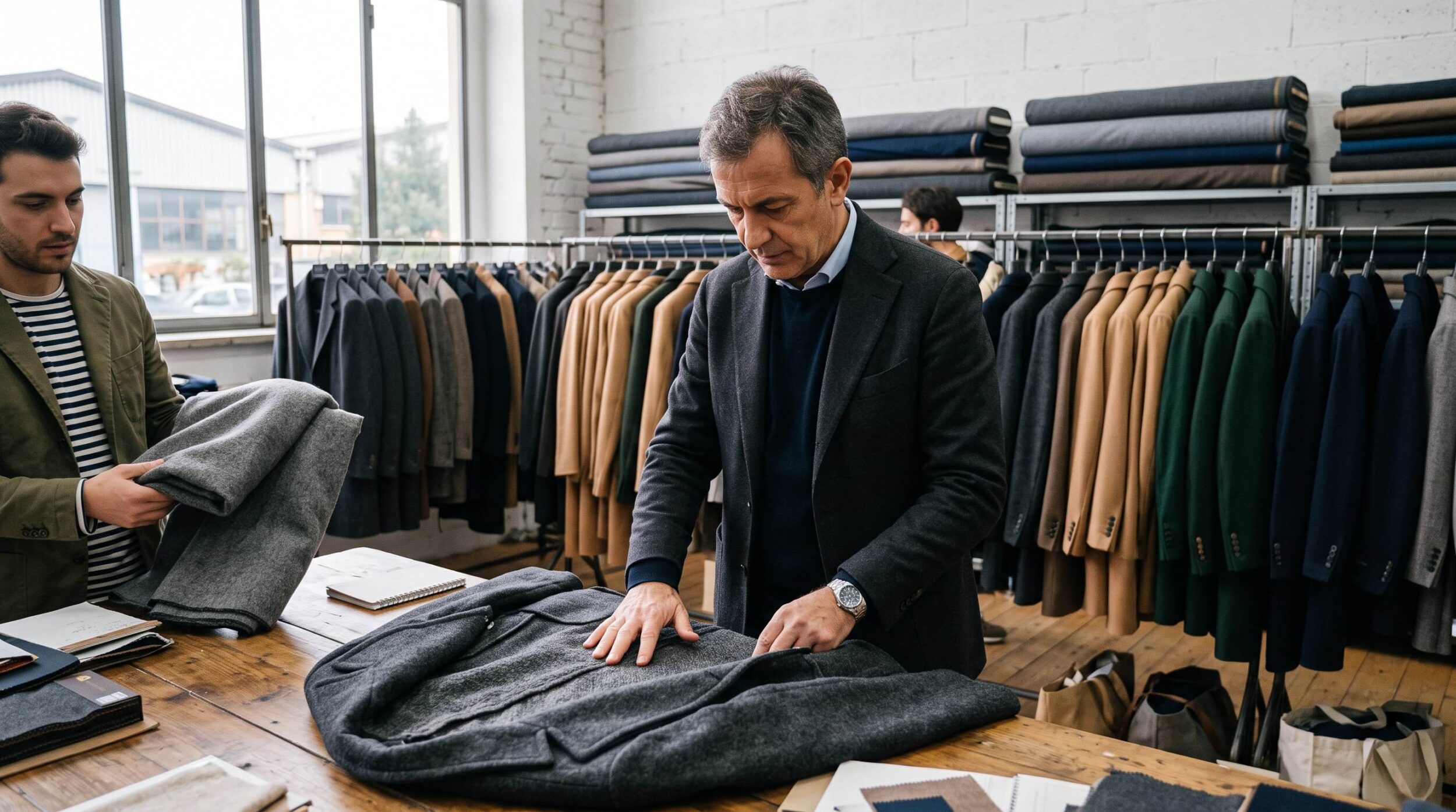
The common assumption is that Prato goes quiet in summer — that July and August are gap months between SS26 clearing and AW26 starting in earnest. That assumption is wrong. The district doesn’t pause; it transitions. And the transition starts earlier than most buyers working from trade show calendars would expect, which is why so many of them arrive in September thinking they’re early and find the best stock already committed.
From late June onward, Prato manufacturers begin two parallel activities. The first is the end of SS26 production, which means remaining summer stock is still being made and shipped, but the range is narrowing and the production emphasis is shifting. The second is the start of AW26 sampling and pre-production, which means the first autumn fabrics, trims, and garment constructions are appearing in showrooms months before the mainstream wholesale trade show season would suggest they should.
The reason for this early movement is structural. Prato’s pronto moda model is built on speed: short production cycles, minimal inventory holding, fast response to demand. That model requires suppliers to begin developing the next season’s product while the current season is still selling — otherwise the gap between seasons would be a genuine supply vacuum rather than a managed transition. The result is that the July-August window in Prato contains more new product than most buyers realise, if they know where to look and what to ask for.
The Fabrics That Work Best at the Seasonal Boundary
Transition-season buying requires a different fabric logic from peak-summer or peak-autumn sourcing. The fabrics that sell best across the summer-to-autumn boundary are those that read as current in both contexts — not so lightweight that they feel out of place in September, not so heavy that they can’t be sold in August. This is a narrower performance window than either peak season, and the fabrics that navigate it successfully tend to have specific physical characteristics.
The first category is the mid-weight linen or linen-cotton blend in deeper or earthier tones. A wide-leg trouser in a 180 g/m2 dusty terracotta linen coordinates naturally with summer tops in August and with autumn knitwear in September. The fabric weight gives it credibility in cooler temperatures while the linen content keeps it from reading as heavy. The colour palette does significant work here: the neutral, earthy tones that have been strong in SS26 translate directly into autumn without looking like leftover summer stock.
The second transition fabric category is the light jersey in natural tones — a fabric that most buyers associate primarily with autumn, but which the best Prato manufacturers have been producing in summer-weight versions designed specifically for the transition window. A fine-gauge interlock jersey in sand, slate, or deep ivory is warm enough to wear in September in northern European markets but light enough to sell from August in most boutique contexts. The jersey category also has the advantage of easy layering, which is the functional need that drives transition-season buying for many customers. Jersey and knit travel layers in SS26 have already established the format for this customer in summer — the autumn transition versions build directly on that established purchase pattern.
How Italian Wholesale Suppliers Manage the Seasonal Overlap
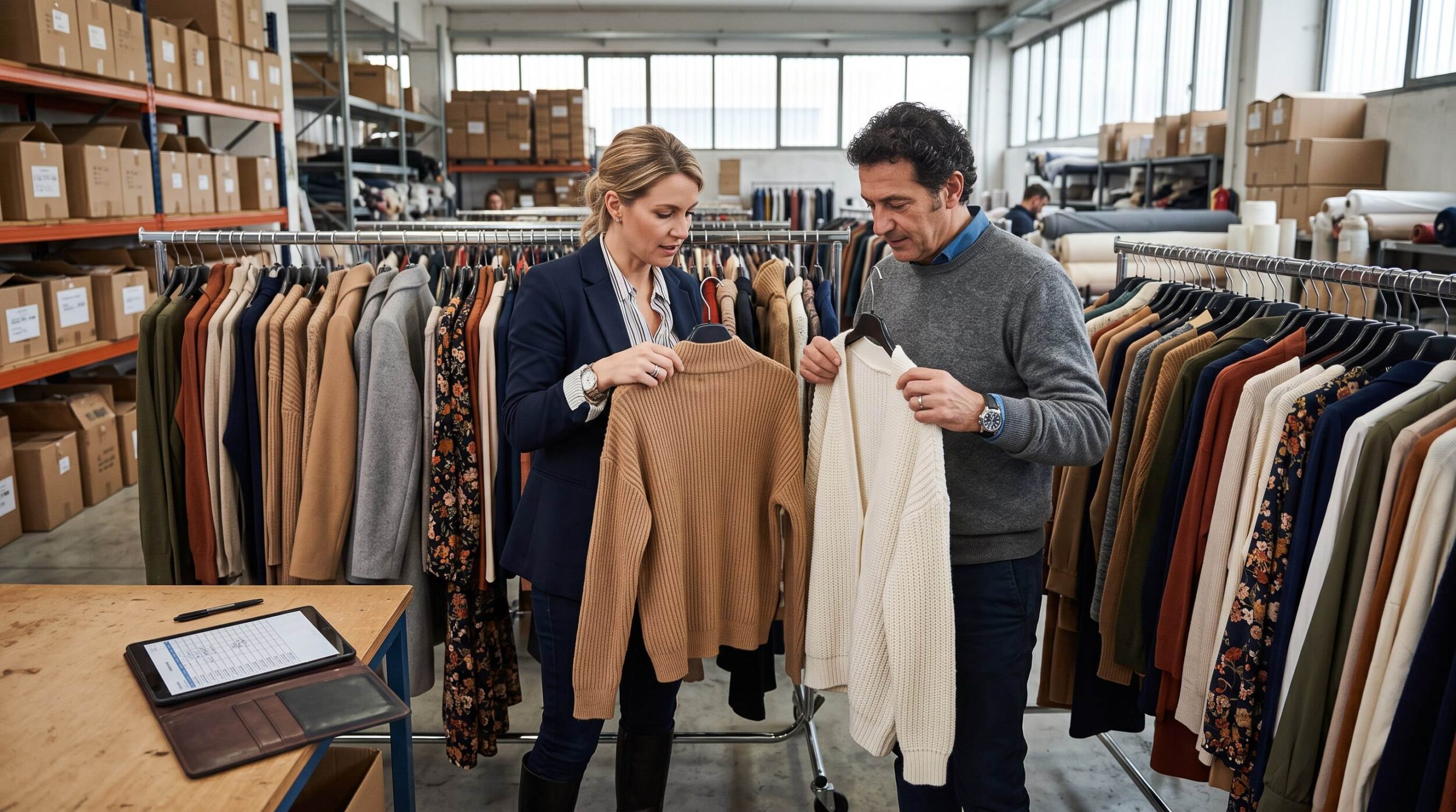
The practical mechanics of the transition period in Prato involve a specific kind of showroom navigation that buyers who haven’t worked through an agent in the district may not be aware of. During June, July, and early August, most Prato showrooms carry a mixed range: SS26 final stock on one part of the rail, transition pieces and early AW26 arrivals on another. These categories are not always clearly labelled, and the distinction matters — SS26 final stock has a limited shipping window, while early AW26 pieces have more flexibility on timing.
The production hierarchy during this period is also relevant. Prato manufacturers prioritise AW26 production for buyers who have placed confirmed orders. This means that the buyers who take early AW26 positions — even modest ones — have first access to the best production capacity, the preferred fabrics, and the size distributions that haven’t yet been broken by other buyers. The buyers who wait until September or October are sourcing from the remaining production capacity, which is smaller and carries more constraints.
Understanding this production hierarchy is one of the core arguments for using a local sourcing agent during the transition period. An agent with ongoing relationships in the district knows which suppliers are moving aggressively into AW26 production, which are still clearing SS26, and which have genuine transition pieces that work for both contexts. That navigational knowledge is the practical advantage that makes the difference between arriving in Prato during this window and finding the right product, versus arriving and seeing only the end of summer stock.
Transition Garment Formats That Cross the Seasonal Boundary
Beyond fabric, the garment formats that sell through the transition period most effectively have specific construction characteristics. The lightweight blazer or unstructured jacket has been one of the strongest transition performers in recent seasons, and SS26 has reinforced that. A relaxed single-button blazer in a mid-weight linen-cotton blend or a light wool-cotton can be worn in August evenings, September days, and early October depending on the climate — a three-month selling window that most summer-specific garments cannot match.
The overshirt format — which had a strong SS26 season as a layering piece over summer dresses — also crosses the boundary well when it’s produced in a slightly heavier fabric or a more structured construction than the pure summer versions. A cotton overshirt at 220 g/m2 reads differently from the same silhouette at 140 g/m2: the heavier version is a jacket equivalent in mild weather, not just a shirt layer. This category works well for boutiques because it allows the floor to carry the silhouette that customers already know from summer in a weight that serves the new season.
The Italian overshirt and shirt dress formats from SS26 have built customer familiarity with the silhouette, which is an asset for transition buying — the customer doesn’t need to be introduced to the garment category, only to a new version of it in an appropriate fabric weight. Buyers who track which overshirt and light layer formats worked in their stores this summer have a strong basis for selecting the right autumn equivalents.
How to Access Transition Stock From Prato Effectively
The most efficient way to access transition-season stock from Prato is through a sourcing agent who is present in the district during the transition window and can navigate both the remaining SS26 inventory and the early AW26 availability simultaneously. The alternative — waiting for the main trade show season in September and October and sourcing from whatever is still in production — produces worse outcomes on fabric quality, size availability, and lead time, every time.
A transition sourcing session typically covers three objectives: closing out any final SS26 positions that still make commercial sense, identifying the transition fabrics and garment formats that bridge the seasons for your specific customer, and placing early AW26 orders in the categories where lead time and production access are critical. These three objectives can be addressed in a single structured session, provided the agent preparation work has been done in advance — identifying which suppliers are producing what, what minimum quantities look like, and which colourways and fabric stories are most relevant to the buyer’s market.
For buyers who haven’t used a Prato-based agent before, the transition window is a good entry point. It’s a lower-pressure buying moment than the peak SS26 sessions in February and March, the range is more curated, and the strategic value of getting early access to AW26 production is immediately visible. The Italian Fashion Sourcing process is structured to accommodate this kind of multi-objective session, with the preparation work done before the session so the buying time is spent on selection rather than orientation.
If you want to use the transition window to get ahead of AW26 while still closing out summer, Italian Fashion Sourcing can structure a session that covers both. The preparation work and supplier navigation are handled before you join the session, so you spend your time on selection. Book the introduction call at italianfashionsourcing.com/interview/ to set it up.