
Why the Coord Set Has Outlasted Every Season That Was Supposed to End It
Fashion retail has been calling the end of the coord set for about three seasons. Editorial coverage has dropped since the 2023–2024 peak, when matching sets were framed as the defining trend of that moment. But boutique sell-through has not followed the press coverage down. The coord keeps selling. Not because it’s fashionable in the trend-report sense — it isn’t, particularly — but because it solves a real problem for the customer. Practical solutions are harder to kill than trend reports suggest.
The problem the coord solves is decision fatigue at the point of purchase. When a customer picks up a matching top and trouser as a unit, she has resolved the outfit question before she leaves the store. She doesn’t need to imagine what the top works with or whether she has the right bottoms at home. The coord is the complete answer. For boutiques, this translates into higher conversion rates on floor traffic because the buying decision is simpler, and into lower return rates because the customer’s expectation of how the outfit will look is set by the set itself rather than by her reconstruction of a pairing she thought would work.
The format also generates a specific kind of basket economics that benefits boutique buyers. When a customer buys a coord as a set, the average transaction value is higher than a single-piece purchase, and the margin per transaction is comparable or better because the total unit cost is lower than two separately sourced pieces at the same retail price. Italian pronto moda suppliers have understood this dynamic for several years, and the quality of coord set production at mid-market price points has improved meaningfully as a result.
The Configurations That Generate the Best Sell-Through
Not all coord formats perform equally. Within the category, the configurations that have generated the most reliable sell-through across SS26 boutique markets are identifiable, and understanding which ones work in which retail contexts helps buyers make better selection decisions rather than treating all coord sets as interchangeable.
The trouser-and-blouse configuration — wide-leg or straight-leg trouser paired with a relaxed shirt or blouse in the same fabric — has been the strongest performer across the broadest range of boutique types and markets. The format works because it’s occasion-neutral: the customer can wear it dressed up for an event or dressed down for a weekend lunch. The trouser can be worn with other tops in the customer’s wardrobe, which reduces the perceived risk of buying the piece even though she intends to wear it as a set. Linen coord sets in smart-casual summer contexts have delivered consistent sell-through precisely because this versatility reduces the barrier to purchase.
The second strongest configuration is the skirt-and-jacket or skirt-and-blazer coord in a mid-weight fabric — categories that are primarily relevant to autumn buying but worth noting here as an early AW26 planning reference. The third is the shorts-and-top set in a lighter fabric, which has performed well in resort and younger-customer-skewing boutiques but more slowly in stores targeting the 35-plus demographic. Buyers who serve both customer groups often find that the trouser-and-blouse format bridges the age range more effectively than the shorts configuration.
How Prato Produces Coord Sets and Why It Matters for Buyers
Understanding how coord sets are produced in the pronto moda system matters for buyers because it affects how you manage the buying decision — specifically, the trade-off between buying the set together versus buying tops and bottoms separately from different suppliers.
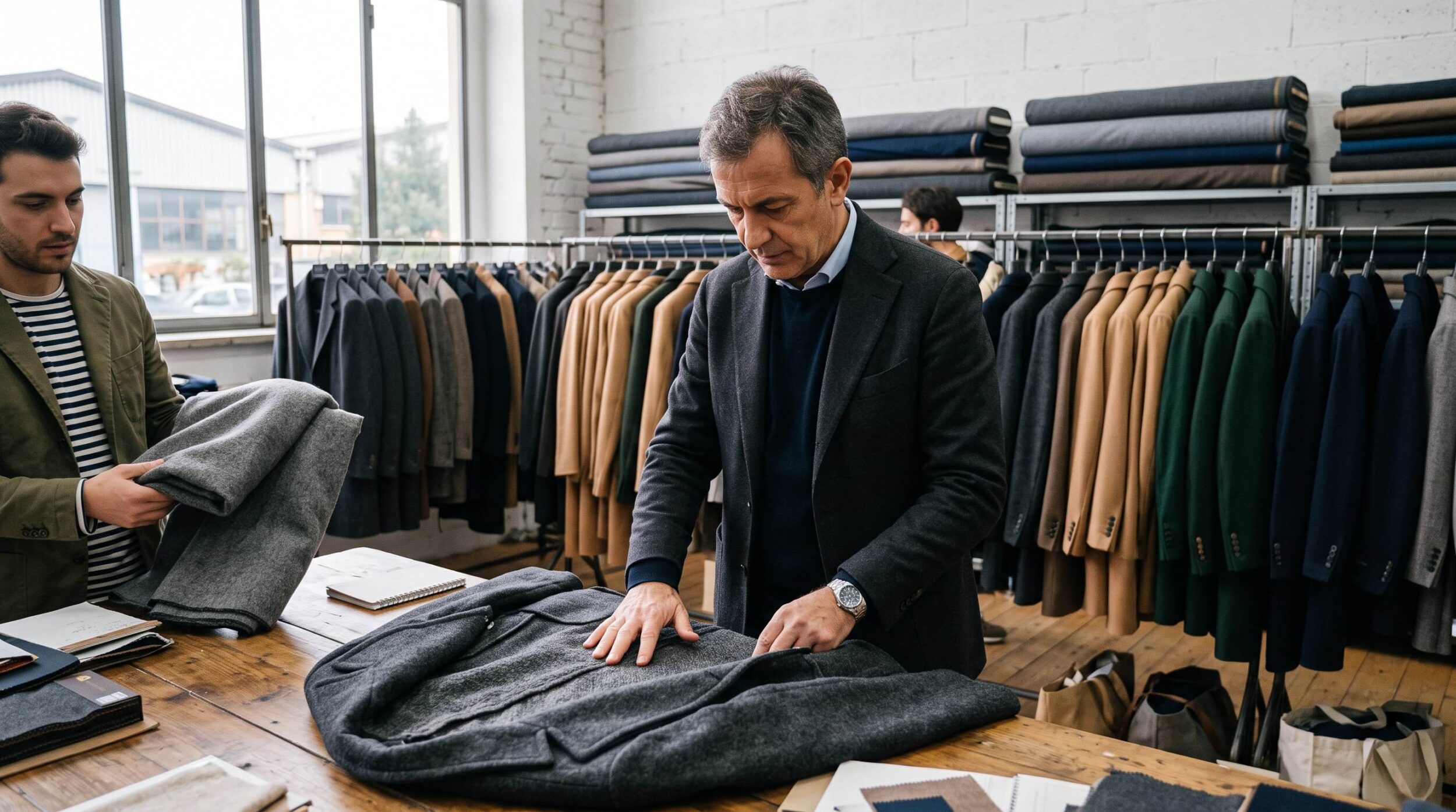
Most Prato manufacturers produce coord sets as integrated units: the top and bottom are cut from the same fabric batch, which ensures colour consistency and print registration across the pieces. This is not always the case when a buyer attempts to approximate a coord by combining pieces from two different suppliers who happen to be using the same fabric. Small dye-lot variations and print registration differences between batches can make the pieces read as ‘almost matching’ rather than as a genuine set — which customers notice immediately on the floor.
The practical implication is that buying coords from suppliers who produce them as integrated units is almost always preferable to constructing a coord from separate sources. The minimum quantities in the Prato pronto moda segment for coord sets are typically six to twelve sets per style, with size distribution determined by the buyer. This is a lower minimum than many international buyers expect, and it makes coord buying accessible even for boutiques with limited depth-buying capacity. The quality advantage of integrated production is worth prioritising even if the per-set price is slightly higher than a self-constructed alternative.
The Capsule Logic Behind the Coord Format
The coord is one expression of a broader floor strategy that has been gaining ground in boutiques over the past several years: building around outfit solutions rather than individual pieces. Instead of a large number of separates and hoping the customer discovers the combinations, a capsule floor carries fewer pieces that are already in conversation with each other. The customer sees an outfit, not a puzzle.
The coord set is the most explicit version of this approach, but the same logic extends to groupings of separates bought with intentional pairing in mind. A linen blouse, a pair of matching-tone linen trousers, and a coordinating printed overshirt bought from the same or complementary suppliers, displayed together as a capsule unit, generates a similar buying-decision simplification for the customer even though the pieces are technically separate. The customer sees an outfit rather than individual options, and the conversion logic follows the same pattern as the formal coord.
For buyers planning AW26, this capsule logic provides a useful framework for the autumn buy. Rather than thinking about individual categories in isolation, the question becomes: what outfit solutions do I want to offer my customer for autumn? The choice between ready-to-wear and private label takes on a different character in this framework — private label allows a boutique to create a true capsule with complete design control over each piece, while ready-to-wear buying requires the buyer to identify the capsule-forming opportunities across what suppliers are producing.
Building a Coord Position That Works Across Seasons
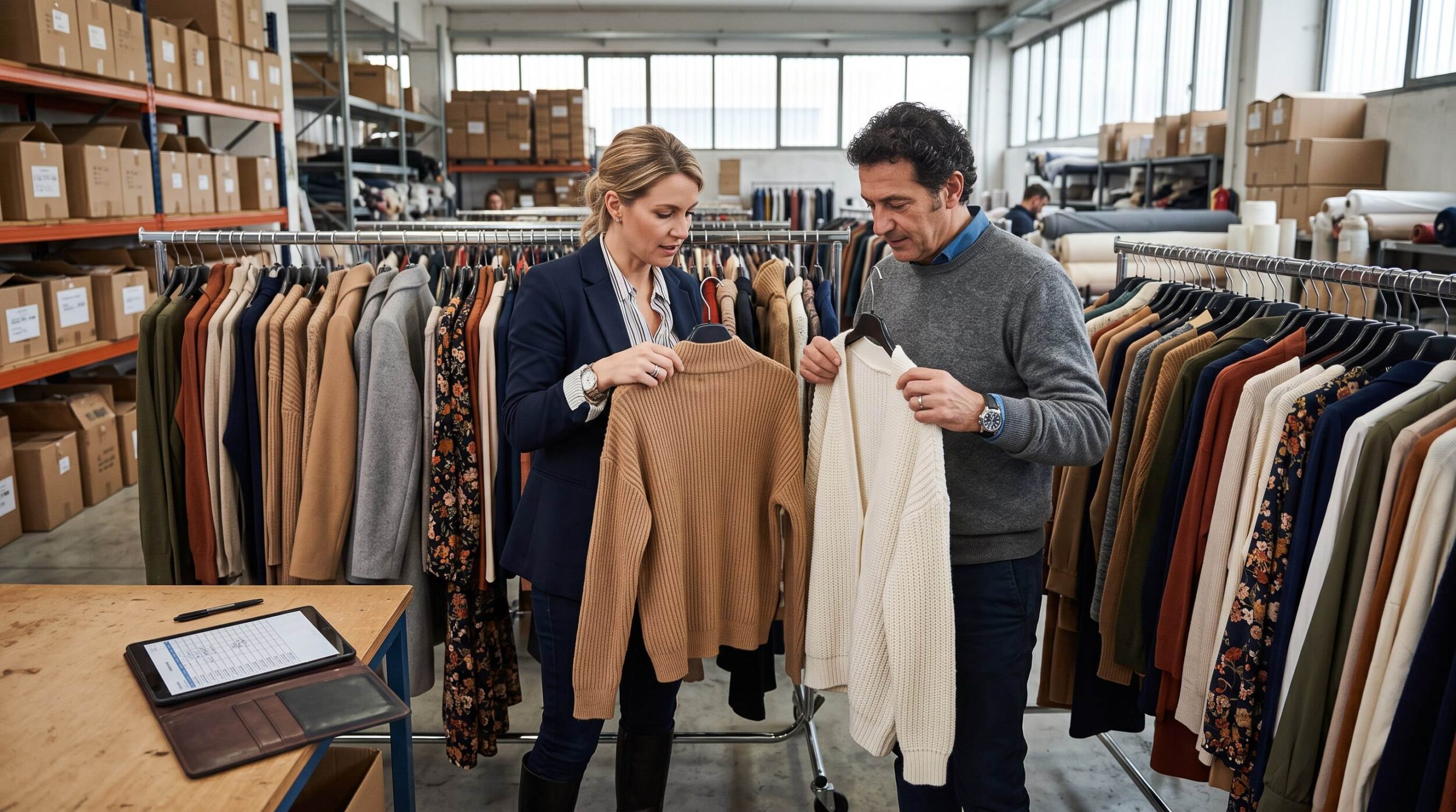
The coord set is one of the categories where buying discipline makes the biggest difference to outcomes. Because the format is popular and widely available in Prato, the temptation is to buy broadly across multiple suppliers and configurations. But a boutique floor with too many coord options loses the decision-simplification advantage that makes the format work — when there are fifteen different coord sets on the floor, the customer faces the same selection problem she was trying to avoid.
A tighter coord position — eight to twelve sets across two or three clear colour or fabric stories — performs better than a sprawling collection because it allows the floor to show the outfit logic clearly. Each story should have enough depth in the key sizes to create a complete floor presence without requiring markdown to clear. The buying discipline is to resist adding more styles once the core position is established, and to go deeper in the styles that are already working rather than adding variety for its own sake.
This discipline transfers directly to AW26 planning. If the coord format has been working in your store this summer — and for most boutiques in the mid-market, it has — the autumn buy should include a coord position with the same structural logic: a small number of coherent stories in fabrics that work for the season. Working with Italian Fashion Sourcing for AW26 sourcing allows buyers to identify the coord formats that Prato is producing for autumn and to build the story structure before committing to specific pieces.
If you want to build a coord position for AW26 with the same commercial structure that’s working this summer, the introduction call at italianfashionsourcing.com/interview/ is where we start. We’ll identify which Prato suppliers are producing the best autumn coord formats and work out the capsule logic that fits your customer and price architecture.