

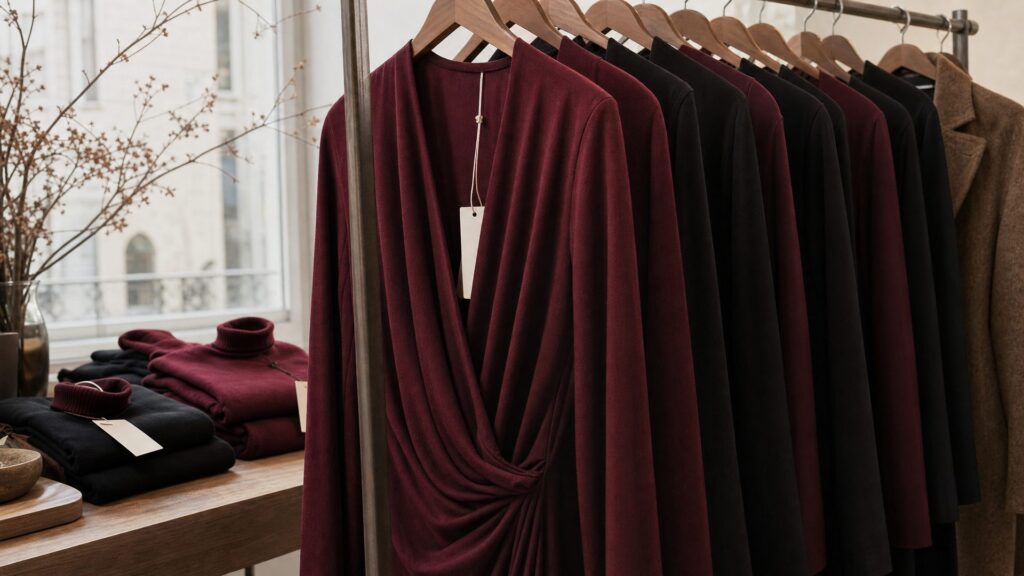
Viscose for winter sounds like a contradiction to anyone who knows the fabric from summer dresses, and the question of whether it can keep someone warm is one of the most common fabric searches once the temperature drops. The short answer is that viscose is not a warm fibre in itself, yet it appears all over winter collections in knit blends and jersey dresses. Both statements are true at the same time. This guide explains how viscose behaves in the cold, where it performs well and where it does not, how it compares with wool and polyester, and how buyers can source winter pieces built on it.
How Warm Viscose Really Is in Cold Weather
Viscose is a regenerated cellulose fibre, made by dissolving wood pulp and spinning it back into filaments, so in chemical terms it is close to cotton rather than to wool. Its fibres are smooth and dense, with no natural crimp, which means a viscose fabric traps very little still air. Trapped air is what insulates, and this is the main reason viscose feels cool on the skin and drapes so fluidly. A woven viscose dress worn alone on a cold day will not hold body heat the way a wool knit does, and anyone who expects it to will be disappointed as soon as they step outside.
Warmth in a garment, however, depends on construction as much as on fibre. A heavy viscose jersey, a double knit or a brushed viscose blend holds more air than a fine woven crepe, and it feels noticeably warmer. When viscose is blended with wool, the wool supplies insulation while the viscose adds softness and drape. So the honest answer to whether viscose is warm is that it is not warm on its own, though it can be part of a warm garment. The weight of the fabric and what it is blended with matter far more than the word viscose on the label.
Viscose for Winter Indoors: Moisture and Static
Winter is not only spent outdoors, and indoors viscose has real advantages. It is one of the most absorbent cellulose fibres, taking up more moisture than cotton, so it feels comfortable in warm offices and heated shops, where people move between cold streets and overheated rooms. Synthetic fibres such as polyester absorb almost no moisture, which is why they can feel clammy after a few hours indoors. Viscose also builds up much less static than polyester or acrylic, a practical benefit in the dry air of heated buildings, where synthetic dresses tend to cling to tights and crackle when they are taken off.
The weak point is what happens when viscose gets properly wet. Unlike wool, which can absorb a large share of its own weight in vapour before it feels damp, a viscose garment soaked by rain or sweat feels cold against the skin and dries slowly. Viscose also loses a large part of its strength when wet, so it stretches and can shrink in the wash. For winter wear this means viscose works best as a layer that stays protected under a coat. Washing should be gentle and cool, without wringing, and knits should be dried flat so they keep their shape for the whole season.
Viscose Knitwear and Winter Blends
Viscose knitwear is everywhere in winter collections, and the reason is mostly handle. Blended with polyamide, viscose produces fine, soft knits with a fluid drape and a slight sheen that feel pleasant against the skin, which is why it is common in roll necks and close-fitting knit dresses. These blends are not as warm as wool, but they work very well as a base layer under jackets and coats. Customers who find wool itchy often prefer them for that reason. Viscose also appears in wool and viscose blends, where it softens the hand of the wool and lowers the price of the finished piece.
Viscose is less resilient than wool in a knit, and that affects how the garment ages. Viscose blend sweaters can lose shape at the cuffs and hems if they are hung while damp or washed too warm, and loose knits with low twist yarns may pill where they rub. Reading the composition label tells the story quickly. A knit that is mostly viscose and polyamide will be soft and fluid with moderate warmth, while one that combines viscose with wool or a share of cashmere will be noticeably warmer. Composition labels in pronto moda are short, so it pays to read them every time.
Viscose vs Wool vs Polyester for Winter
Comparing the three fibres makes their roles clear. Wool is the warmest of the group, thanks to its crimp and its ability to absorb moisture vapour while still feeling dry, and it stays reasonably warm even when slightly damp. Polyester is inexpensive and durable, and when it is brushed or made into fleece it can be very warm, but it does not absorb moisture and it builds static easily. Viscose sits between them. It is softer and more breathable than polyester and cheaper than wool, but it offers little insulation unless it is knitted thick or blended with a warmer fibre.
So viscose vs wool is not really a contest for outdoor warmth, where wool wins clearly, while indoors and in layering viscose often feels more comfortable than polyester. The fibre that answers the question of viscose fabric for winter or summer is the same one, used in a different construction. In summer it is woven light and open, as described in our comparison of breathable summer fabrics, and in winter it is knitted heavier or blended with wool. Understanding that distinction helps customers buy viscose pieces for the right moments of the year.
Layering Viscose Dresses Through the Cold Months
The most successful winter viscose pieces are dresses, and their success comes from layering. A long-sleeved viscose jersey dress worn with opaque tights and a wool coat is warm enough for most city winters, and the fluid fabric moves well under outerwear without adding bulk. Printed viscose midi dresses carry summer patterns into autumn when worn with a fine knit on top, while plain viscose crepe dresses in deep colours work for evenings and holiday events. Our overview of winter fashion trends for 2026 and 2027 shows how fluid dresses sit alongside heavier textures in this season’s collections.
Buying Viscose Winter Dresses and Knits in Prato
For boutique buyers, viscose is one of the most accessible fibres in Prato pronto moda through the winter. Wholesalers offer viscose jersey dresses, printed midi dresses, viscose and polyamide knits and wool blend sweaters from early autumn, with minimums usually between €300 and €500 per warehouse and two to twelve pieces per style. Viscose pieces tend to sit at accessible price points, which makes them useful for filling the middle of a winter assortment between statement coats and premium knitwear. Blends are the rule rather than the exception, so composition labels must be read on every style.
The checks are simple but they matter. Buyers should look at the weight of the jersey and the stretch recovery of the knits, since a viscose dress that loses shape after a few wears comes back as a complaint. Payment is 100% before shipment and unsold goods cannot be returned, which makes careful selection essential. In a live buying session we show each piece on video and read the labels on camera for the client, then consolidate purchases from several wholesalers into one invoice and one shipment under DAP terms, for a 10% commission on the value of the goods.
Making Viscose for Winter Work in Practice
Viscose will never replace wool as an insulating fibre, and it should not be sold as one. Its value in the cold season lies elsewhere. Soft viscose knits sit comfortably under coats and layer easily with dresses, while blends let wool provide the warmth and viscose the drape. Customers who understand that distinction stop asking whether viscose is warm and start asking how a particular garment is built. Chosen with attention to weight and blend, viscose for winter becomes a comfortable and practical choice that keeps a favourite summer fibre working through the colder months of the year.



