

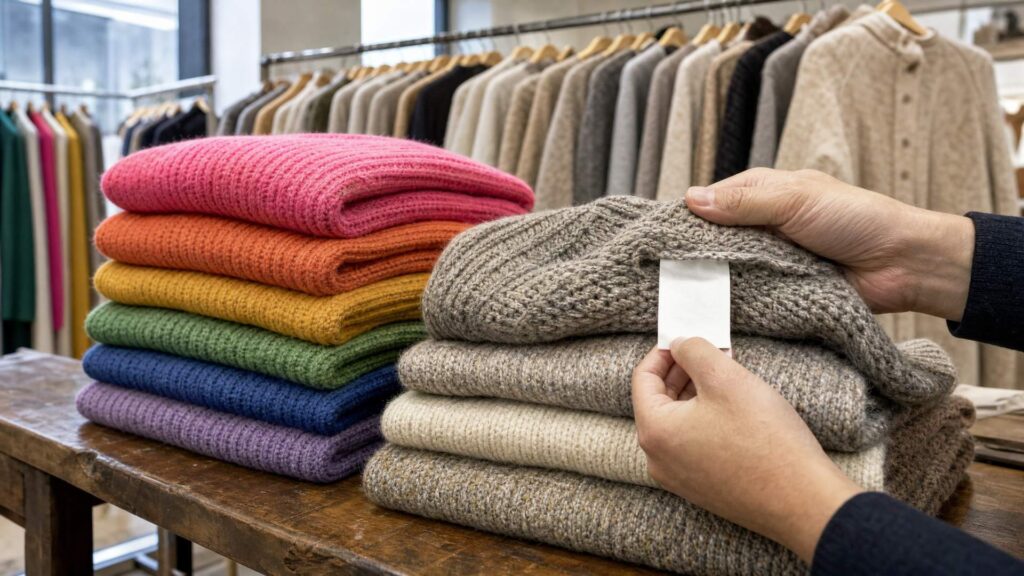
The short answer to whether acrylic is warm is yes, at least when it is dry. Acrylic was developed in the middle of the twentieth century as a substitute for wool, and its fibres are produced with a crimp and bulk that trap air in much the same way. A thick acrylic sweater can feel cosy on a cold, dry day, and it costs a fraction of a comparable wool knit. The longer answer depends on moisture and on how long the garment is expected to last. This guide compares acrylic with wool, explains why the two are so often blended, and shows how to read the label before buying.
Is Acrylic Warm: How the Fibre Insulates
Warmth in any sweater comes mainly from still air held inside and between the fibres, and acrylic is engineered to be good at this. It is a synthetic fibre made largely from acrylonitrile, a compound derived from petrochemicals, and it is spun into yarns that are soft and voluminous. Weight for weight, a bulky acrylic knit can insulate surprisingly well, which is why it has long been used for blankets and inexpensive winter jumpers. It is also colourfast, takes bright dyes evenly and does not attract clothes moths, practical advantages that explain its popularity across the whole knitwear market.
The weak point is moisture. Acrylic absorbs very little water vapour, roughly 1 to 2 percent of its weight under standard conditions, compared with around 16 to 17 percent for wool. When the body warms up and starts to perspire, that vapour cannot be taken into the fibre and sits on the skin instead. The wearer feels clammy, and once the activity stops and the dampness cools, the sweater feels colder than its thickness suggests. Wool behaves differently, absorbing vapour into the fibre and releasing it slowly, so it keeps insulating while the wearer moves between a cold street and a heated shop.
When comparing warmth in a shop, thickness and knit structure reveal more than fibre names. A dense, chunky acrylic sweater will outperform a thin, loosely knitted wool one in dry cold, simply because it holds more air, while a fine gauge acrylic jumper offers little insulation at all. Holding the knit up to the light shows how open the structure is, and the weight in the hand gives a rough idea of how much fibre is there. For a fair comparison between acrylic and wool, garments of similar thickness and gauge should be set side by side, and in that test wool usually keeps the advantage over a full day of wear.
Acrylic vs Wool on Breathability and Comfort
Breathability is where the comparison between acrylic and wool becomes most noticeable in daily wear. Wool regulates the microclimate between skin and garment, which is why a merino sweater feels comfortable over a wider range of temperatures and resists odour better than most synthetics. Acrylic is fine for a short walk in dry cold, or for sitting still, but in a crowded train or during a long day on foot it tends to feel sweaty. It also builds up static electricity in dry winter air, which makes it cling and attract lint. For people who run warm, these differences matter more than any number on the label.
Softness is less clear cut. Acrylic can be spun very fine and finished to feel smooth and supple, and an acrylic sweater does not cause the prickle that coarse wool fibres produce, since that sensation depends on stiff fibre ends above roughly 30 microns pressing on the skin. For customers who find cheap wool scratchy, a soft acrylic or an acrylic and wool blend can actually be the more comfortable choice. Fine merino now offers the same comfort with far better moisture handling, but at a different price point, and that trade-off is the real choice facing most shoppers.
Acrylic Pilling and Sustainability
Pilling is the most common complaint about acrylic knitwear. Friction pulls fibre ends out of the yarn and twists them into small balls, and because acrylic fibres are strong, those balls stay anchored to the surface instead of breaking off as weaker natural fibres often do. Loosely spun, brushed yarns pill the fastest. A fabric shaver removes the pills, and washing the sweater inside out on a gentle cycle slows the process. Acrylic is easy to look after in other respects, since it is usually machine washable and does not shrink, but high heat can permanently soften and stretch it, so tumble drying and hot irons are best avoided.
Sustainability is the strongest argument against acrylic. It is made from fossil resources, it does not biodegrade in any practical timescale, and recycling of knitwear acrylic remains very limited. Research at the University of Plymouth found that acrylic fabric released more microfibres during domestic washing than polyester and polyester cotton fabrics tested alongside it, adding to microplastic pollution in rivers and seas. Wool is renewable and biodegradable, though its footprint depends heavily on how sheep are farmed and how the fibre is processed. A garment worn for many winters is still a better outcome than a cheap one discarded after a season, whatever the fibre.
Why Acrylic Appears in Wool Blend Knitwear
Most acrylic in fashion knitwear is not used on its own but blended. Adding acrylic to wool lowers the cost of the yarn, increases bulk without adding weight and can make the garment easier to wash. Polyamide is often added as well for strength and abrasion resistance, and viscose brings drape and a smoother hand. A well designed wool blend knitwear piece takes advantage of each fibre, so a sweater with a majority of wool and a share of polyamide can be tougher and more stable than pure wool at a similar weight. The proportions are what decide the result, which is why the label matters.
Reading a knitwear composition label is simple once the rules are clear. In the European Union every garment must list each fibre and its percentage by weight in descending order, so the first fibre named is always the dominant one. Very small components can be grouped as other fibres within strict limits. On Italian labels, acrilico is acrylic and lana is wool. A sweater labelled 50% acrilico and 30% lana will behave mostly like acrylic, while one labelled 80% lana and 20% poliammide, the Italian term for polyamide, will behave like wool. Words such as wool touch or cashmere feel on a hangtag say nothing about composition.
Acrylic and Wool Blends in Prato Knitwear: Honest Guidance for Buyers
In Prato pronto moda, acrylic and wool blends cover a large share of the entry and middle price levels, because they allow on trend shapes and colours at prices a boutique can mark up comfortably. Our analysis of what different price points buy in Prato knitwear shows how composition shifts as the price rises, from acrylic-rich yarns towards wool and noble fibre blends. The broader guide to Italian knitwear wholesale explains styles and timing. Our honest advice is to buy acrylic blends for what they are, fashion pieces with a seasonal life, and to price and describe them accordingly.
In practice, garments that are mostly acrylic should never be sold with wool language, and the wool-rich pieces belong with clients who expect warmth and longevity. In low cost pronto moda, up to 5% of pieces may show minor irregularities, an accepted standard of the segment, so the label and finish deserve a check before purchase. Prato minimums are usually €300 to €500 per warehouse with two to twelve pieces per style, which allows a boutique to balance both levels in one order. Retailers who want a specific composition under their own name can explore private label production in Italy.
Is Acrylic Warm Enough for Winter: The Verdict
Acrylic is warm in dry, still conditions and loses ground to wool as soon as moisture and movement come into play. It is light and inexpensive and washes easily, yet it breathes poorly and pills readily, and its environmental cost is heavier. Wool regulates temperature better and lasts longer, while blends sit between the two depending on their proportions. For shoppers, the composition label is the most reliable guide to how a sweater will actually perform. For boutiques, the answer to whether acrylic is warm becomes a question of positioning, where clear labels and honest descriptions keep both blends and wool knits selling.



