
Reading AW26 Before the Trade Shows Arrive
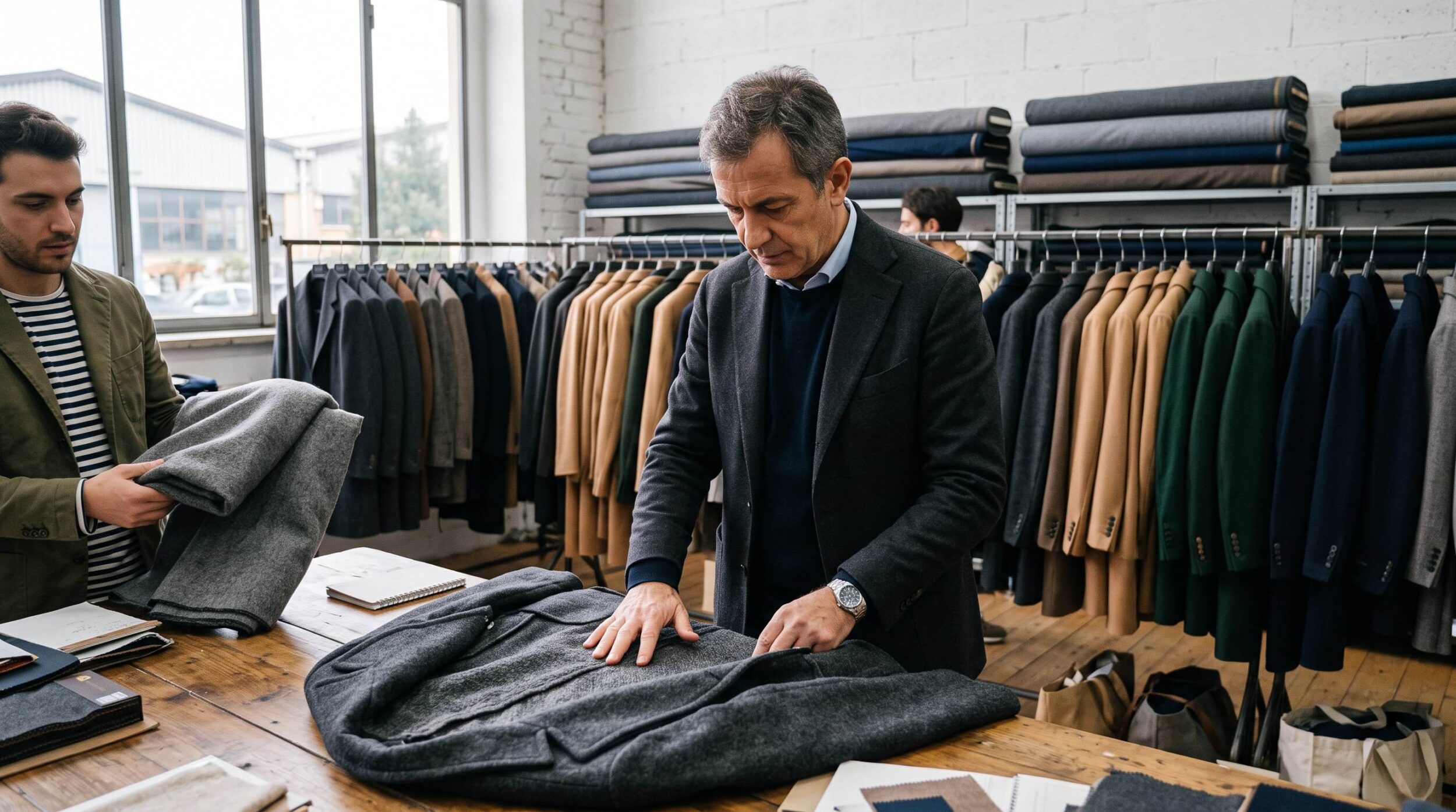
The conventional sourcing calendar says AW26 starts in September, when the trade shows open. For buyers working directly in Prato, the direction is readable from mid-summer — not in finished collections, but in the fabric arrivals, trim orders, and first sample production that precede the formal season. It’s incomplete information, but it’s real information. And it comes several weeks before most buyers have started paying attention.
What arrives in Prato showrooms during July and August is not always polished or complete. Samples may not have final labelling or packaging. Colourways may still be in development. But the core material directions — the fabrics that manufacturers are investing in for AW26, the textures they’re prioritising, and the price points they’re building toward — are already visible for those who know how to read an unfinished showroom. That early visibility typically translates into better production access, preferred size distributions, and the ability to place orders before the most commercial styles are committed to other buyers.
The AW26 direction emerging from Prato this summer reflects both continuity with recent seasons and some deliberate shifts. The broad movement is toward fabrics with more tactile interest than the clean, lightweight materials that dominated SS26 — textures that read as warmer and more substantial without returning to the heavy, structured aesthetics of several seasons ago. The mid-weight, fabric-forward, outfit-conscious direction that characterised the best SS26 buying continues, translated into materials appropriate for cooler temperatures.
The Fabric Categories Moving to the Front for AW26
Three fabric categories are showing the most consistent early movement across AW26 production in Prato. The first is brushed or peached jersey in mid-weight constructions. Jersey has always been a Prato strength, and the AW26 versions arriving in summer carry more tactile interest than the standard autumn jersey of recent years — the brushing and peaching treatments create a softer, slightly fluffy surface that reads as premium without requiring a significant price increase. This fabric is appearing in relaxed trouser formats, oversized jacket constructions, and the kind of soft blazer that crosses the work-casual boundary.
The second category is medium-weight woven viscose-linen blends in deeper colour stories. The linen-viscose combination that performed strongly in SS26 is being continued for AW26 in heavier constructions with darker palettes — forest greens, deep burgundies, chocolate browns, and the soft slate tones that have been building across Italian wholesale over the past two seasons. These fabrics carry the drape and movement of the summer viscose-linen but with enough weight to work as genuine autumn fabrications. The Prato manufacturers producing in this category are building on the commercial confidence they developed in SS26 linen-viscose and extending it into the colder months.
The third category is textured woven fabrics in jacquard or small-scale weave structures — not the bold brocades of a few seasons ago, but quieter surface interest: a small geometric dobby weave, a tonal herringbone in a soft palette, a lightly slubbed linen-wool blend. These fabrics are performing a specific retail function: they allow garments to be priced at a slight premium over their plain equivalents because the surface detail reads as more considered and deliberate. Mid-market Italian fabric selection in SS26 has shown consistently that surface detail is one of the most reliable ways to justify a higher wholesale price without increasing construction complexity.
Colour and Palette Directions for AW26 in the Pronto Moda Segment
Colour is where the strongest departure from SS26 is visible in the AW26 arrivals. The bright, sun-bleached palette of SS26 — the terracottas, dusty sages, and warm ecrus — is shifting toward a darker, more saturated range for autumn. The transition is not abrupt: many of the same hue families are present in the AW26 arrivals, but deepened and darkened. The dusty sage becomes a forest green or a deep muted olive. The warm terracotta becomes a rich brick or a deep burnt sienna. The off-white and ecru remain but are now more often paired with much deeper tones rather than with other neutrals.
The palette gaining the most traction across Prato AW26 production is a deep earth story: forest green, chocolate, warm burgundy, with sand and ivory used as lightening accents rather than as the primary tones. It’s showing up across multiple fabric categories and garment types in the summer production, which is usually a reliable signal that it will drive volume rather than sit in the editorial corner of the range.
A secondary colour direction is emerging in the slate-grey and cold-neutral space: soft blue-greys, muted lavenders, and cool off-whites that read as modern and minimal rather than warm. This direction is most visible in the jersey and knit categories and tends to appear in coordinate formats rather than statement prints. It appeals to a different customer profile from the warm earth palette — typically a more urban, minimalist aesthetic — and for boutiques that serve both customer types, carrying both colour directions from the start of the AW26 season is likely to broaden sell-through rather than split it.
Textures That Are Differentiating the AW26 Range
Beyond fabric category and colour, the texture directions visible in AW26 Prato production are worth noting specifically because they represent the style-level differentiation that helps boutiques build a distinctive floor. Several texture stories are appearing consistently across early AW26 samples. The first is a soft bouclé or looped texture in knit and woven formats — not the heavy bouclé of several seasons ago, but a lighter, more fluid version that works in draped silhouettes rather than structured ones. This texture is appearing in blouses, wide-leg trousers, and the soft blazer category.
The second texture story is a return to velvet in mid-weight constructions. Not the heavy crushed velvets of past autumn seasons, but smooth, mid-pile velvets in the deep earth and cool neutral palettes described above. These are appearing primarily in trouser and coordinated jacket formats at price points that work for mid-market retail. The velvet category has a clear retail logic: it photographs well, has strong physical appeal on the floor, and occupies the occasion-wear and smart-casual segment where boutiques often struggle to find product that works without going into formal tailoring.
The third texture is a subtle slub or linen-look woven quality in heavier constructions — fabrics that carry the visual language of linen but in weights appropriate for autumn. This direction builds directly on the linen familiarity that SS26 has established in many boutiques’ customer bases. Working with an Italian sourcing agent during the summer window allows buyers to see these texture stories in person before they’re fully available at trade shows, which translates directly into better selection and earlier production access.
Prioritising AW26 Fabric Categories for Early Orders
Not all AW26 fabric categories require early ordering. The categories where early commitment yields the most advantage are those where the best production quality is limited — either because the raw material is sourced from specific suppliers with limited capacity, or because the construction technique is relatively specialised within the pronto moda segment. The brushed jersey, textured jacquard, and mid-weight velvet categories all fall into this description for AW26: they involve production processes that the best Prato manufacturers apply to limited runs, and the first buyers in tend to get the cleaner constructions and more complete size ranges.
The categories where earlier ordering is less critical are those produced in broader volume with more standard construction processes — basic jersey separates, plain-weave woven trousers, simple knitwear in standard patterns. These categories will be well-represented in Prato showrooms through the full trade season, and waiting until September or October to place orders in these specific categories doesn’t carry significant opportunity cost. The buying discipline is to identify which categories in the AW26 range require early commitment and prioritise those, while treating the more standard categories as fill-in buying that can be done at a later stage.
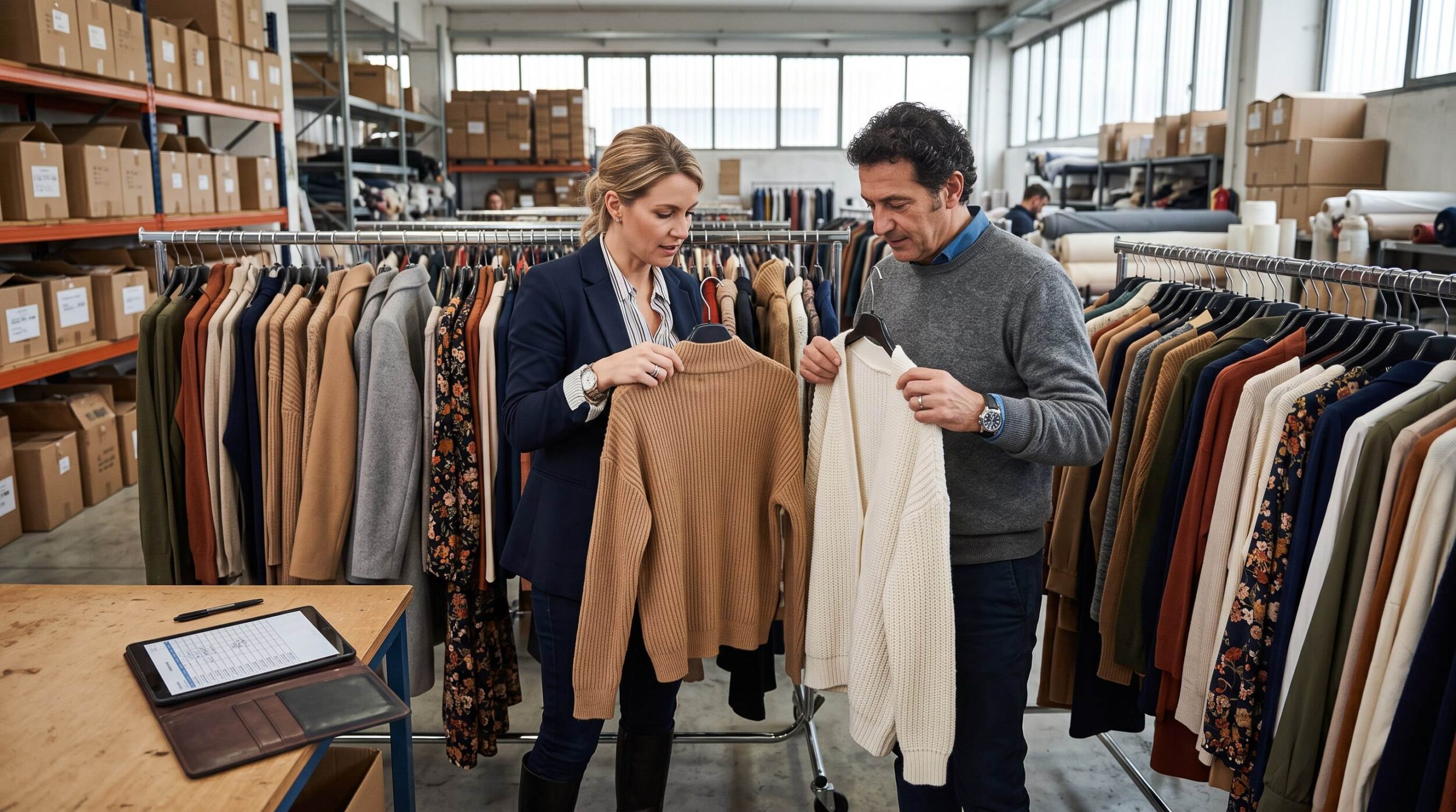
For most boutique buyers, the practical implication is a two-stage AW26 buying approach: an early summer session focused on the fabric-forward, texture-driven categories where early access matters, followed by a second session in autumn to fill in the remaining categories with full-season production visibility. The Prato sourcing process supports this two-stage approach well, and for buyers who haven’t used it before, the summer session is the one that tends to generate the strongest returns on the investment.
If you want to see what AW26 looks like in Prato before the trade shows open — and get production access before the best stock commits — Italian Fashion Sourcing runs summer sessions specifically for this purpose. Book your introduction call at italianfashionsourcing.com/interview/ to discuss timing and what you want to find.