Custom Woven Labels for Clothing: Size, Wording and the Proof You Approve Before Production
14 October 2026
Sourcing Strategy
Private label brands planning an AW26/27 launch or seasonal collection face a noticeably tighter production calendar than retailers sourcing ready-made pronto moda, and several Prato manufacturers are already reporting that their private label production slots for late autumn delivery are filling faster than at the same point last year. This timing pressure comes from a simple production reality: private label work requires prototype development, sample approval and a minimum production run before a single finished garment is ready to ship, which adds weeks to a process that ready-to-wear buyers skip entirely.
For brands and retailers considering a private label AW26/27 line, understanding exactly where this season’s timing pressure points fall matters more than the styling decisions themselves, since a strong design concept arriving too late in the calendar still results in a missed delivery window regardless of how well the finished pieces would have performed.
Ready-to-wear buyers sourcing through a live showroom session can place an order and expect delivery within a relatively predictable window, since the garments already exist in some form before the order is placed. Private label production starts from a different point entirely, typically a sketch, a reference sample, or an existing pronto moda style the client wants adapted with their own branding, fabric choice or fit adjustments.
This earlier starting point means private label timelines need to account for prototype development and a written sample approval step before bulk production even begins, both of which add real calendar time that does not exist in the ready-to-wear sourcing process. A brand that treats private label timing the same way as a wholesale order is almost always working from an unrealistic delivery expectation.
Prototype development for an AW26/27 private label piece typically takes several weeks from initial brief to a physical sample ready for client review, and this timeline extends further if the brand is requesting fabric, print or construction details that require additional sourcing beyond what a manufacturer already has on hand. Brands working from an existing pronto moda style as their starting reference generally see faster prototype turnaround than those building a design from sketches alone, since the manufacturer is adapting rather than originating the full pattern.
This season specifically, manufacturers report that prototype requests involving the cobalt, camel and charcoal palette driving AW26/27 collections are moving faster than custom colour requests outside this range, simply because suppliers already have the relevant dye lots and fabric stock in active production for their own pronto moda lines.
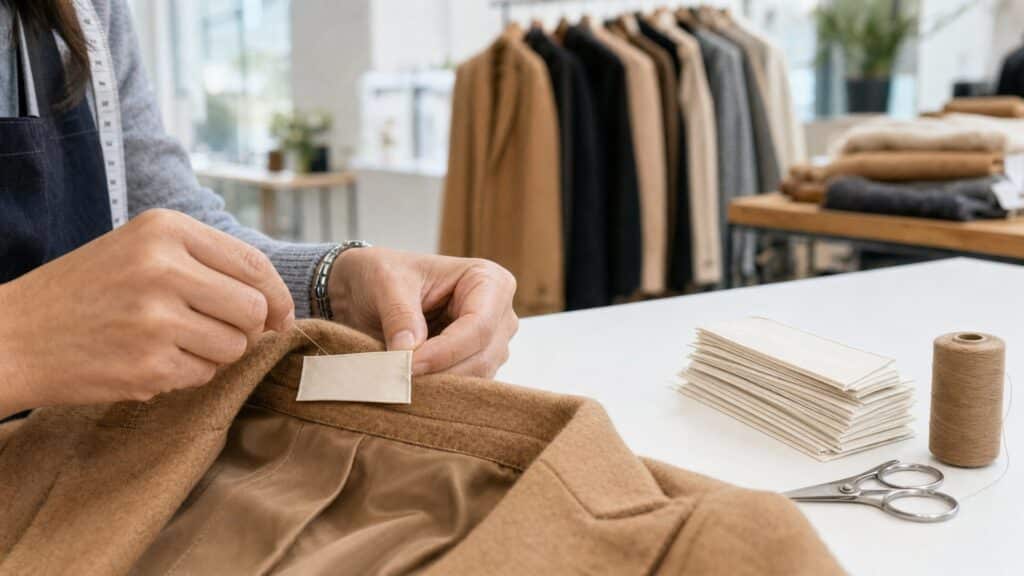
Custom labelling, swing tags and packaging requirements add a separate but related timeline, since these elements are typically finalised and produced in parallel with the garment prototype rather than after it, and brands should confirm these details early so they do not become an unexpected delay once the garment sample itself is already approved.
Written sample approval is a mandatory step before any private label production order begins, and brands sometimes underestimate how much calendar time this single checkpoint consumes when international shipping and review time are factored in. A sample sent from Prato typically needs several days in transit before a brand can physically inspect it, and a second review round, if needed after initial feedback, adds the same shipping delay again.
Brands working with an agent who can review and photograph samples in person at the showroom, rather than waiting for physical shipment for every round of feedback, generally compress this approval step meaningfully compared with managing the process entirely via remote correspondence and international courier delays.
Private label production in the Prato district typically requires a minimum quantity per style that is considerably higher than the per-style minimums common in ready-to-wear wholesale sourcing, since a manufacturer is dedicating a full production run specifically to one client’s branded line rather than producing stock that can sell across multiple buyers. This minimum applies regardless of how compressed the brand’s desired delivery timeline is, which means rushing the approval process does not reduce the production time required once a sample is confirmed.
Brands planning a smaller AW26/27 private label launch should factor this minimum into their initial planning rather than discovering it only once they are ready to place a production order, since adjusting a launch plan around a minimum quantity is far easier to do early than after a prototype and timeline are already finalised.
Several manufacturers offer some flexibility on minimum quantities for brands committing to multiple styles within the same production run, even when a single style alone would not meet the standard minimum, which is worth raising directly during initial conversations rather than assuming the minimum is fixed and non-negotiable in every case.
This particular AW26/27 season is showing tighter private label production windows than usual because the same manufacturers producing branded private label work are simultaneously running at higher capacity for their own pronto moda lines, given the strong early demand already visible across structured outerwear, knitwear and the season’s broader colour direction. A manufacturer balancing both types of production naturally prioritises whichever client commits and confirms a sample first.
Brands that move through prototype and approval stages promptly this summer are positioning themselves ahead of this capacity squeeze, while those who delay into early autumn are more likely to find that the manufacturers with the strongest AW26/27 fabric and colour matches have already allocated their available private label slots to earlier clients.
This timing pressure is consistent with the pattern already described for ready-to-wear buyers in the private label Italy production timeline, though private label brands should expect their specific AW26/27 windows to compress further than that general timeline suggests, given how much current pronto moda demand is competing for the same manufacturing capacity this particular season.
A brand planning a late autumn AW26/27 delivery should work backward from the desired delivery date, allowing realistic time for prototype development, sample approval and the full minimum production run, rather than starting from a fixed launch date and hoping the production calendar accommodates it.
Brands beginning their AW26/27 private label planning benefit from the same early engagement already recommended for ready-to-wear buyers moving through an AW26 sourcing session in Prato, since identifying the right manufacturer and beginning prototype discussions early gives a brand more flexibility if early samples require revision before final approval.
This is particularly important for brands working from an existing pronto moda style as a private label starting reference, since identifying which manufacturers currently have capacity for branded adaptation work, rather than assuming any wholesale supplier can accommodate this kind of request, saves significant time compared with discovering a capacity mismatch only after initial conversations are already underway.
A brand targeting delivery in time for the core AW26/27 selling season should ideally begin prototype conversations with a Prato manufacturer no later than this summer, allowing adequate time for sample development, at least one revision round, written approval and the full minimum production run before shipping. Brands starting this process later in the year should expect to either accept a later delivery window or work with a manufacturer who has unusually flexible remaining capacity, which becomes less likely as the season progresses.
Building in a buffer beyond the manufacturer’s stated production timeline is generally wise, since private label production, particularly for first-time client relationships, more often runs slightly longer than initially quoted rather than shorter, and a brand without any calendar cushion risks missing its intended launch window entirely.
Brands working toward a hard external deadline, such as a coordinated marketing launch or a retail partner’s intake window, should communicate that fixed date to the manufacturer as early as possible, since some production flexibility is sometimes available for clients who flag a genuine deadline upfront rather than only after a delay has already occurred.
For brands and retailers planning an AW26/27 private label line, timing deserves the same urgency this season as sourcing decisions for ready-to-wear apparel, if not more, given how much additional calendar time prototype development and sample approval add before production even begins. Manufacturers with strong AW26/27 colour and fabric matches are filling their private label capacity alongside their own pronto moda demand, and brands who begin the process this summer are working from meaningfully better odds of a smooth, on-time launch than those who wait until early autumn to start.
If you are planning an AW26/27 private label launch, starting the prototype conversation now protects your delivery window before manufacturer capacity tightens further this season. Learn more about the full process at italianfashionsourcing.com/services/private-label-production-italy/, or start with a short interview at italianfashionsourcing.com/interview/ and we will match you with Prato manufacturers who currently have private label capacity for an AW26/27 timeline.
Italian fashion supply, curated and delivered to your inbox.
How can we assist?
See our services