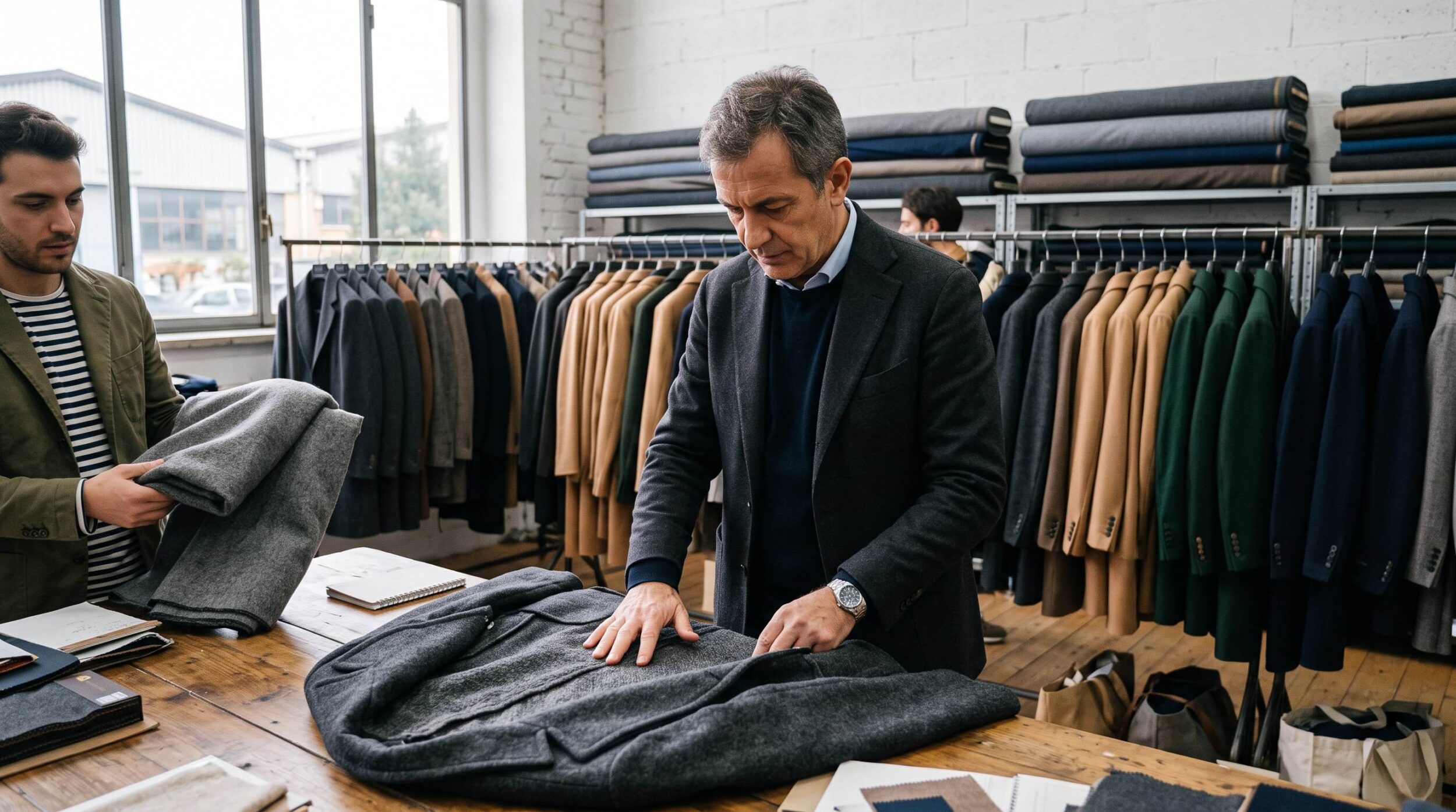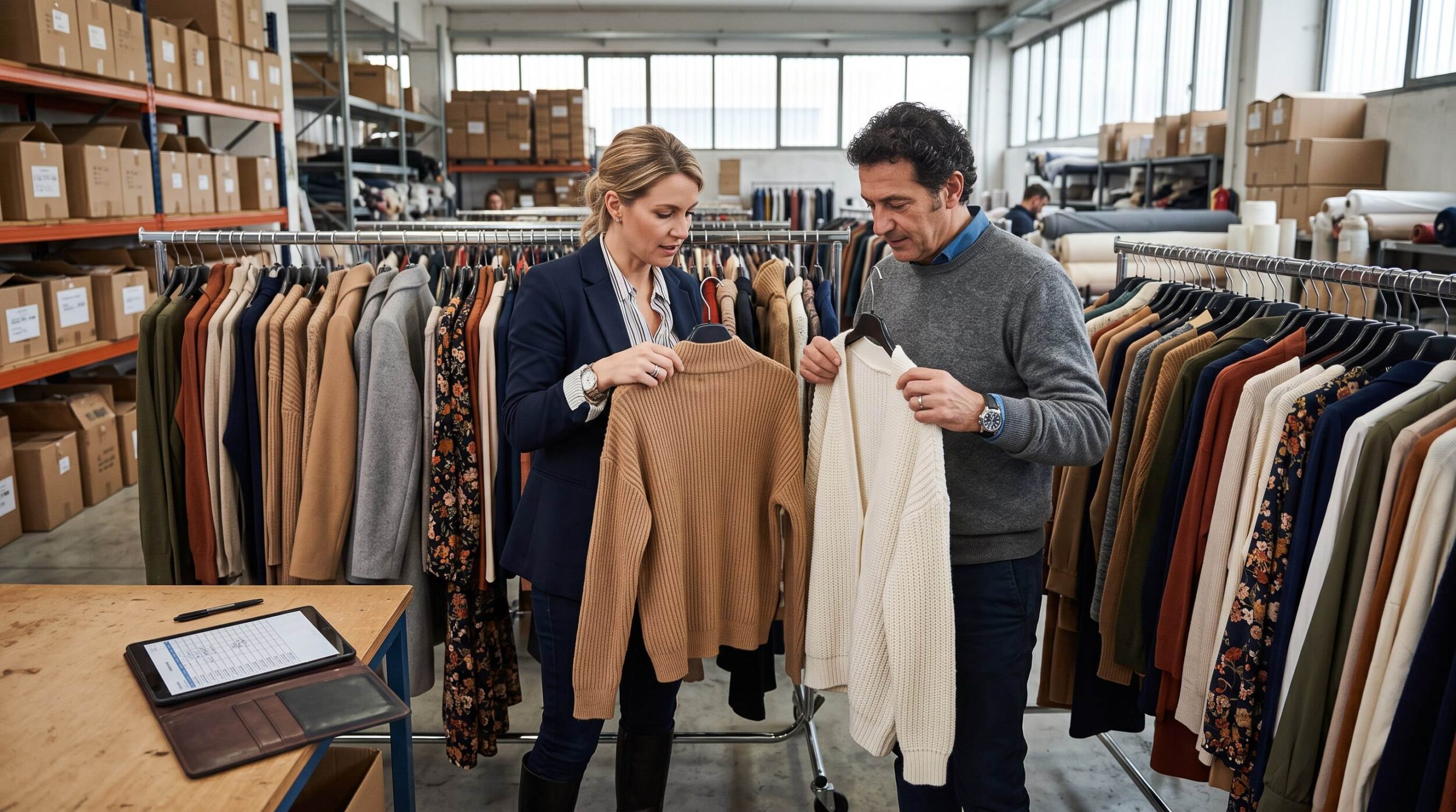
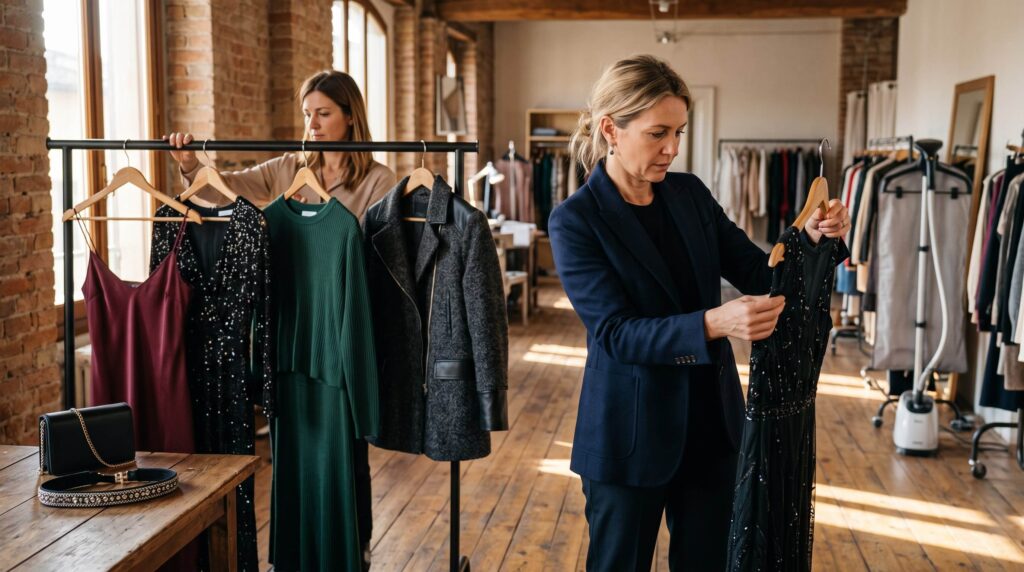
The final weeks of the year concentrate a disproportionate share of annual margin for a boutique or an online store, and the buying behind them happens long before the first customer looks for a party outfit. Planning a winter dresses wholesale Italy purchase means working backwards from a shelf date, not forwards from an idea. An order confirmed too close to the selling window is an order bought for the January clearance rack. Retailers who sell well in December committed their budget while the weather in Prato was still warm.
Six years of buying across the Prato district make the pattern predictable enough to plan around. Occasionwear behaves differently from the rest of a winter assortment because its selling window is short and unforgiving: goods that arrive late do not sell later, they sell at a discount or they sit. That asymmetry shapes every decision that follows, from how many styles enter the buy to how deep each one goes, and above all how much of the budget stays unspent until the first sell-through numbers arrive.
Why Winter Dresses Wholesale Italy Buying Starts Before Autumn Ends
Occasion pieces merchandised during the first week of November must already have cleared customs, which means the consignment left Italy earlier and the order was selected, confirmed and paid earlier still. Ready stock shortens that chain because the garments already exist; anything made to order adds a production stage on top of shipping and clearance. Payment sequencing matters too: IFS works on 100% payment before shipment, so nothing moves while an invoice waits. Add consolidation, since several suppliers become one invoice and one shipment, and the realistic cut-off sits far earlier in the calendar than the floor date suggests.
Customs clearance is the stage buyers underestimate most often. Shipments travel DAP, so duties and local taxes at destination are the client’s responsibility, and a consignment stopped because nobody arranged that payment stands still during the exact fortnight it was meant to be selling. Non-EU retailers should brief their broker and reserve the funds before the goods land, not after the arrival notice reaches them. Internal deadlines deserve the same treatment: photography, e-commerce listing and window changeover consume days nobody counts when the calendar is drawn backwards.
Building an Occasionwear Sourcing Assortment That Holds Together
An occasionwear sourcing assortment is not a rail of evening gowns. It is built from four groups that support each other: evening and ceremony dresses at the top, garments in shiny or worked fabrics that read as festive without imposing a formal dress code, elegant coordinated sets a customer can break up and wear again in February, and outerwear light enough to go over all of it. The last group is the one most often skipped, and it usually closes the sale when a customer is standing in front of a mirror in December.
Supplier minimums decide how many of those groups a single session can realistically cover. Typical pronto moda minimums sit around €300 to €500 per warehouse and two to twelve pieces per style, so a buyer chasing all four groups across too many warehouses ends up with a thin, incoherent order. Concentration usually wins. Understanding how dress styles and price bands are structured across the Italian wholesale market before the session starts keeps the assortment aligned to one clearly defined customer.
Shiny Fabrics, Knitwear and the Middle of the Party Dresses Wholesale Range
Shiny and worked fabrics carry the occasion message quickly, but they expose finishing far more than a matte crepe does. In low-cost pronto moda, up to 5% of pieces can show minor irregularities, and on sequins, laminated surfaces or heavily worked cloth those irregularities are easier to see. A retailer selling at a premium positioning should check finishing during the session and budget for a small share of pieces going to markdown, rather than discovering the issue at unpacking.
The middle of the party dresses wholesale range is where most of the volume actually sits. Not every December customer wants a floor-length gown; many want something wearable at a dinner, at an office party and again in spring. Knitwear covers that ground well, and knitted dresses and coordinated sets from the Prato district give a boutique a price point below evening pieces with a longer wearing season attached. Treating that band as filler is a mistake, because it normally turns faster than the statement pieces above it.
Accessories and the Real Value of Holiday Season Buying for a Boutique
Accessories change the arithmetic of the average basket more than an additional dress does. A customer who has already chosen an evening piece is in a buying frame of mind, and a bag, a belt or an evening shoe presented next to the garment lifts the value of the transaction without demanding a second decision. The Tuscan accessory and leather goods workshops serve this well, being oriented towards accessories and leather goods rather than garment volume, and one session can combine both districts into a single consolidated order.
Buyers regularly ask how much of the holiday budget should go to accessories. There is no universal figure, and anyone quoting one is guessing, but the useful discipline is to size the accessory line against the garments it completes rather than as an independent category. Pieces bought to sit beside specific dresses tend to sell; pieces bought because a showroom range looked appealing survive into the following winter. That logic also protects the reassortment reserve.
Depth, Rotation and the Risk Hiding in Occasionwear Sourcing
Occasionwear rotates inside a few weeks. That single fact is the whole risk profile, and it explains why the correct buying behaviour is narrow and shallow instead of broad and deep. Few styles, limited depth on each one, and a reserve held back for a second pass on whatever moves. The retailer who buys wide in September to feel covered is the retailer holding evening dresses in January, when the same customer is looking at coats and nothing on that rail sells at full price.
The cost of over-buying is not only tied-up capital. Unsold occasion stock distorts the January assortment, occupies the best selling space during a low-traffic month, and drags the season’s margin down through markdowns nobody planned. Under-buying costs a handful of missed sales, which is a smaller and far more recoverable error. Since the two mistakes are not equivalent in weight, the sensible default in this category is to stay slightly short and ready to react rather than comfortable and overstocked.
Reassortment Is Not Guaranteed When You Buy Winter Dresses Wholesale in Italy
Reassortment in pronto moda is possible but never guaranteed. Warehouses buy limited quantities of a style, and once a model sells out it is often gone rather than replenished; a supplier who does reorder may come back in different colours or with cloth from a different mill. This is a structural feature of the format, not a service failure, and the reserve budget should be understood as a fund for buying the next best available thing quickly, not as an option to repeat the original order line by line.
Speed is what converts that reserve into sales, which is where a buyer physically present in the district matters. IFS works on a commission of 10% of confirmed purchase value, with a minimum of €250 per working day, and on-site assistance at €250 per day plus commission, so a short second session, once the first sell-through numbers are in, is a modest cost against a rail that is emptying. Retailers who want the whole selection and purchasing process handled from showroom to consolidated shipment plan that second window into the season before it opens.
Planning the Cycle Instead of Reacting to It
None of this survives improvisation. A boutique that treats the holiday period as a distinct buying cycle, with its own calendar, its own budget and its own reassortment reserve, is working with the category instead of against it. IFS does not publish supplier lists and never discloses supplier names, so what a client is actually buying is the selection work and the execution around it: verified warehouses, a live session, one invoice, one shipment and complete export documentation.
For retailers who want occasion pieces under their own label the route is slower, since private label production starts at €3,000 of order value and 100 pieces per model, which pushes that decision back to spring rather than autumn. For the coming season the practical step is narrower: fix the floor date first and count backwards from it. That habit separates a well-timed winter dresses wholesale Italy order from a shipment landing well into December, when the best weeks have gone.