
Why Viscose Performs Differently from Linen and Cotton This Season
Calling SS26 a ‘linen season’ is broadly right, but it has led some buyers to under-invest in viscose — which has its own customer and its own commercial logic. The viscose buyer is not the same person as the linen buyer. She wants lightness and a natural feel, but she’s responding to drape and movement rather than structure and texture. She notices how the fabric falls when she holds the garment up; she’s less interested in how it creases.
This distinction matters because the two categories can coexist in a boutique edit without competing directly. A well-curated summer floor carries both: linen coordinates and structured pieces for the customer who wants clean lines and a fashion-forward silhouette, viscose slip dresses and draped blouses for the customer who wants fluidity and a more relaxed feel. Boutiques that have treated viscose as a secondary category this season — adding it only to fill gaps rather than as a deliberate commercial choice — have generally seen it underperform relative to its potential. Boutiques that positioned it as a distinct offer have, in many cases, seen it clear faster than anticipated.
The practical implication for late-season buying is that viscose is worth reassessing on its own terms rather than as a linen alternative. The best-performing SS26 viscose styles are identifiable by category, construction, and print profile — and some of those categories still have viable supply in Prato in June.
The Bias-Cut Slip Dress: The Category That Has Moved Fastest
Across multiple boutique markets, the bias-cut viscose slip dress has been the single fastest-selling silhouette in the viscose category this season. The format is not new, but the SS26 versions produced in the Italian pronto moda market have arrived at a price-to-quality ratio that works well at mid-market retail — typically €28–38 at wholesale, retailing at €85–130 depending on the market. At that margin structure, with a garment that appeals to multiple age groups and occasions, the category has been a reliable performer from the first weeks of the season.
The slip dress format works in viscose for a specific physical reason: the bias cut requires a fabric with sufficient drape to follow the body’s contours without pulling or puckering at the seams. Viscose’s natural drape characteristics make it one of the few affordable fabrics that can be cut on the bias without heavy finishing treatment, which keeps production costs manageable while maintaining the silhouette. Linen and cotton, by contrast, have too much body for a bias construction to work cleanly at this price point — which is why you see far more slip dresses in viscose and silk than in either of those fabrics.
For buyers looking at late-season stock, the question is whether Prato suppliers still have slip dress styles in viable colourways. The prints that have moved fastest — small floral on dark ground, abstract organic print in terracotta and sand — are largely depleted in the better suppliers. What tends to remain available in June are the solid-colour versions in classic tones, which still sell but require slightly more styling support on the floor to move without markdown pressure.
Fluid Wide-Leg Trousers and Draped Blouses: The Supporting Categories
The bias slip dress is the headline performer, but two supporting categories have contributed meaningfully to viscose’s strong season. The fluid wide-leg trouser in viscose or viscose-blend has performed well in boutiques with a customer base skewing toward the 35–55 age range — a demographic that responds strongly to the comfort and elegance combination that viscose wide-legs deliver. The silhouette reads relaxed and feminine without requiring the fashion confidence that some more architectural SS26 silhouettes demand. At retail it’s worn with a simple tank or a tucked blouse, which makes it easy for customers to justify at the point of purchase.
The draped blouse category has been more variable. Styles with a clean drape and a defined neckline — V-neck or square-neck in a fluid viscose — have sold consistently. Styles with more complex draping constructions, where multiple panels create a gathered or twisted effect, have moved more slowly: they photograph well, attract initial attention, but require a customer with high confidence in how the garment will sit on her specific body. For late-season ordering, the clean-drape formats are the safer bet.
Both categories benefit from the same fabric characteristics that make viscose work for slip dresses: drape, colour saturation, and the way the fabric moves in warmer light. Eco-viscose options in SS26 collections have been growing in availability through Prato suppliers, and some boutiques have found that the sustainability positioning adds a layer of customer appeal that supports the retail price point.
How to Identify Commercial Viscose on a Sourcing Rail
The challenge with viscose at wholesale is that the fabric quality range is wide. At the lower end, viscose garments can feel limp, lose their drape after a few washes, and develop surface pilling quickly. At the higher end, a well-finished viscose garment can maintain its drape characteristics through a full season of wear and multiple wash cycles. The visible indicators that distinguish one from the other are available to any buyer who knows what to look for.
Weight is the first indicator. Hold the garment up from one shoulder and let it fall freely. A heavier viscose — typically above 110 g/m2 — will fall with a smooth, continuous movement and maintain tension across the surface. Lighter viscose will catch on itself slightly or show uneven tension. The visual impression is of a ‘wet’ or flowing quality in the better fabric versus a slightly crepey, static surface in the lighter version. This is easiest to assess in solid colours or tonal prints where the surface isn’t masked by a busy pattern.
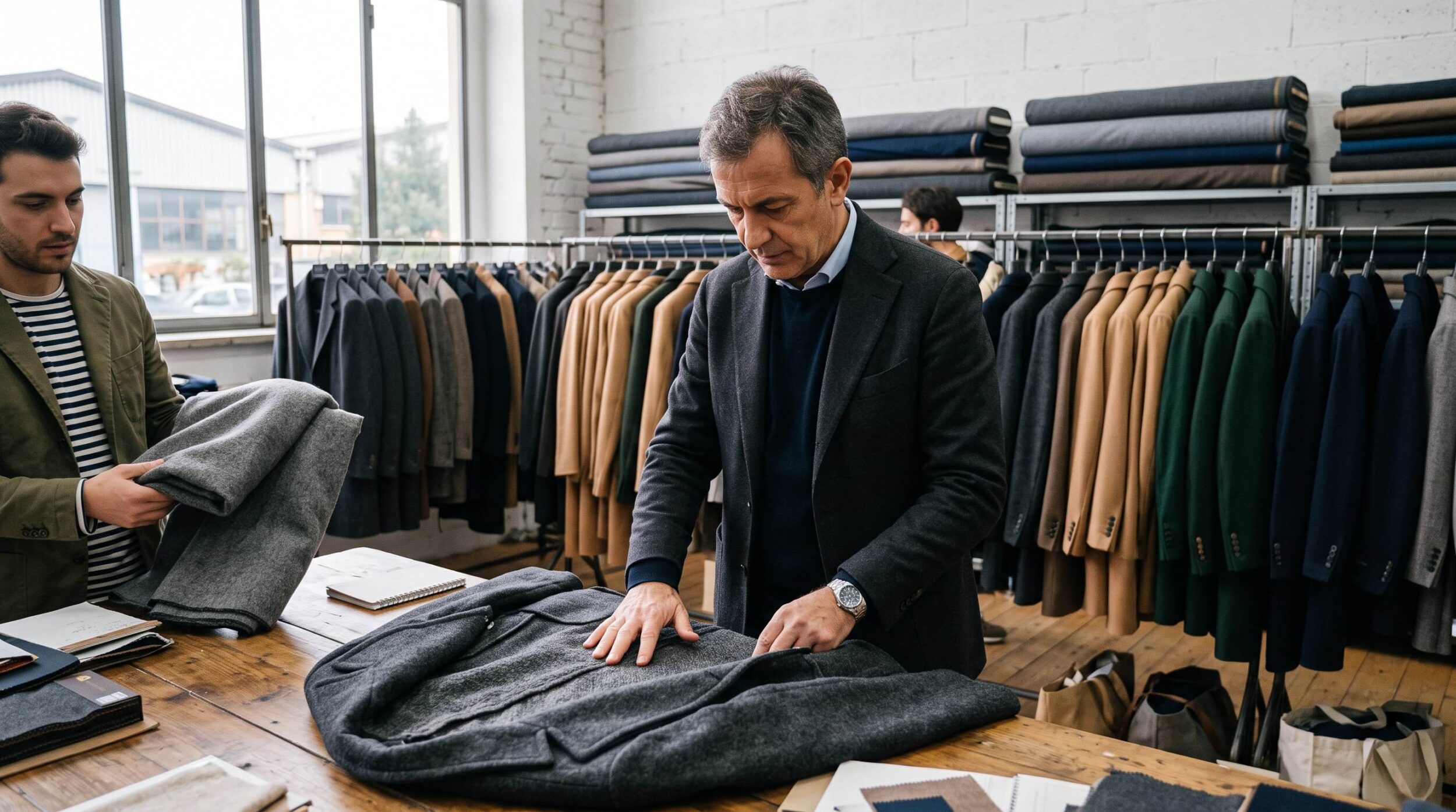
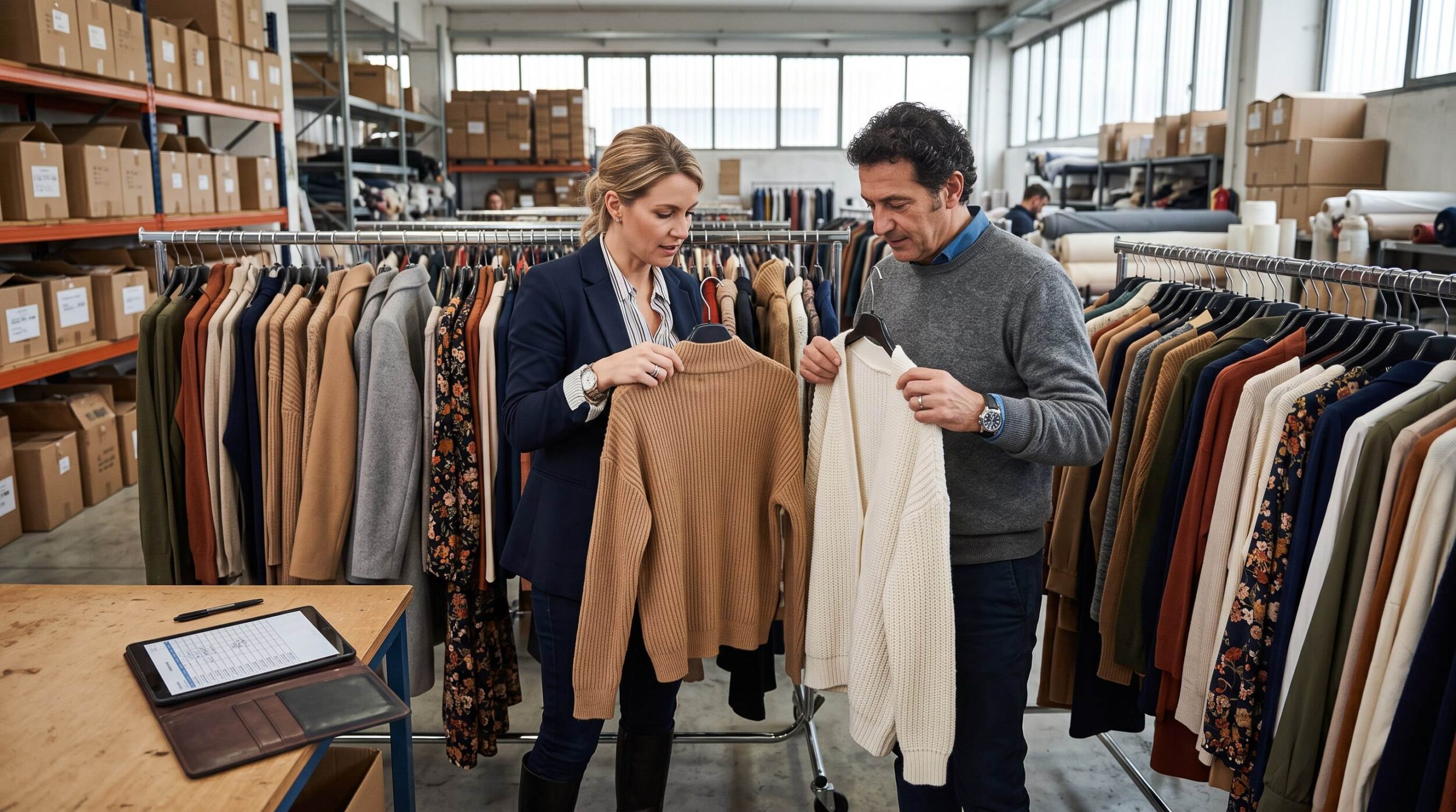
The second indicator is seam behaviour. Check how seams respond to gentle manipulation: quality viscose seams lie flat and recover without pulling. Lower-grade viscose tends to pucker slightly at the seam line, which becomes more pronounced after washing. The third indicator is print clarity on printed viscose: sharp, well-registered print edges on a flowing viscose base indicate a higher-grade printing process and base fabric. A live sourcing session in Prato gives buyers direct access to this kind of hands-on evaluation, which is very difficult to replicate from lookbook images alone.
Building a Viscose Position That Earns Its Margin
Viscose is either a high-margin category or a markdown category. Which one you get depends almost entirely on what happens at the sourcing stage. The base fabric quality, the silhouette’s viability for your customer, the print’s staying power, and the wholesale-to-retail ratio — all of these are assessable before you commit. But only if the buying process includes the right evaluation steps, and only if you’re willing to walk away from product that fails them.
For boutiques building a late-season viscose order, the most reliable approach is to focus on the formats with the longest proven selling arc in your market. If slip dresses have been selling strongly in your store through May and June, a small replenishment in the solid-colour formats that are still available is lower-risk than trying a new category. If wide-leg trousers have been slow, adding more won’t fix the problem — and a different construction from a different supplier is unlikely to change the fundamental dynamic.
The discipline is the same as in any late-season buying: let the data from your floor tell you what to buy more of, rather than trying to use a sourcing session to introduce new categories into a season that doesn’t have enough selling weeks left to build customer familiarity. The SS26 Prato womenswear trends set a clear direction at the start of the season; late-season buying is about executing cleanly within that direction, not expanding it.
If viscose is a category you want to evaluate or top up before the season closes, Italian Fashion Sourcing can identify which Prato suppliers still have viable stock and what the lead time looks like for your market. Start with an introduction call at italianfashionsourcing.com/interview/ — we’ll work out what’s worth ordering and what to leave.