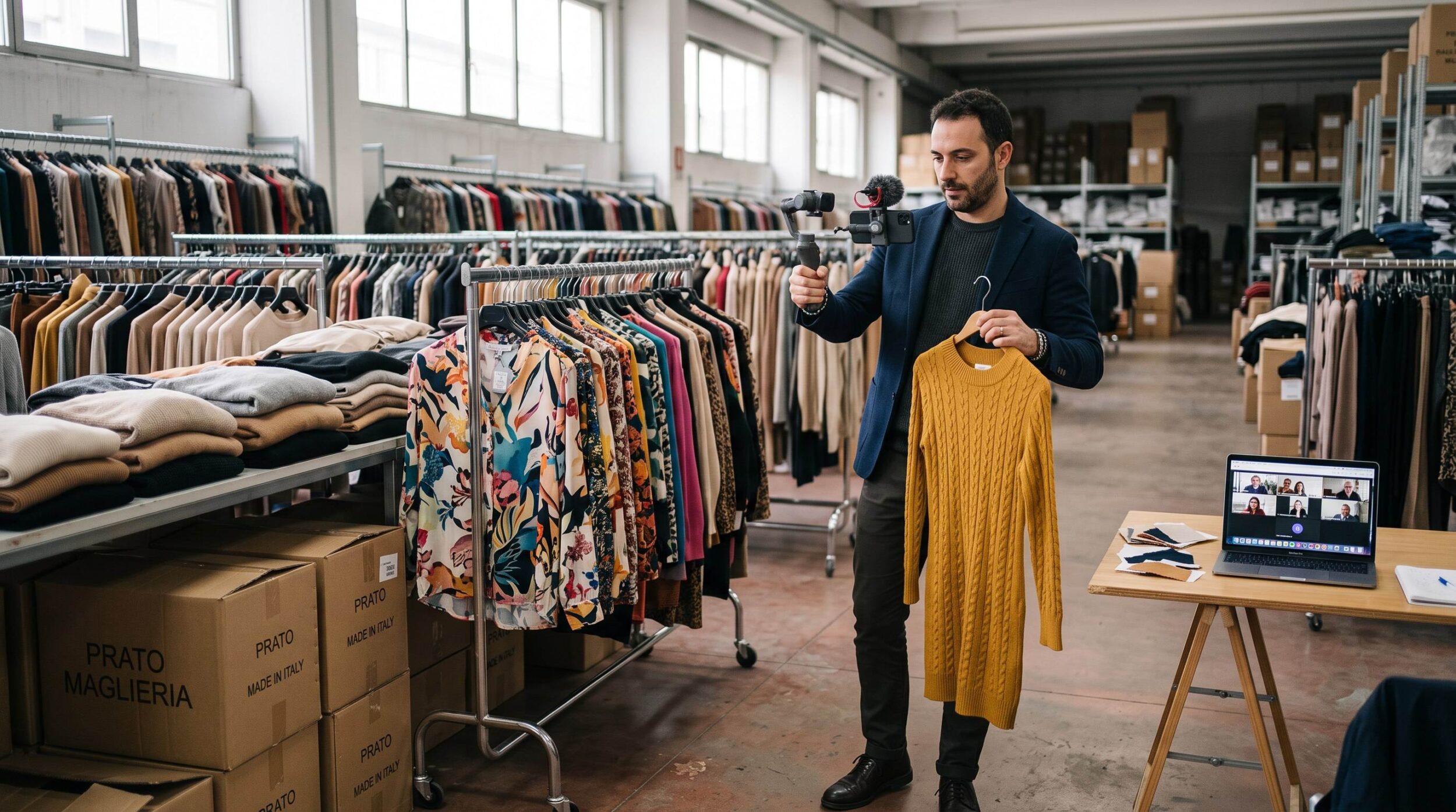
Buyer filming a garment on a rail during a remote buying session Italy side inside a Prato pronto moda wholesale warehouse

How It Works

The How It Works section is the operational core of the Italian Fashion Sourcing editorial programme. Every article in this section exists to answer a practical question that a buyer asks before, during or after a Prato sourcing session.

We cover the full sourcing cycle: how to prepare a buying brief, how minimum order requirements work in the Italian pronto moda market, what happens between session and shipment, how customs documentation and export logistics are handled, and what to expect when your goods arrive. We also explain the mechanics of private label production, timelines, minimums, sample approval, quality control, for buyers who want to move beyond ready-to-wear into original brand development.

The articles in this section are written for buyers who are new to Italian sourcing and need a reliable operational map, as well as for experienced buyers who want a clearer picture of how a specific part of the process works. We don’t write to impress, we write to be useful.

If you are planning your first session and want to understand the process end to end, this section is where to begin.

How It Works

Time Zones and Live Buying: How Remote Sessions Work From Australia to the Americas

A remote buying session in Italy is governed by the opening hours of the Prato warehouses, not by the client’s own clock. This article explains how a live video wholesale buying day is scheduled across time zones, from North America roughly six hours behind to Australia eight to ten hours ahead. It covers how the day is structured, what the buyer verifies on the ground that the camera cannot show, and what is confirmed once the session closes. It also explains why supplier names are never disclosed and how contact continues after an order is finished.

How It Works

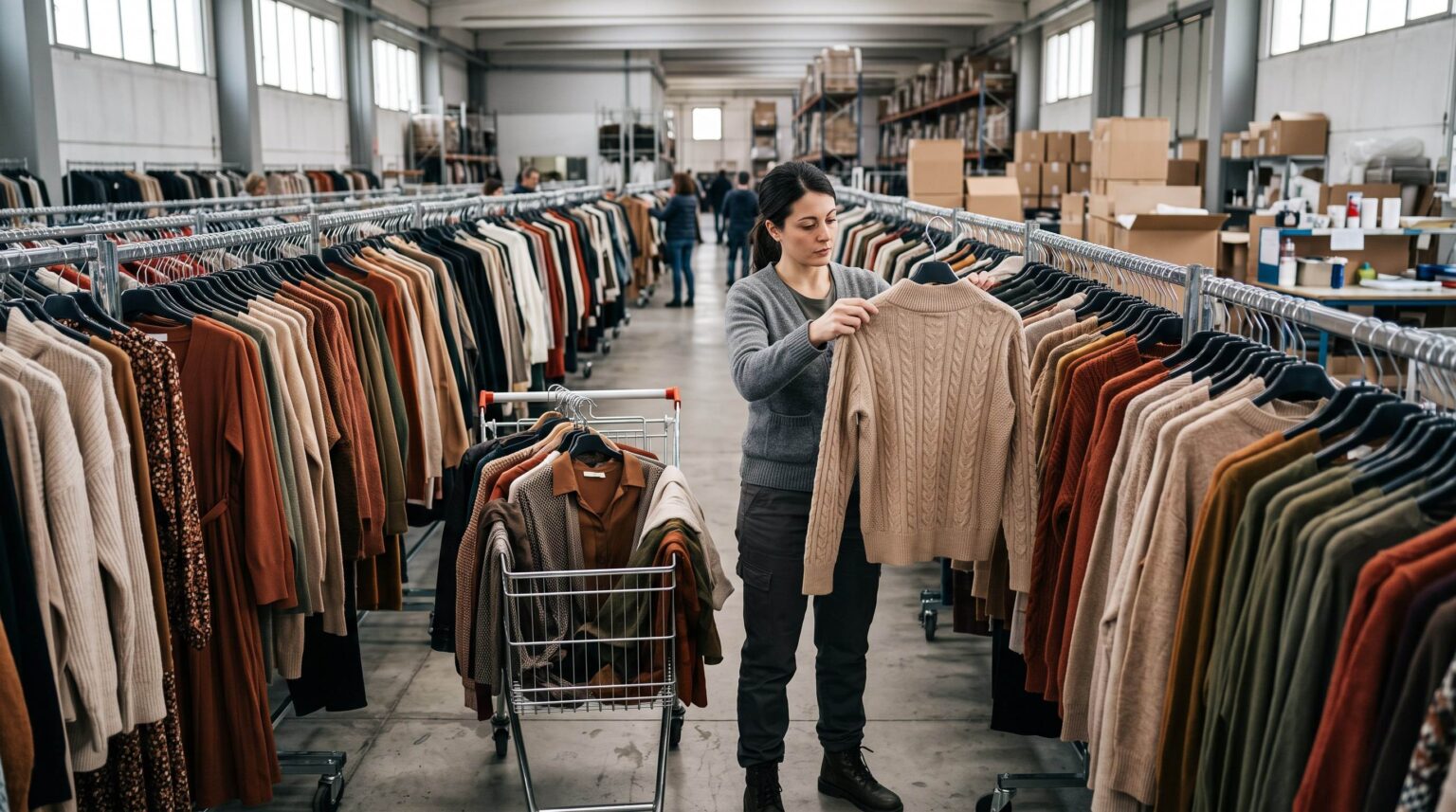
Inside a Prato Warehouse: What Actually Happens During a Wholesale Buying Day

A wholesale buying day in the Prato district follows rules that are rarely explained before a retailer arrives. This article describes how pronto moda warehouses are physically organised, why prices are quoted garment by garment instead of printed in a catalogue, and how negotiation actually works at the rack. It also covers the pace of a day spread across several suppliers with fixed closing hours, and what a client following the session by video sees while the buyer works on the floor.

How It Works

Before the Session: How a Good Brief Makes the Difference Between a Full Rail and a Wasted Day

The difference between a productive buying day in Prato and a session spent recalibrating is usually decided before the first showroom visit. This article sets out exactly what Italian Fashion Sourcing asks for in a brief, from visual references and size curve to session budget and target purchase price, and explains why the final retail price in the client’s own market is the single most useful figure a buyer can share. It also covers realistic preparation times for ready stock and for private label production, how alignment is verified with photos and video before the session, and what happens when a brief arrives vague.

How It Works

Italian Fashion Export Documentation: How VAT, Duties and Customs Work When You Buy Wholesale

This article explains how tax and customs actually work when a boutique buys Italian fashion wholesale through a sourcing agent. It covers the consolidated invoice behind a multi-showroom order, the VAT treatment for goods leaving Italy inside and outside the European Union, the EORI number and preferential-origin declaration used on export, and the packing list that documents a shipment box by box. It also looks at why carrying goods home in personal luggage forces suppliers to charge Italian VAT, using a recent buying group as an example. The aim is to show why the paperwork is handled as part of the sourcing service rather than left to the buyer.

How It Works

How Factory Visits Work: Buying Appointments in Italy’s Prato and Florence Districts

A factory visit in the Prato and Florence districts is not a tour of Italian fashion. It is a structured buying appointment, arranged for a professional who arrives ready to select and order. This guide explains how these visits actually work, from preparation through to finalising an order, and what the suppliers who open their doors expect in return. It also clears up one point too many first-time buyers miss: there is no obligation to buy what you dislike, but a visit is booked to buy, and “just looking” needs to be agreed in advance.

How It Works

Shipping Knitwear Worldwide: Volumetric Weight, Duties and Landed Cost from Italy

Knitwear is light but bulky, and international courier freight is billed on volumetric weight rather than scale weight, which makes logistics a genuine line in the knitwear margin. This article explains how volumetric billing works, how compression-aware packing reduces it, the reference freight bands from Italy to each world region, the customs documentation a consolidated shipment carries, and how to compute landed cost per garment before the buying session rather than after.

How It Works

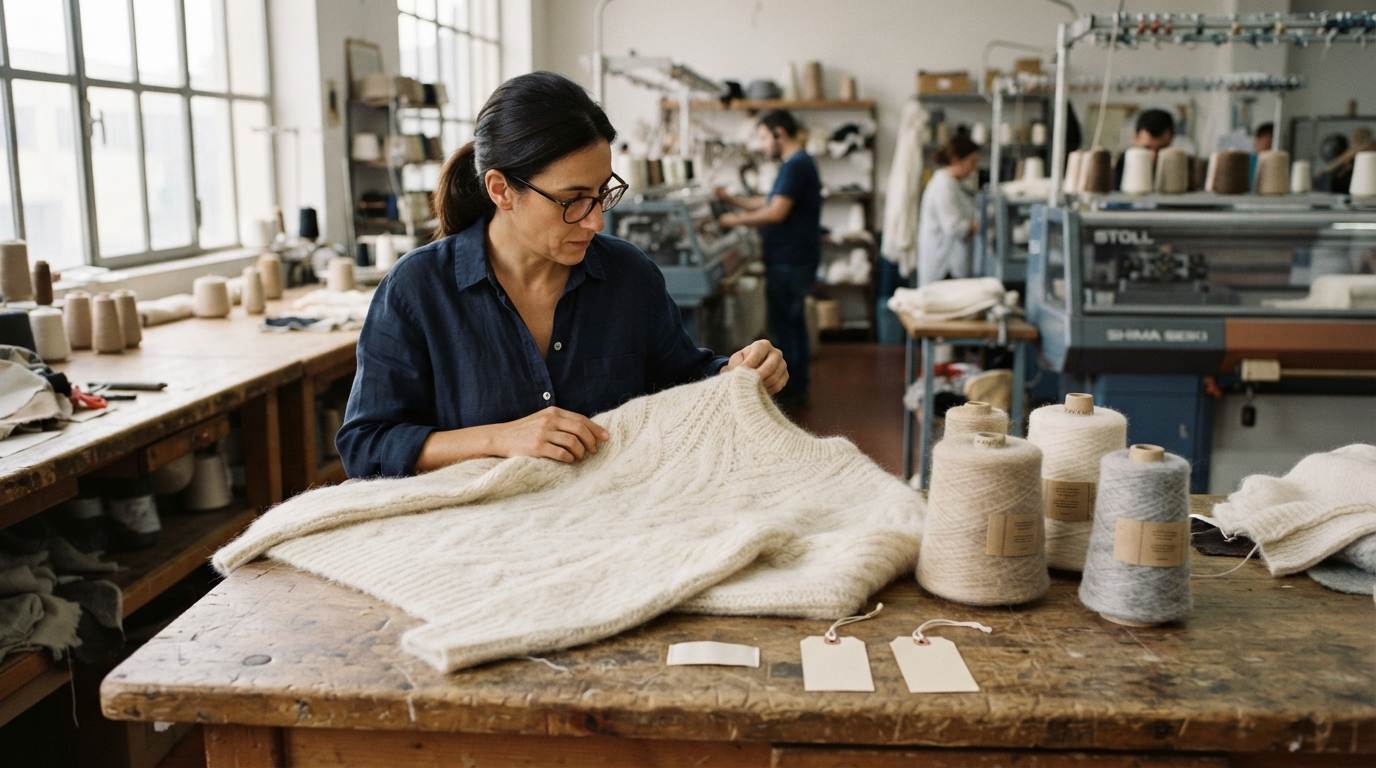
Private Label Knitwear Made in Italy: From Yarn Selection to 100 Pieces per Style

Boutiques with proven knitwear sell-through eventually face the private label question: whether to put their own name on the garments customers already buy. This article explains how private label knitwear production works in Prato, the two development routes from existing models or original designs, yarn selection with Italian spinners, the 3,000 euro and 100 pieces per style minimums, realistic six to ten week timelines, and the labelling and payment framework that completes the project.

How It Works

How to Judge Knitwear Quality in a Prato Showroom: Gauge, Linking and Fibre Checks

Knitwear quality cannot be read from a photograph, which is why disciplined showroom checks are the difference between a winter of reorders and a winter of returns. This article sets out the five-point method used during Prato buying sessions: gauge consistency, linking and internal finish, elastic recovery, pilling resistance and fibre honesty, plus how each check translates to a live video session or an in-person sourcing day.

How It Works

The Transition Window: How Italian Wholesalers Bridge Summer and Autumn Collections

The six-week period between late June and early August is one of the least understood phases of the Italian wholesale calendar. It is the moment when the pronto moda district simultaneously clears the last SS26 production, begins receiving AW26 samples, and starts producing the transition fabrics that bridge the two seasons. This article explains the mechanics of the transition period and how buyers can use this window to stock their floors earlier than competitors.

How It Works

How to Buy Clothing from Italy: A Wholesale Buyer’s Complete Guide

This guide is written for boutique owners and multi-brand retailers who want to source women’s ready-to-wear directly from Italy but are not sure where to start. It explains how the Italian wholesale system works, what buyers can realistically expect in terms of minimum orders and pricing, and what the key steps are from first contact with a supplier to receiving the final shipment. The focus is on the Prato wholesale district, which is the largest and most accessible entry point for international buyers sourcing mid-market womenswear. The article also addresses how a sourcing agent can simplify the process for buyers who cannot travel to Italy or who lack direct contacts in the district.

Italian fashion supply, curated and delivered to your inbox.

Join the Insider List

Be the first to access ready-to-wear drops, supplier insights and private label tips. No noise—only what helps your business buy smarter.
Need help?
Chat with us