An order confirmed in a Prato showroom turns into revenue only when it exists as a set of published product pages. Between those two moments sits work that has nothing to do with buying and everything to do with wholesale product data for ecommerce: composition, measurements, photographs, copy and the internal codes that tie an invoice line to a listing. Six years of sessions across the Prato district point to a consistent pattern: retailers who begin this work when the cartons arrive publish considerably later than those who start during the session itself.
Why Wholesale Product Data Starts in the Showroom, Not the Warehouse
The buying session is the only moment when a garment, the supplier who produced it and someone able to ask questions are in the same room. Labels are readable then. A colour can be written down the way the warehouse names it, and a style code recorded next to the price actually agreed. With supplier minimums normally between two and twelve pieces per style, one session generates dozens of distinct references, each needing its own page, images and size chart. Rebuilding that later from a packing list is slower and considerably less exact.
The habit that works is one row per style, completed while the session runs or in the hours immediately after it. Style code, supplier reference, colour, sizes purchased, unit cost, fibre composition as printed on the label, and a note on anything that will need explaining: a lining, a removable belt, a print that repeats irregularly. Payment is settled in full before the shipment leaves Italy, so the goods are committed early and there is no reason to postpone desk work. Knowing the sequence that leads from a first interview to a confirmed wholesale order makes it clearer where each field can realistically be captured.
Composition, Care and the Product Data You Cannot Reconstruct Later
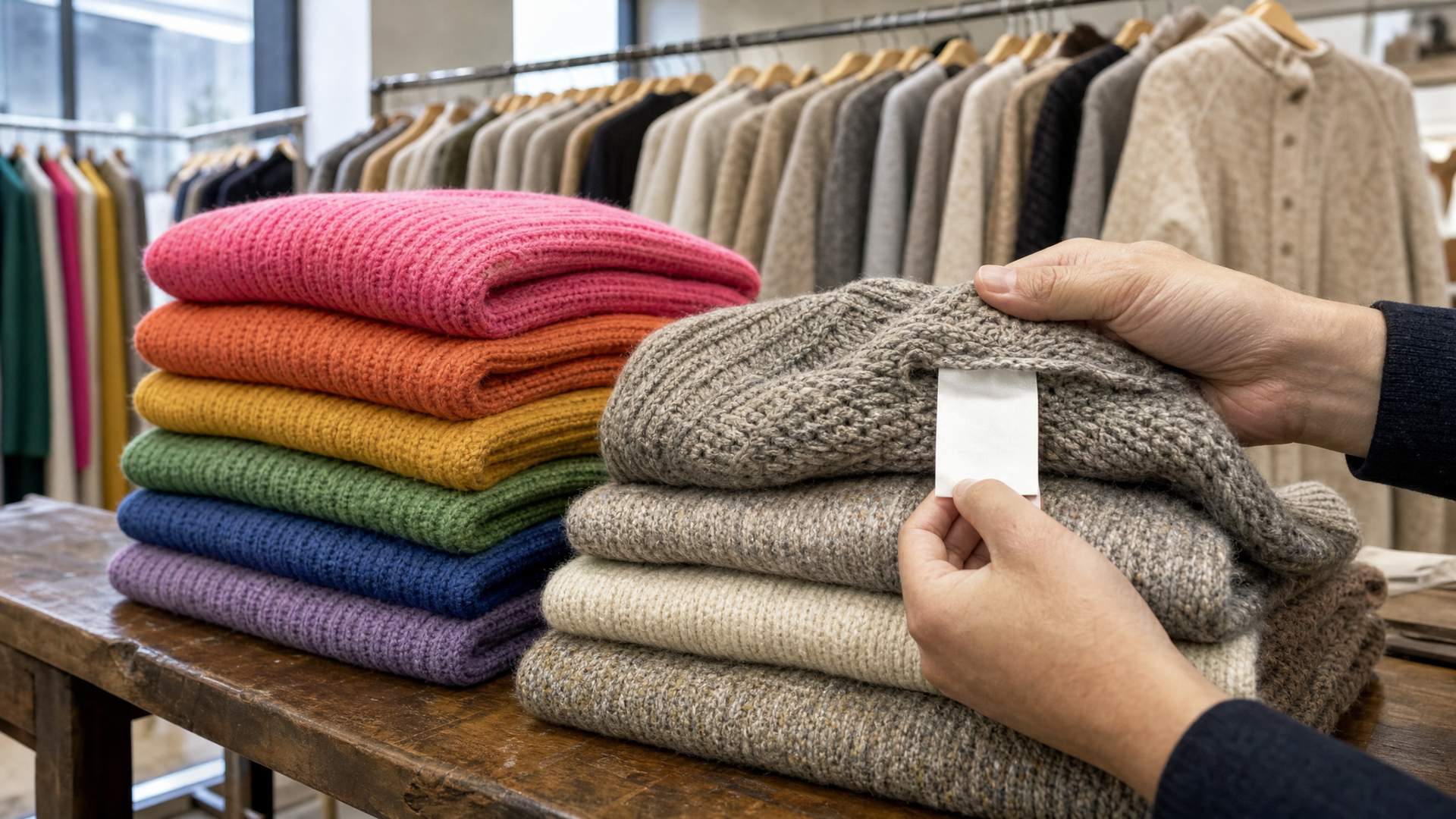
Composition becomes hard to recover once a garment leaves its polybag and joins dozens of others on a rail. Fibre percentages printed on the internal label are the reference for what you publish and for what a customer can hold you to. Labels in low-cost collections are sometimes abbreviated, sometimes printed only in Italian, occasionally present on the production piece but absent from the showroom sample. A phone photograph of the label at selection costs seconds and removes a round of correspondence. Care symbols belong in that frame too, since wash temperature and ironing indication end up on the page.
You do not need the supplier’s name to publish a complete product page. IFS does not provide supplier lists and never communicates the names of the warehouses behind an order, so a listing built on somebody else’s brand identity is not available here. Origin, fibre content, construction detail and your own product code carry the page instead. That is the substance behind what Made in Italy origin actually means for a boutique’s retail margin, where value sits in selection and service rather than in a factory address.
Product Page Measurements Say More Than a Size Label
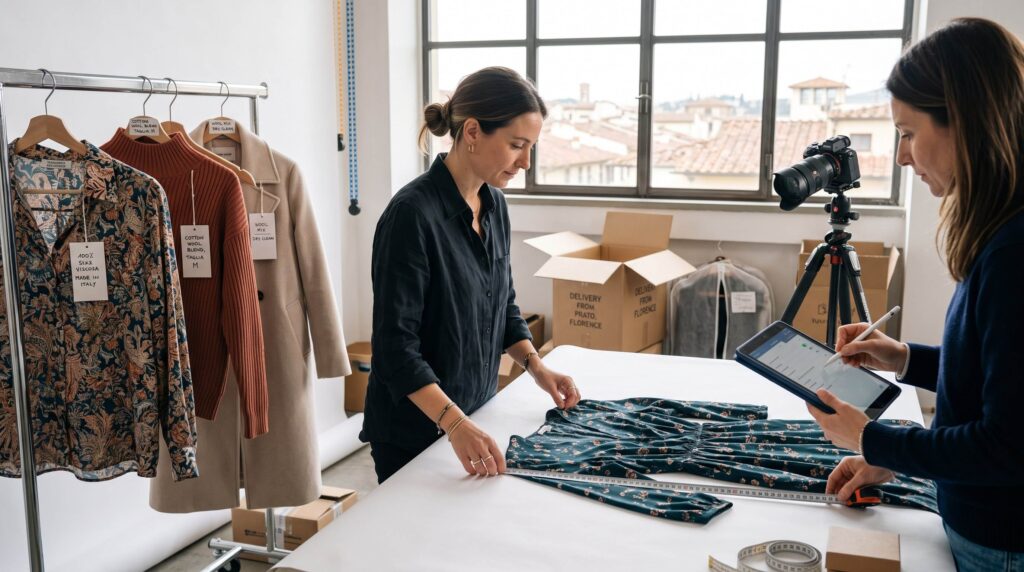
Sizing is not standardised between warehouses. A 42 from one supplier can differ measurably from a 42 bought two streets away, and a size chart built on the label alone produces returns that a measured chart would have prevented. Publish the measurements of the garment you actually hold: chest, waist, hip, shoulder, sleeve and total length, taken flat, in centimetres with an inch conversion where markets expect one. One measured piece per style is usually enough, with a second reading when the same cut arrives in a fabric that stretches differently.
Intake is also the moment to look closely at what you are measuring. In low-cost pronto moda up to five percent of the pieces can show minor irregularities, a crooked seam or a print off register among them, and the piece you measure and photograph should be one you would send to a customer. Measuring a whole intake is an afternoon of work with a tape, a flat table and somebody recording as you go. Keep that sample aside as the reference piece until the style sells out.
Writing Descriptions for an Italian Wholesale Online Listing
A description that only restates the title wastes the page. What a customer needs, roughly in the order they think about it, is what the garment is made of, how the fabric behaves, where it is reasonably worn and how it is washed. Weight and drape can be conveyed honestly without inventing technical figures: whether the viscose is fluid or dry, whether the knit holds shape after a day of wear, whether the lining runs full or partial. Occasion matters too, because someone scrolling on a phone is placing that piece in a specific evening or working week.
Write with the garment in front of you rather than from a supplier photograph. The details that actually sell, a covered zip or a cuff that turns back, are obvious in the hand and invisible in a catalogue shot. Keep one voice across the whole intake, since an online listing built on Italian wholesale stock that reads in several registers looks assembled by several different shops. A short paragraph per style is generally sufficient, and that text is best written while the measurements are being taken.
Fashion Product Photography After Sourcing: Still Life Is Not Editorial
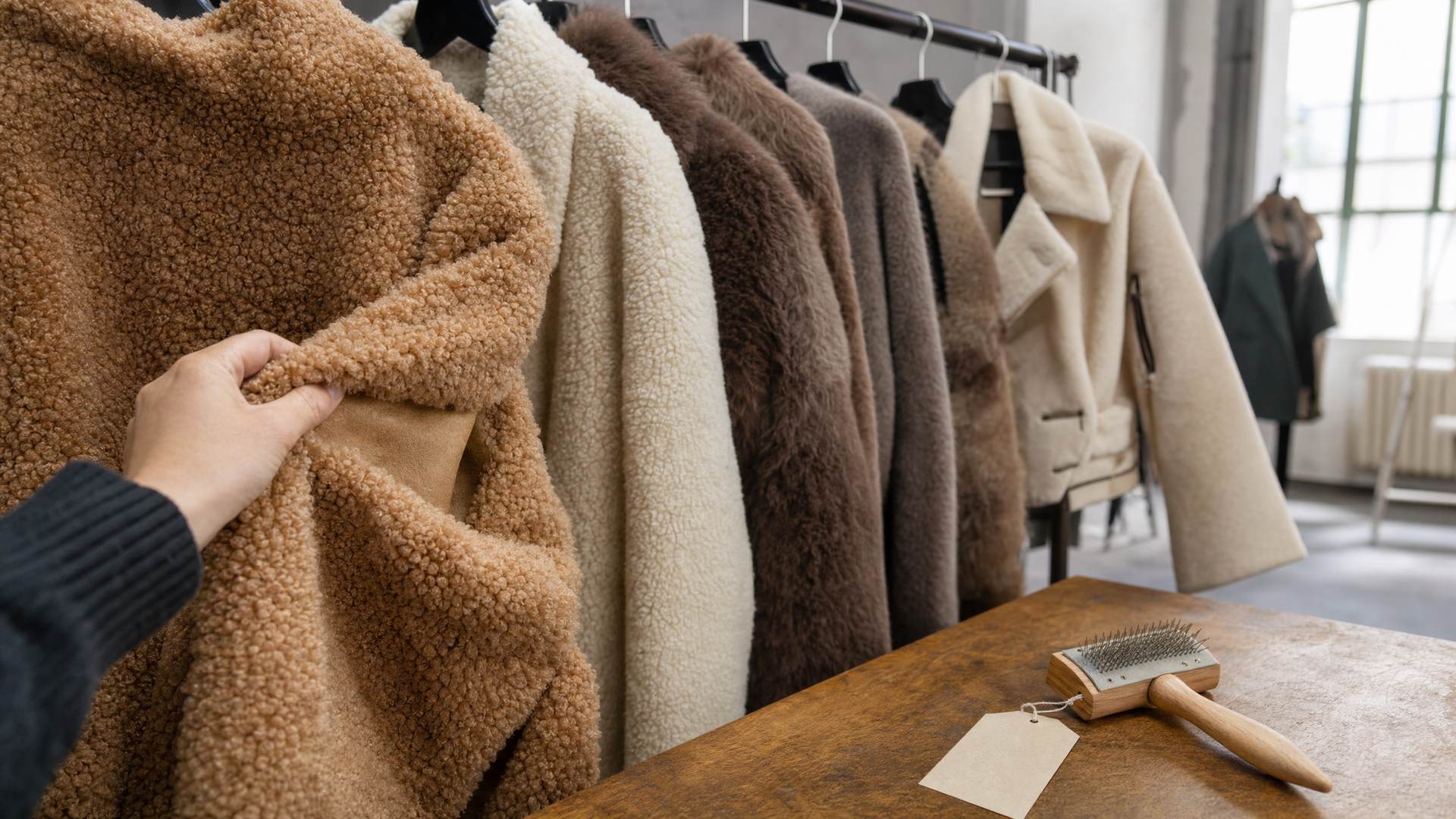
Catalogue photography and editorial photography answer different needs and should not be shot in one undifferentiated session. Still life serves the catalogue: fixed background, fixed distance, even light, and the same frame set for every style, meaning front, back, a fabric close-up, a closure detail and one shot on model or mannequin that gives proportion. Consistency counts for more than beauty at this stage. A grid where every garment sits at the same scale reads as a shop, while a grid where it does not reads as a marketplace stall, and customers register that before reading a word.
Editorial work does another job entirely. It carries the newsletter, the social grid and the seasonal campaign, where it is allowed to be atmospheric, cropped and deliberately imperfect. Mixing the two registers is where budgets disappear: styled location images land on product pages and conceal the cut, while flat white shots land in campaigns and say nothing. Shoot the catalogue set for everything you bought, then select the handful of pieces that deserve editorial treatment. The second set can wait; the first cannot.
Publishing Before the Collection Rotates Out of the District
Pronto moda collections turn over quickly, and a style bought in one session may simply not be available for a reassortment by the time you ask for it. That constraint should govern the calendar. Photograph and publish in the days after arrival instead of stacking cartons in a stockroom until a photographer has an opening, since stock waiting for a shoot is capital doing nothing while the window closes. Because the purchasing service closes with one consolidated shipment and full export documentation, the arrival date is known in advance and the studio day can be booked against it rather than after it.
Pricing the page depends on knowing the landed cost before publication. The service fee is ten percent of confirmed purchase value with a minimum of 250 euro per working day, shipping is quoted on the consolidated parcel, and under DAP terms duties and local taxes are settled by the buyer on arrival. Adding those components to the invoice line gives a genuine cost per piece, and a price set on that basis is far less likely to need correcting after launch, once the first orders have shipped at a margin nobody intended.
Ecommerce Photography, Shop Management and Marketing After the Order
Some retailers handle imagery and listings internally and only need the goods to arrive with their data attached. Others reach the end of a session with a full intake, no studio booked and nobody available to write copy. Ecommerce photography, online shop management and digital marketing are available through sister companies within the same group, which makes them an extension of the sourcing work rather than a separate procurement exercise. The practical gain is narrow but real: one intake sheet feeds the shoot, the listing and the campaign without anyone typing it twice.
For retailers who want the same styles available across several seasons, private label production changes the arithmetic, with a minimum order value of 3,000 euro and 100 pieces per model, and a catalogue page built once and kept alive instead of rebuilt at every drop. In either scenario, wholesale product data for ecommerce is not administrative work that follows the buying. It belongs to the buying, and organising it that way is what lets a page go live with the goods rather than long after them.