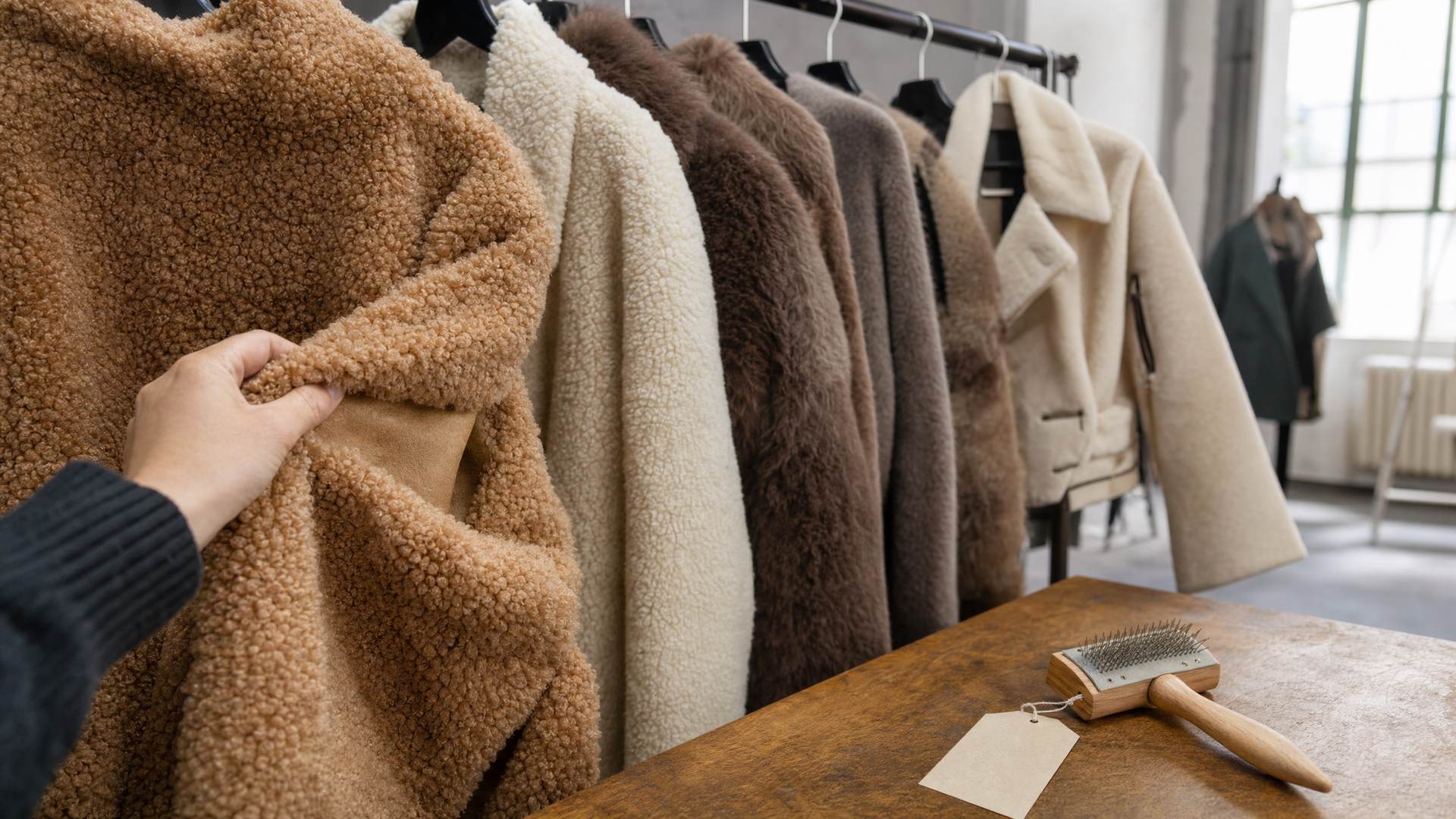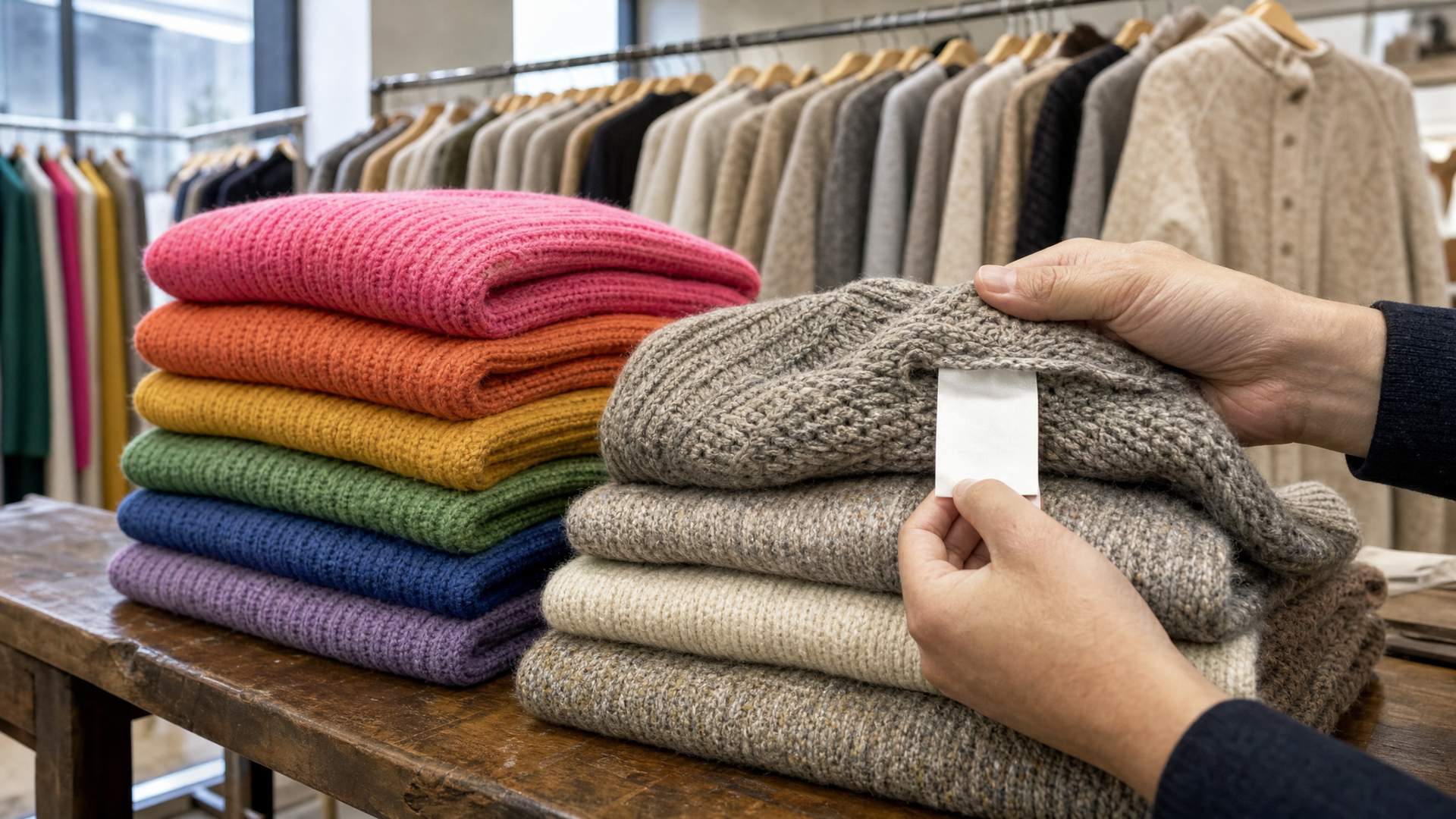

Most of what decides whether a buying day ends with a full rail or a wasted afternoon happens before anyone sets foot in a showroom. Wholesale buying session preparation does the unglamorous work of turning what a boutique owner in Copenhagen or a shop in Dubai has in mind into a shortlist of Prato warehouses worth a full working day. Six years of running these sessions have made the pattern hard to ignore: the brief predicts the day with uncomfortable accuracy.
What We Ask For Before the Buying Session Starts
The brief covers four areas and rarely takes a client more than an hour. Visual references come first: a moodboard, a Pinterest board, photographs of pieces that sold well last season, two or three brand names whose aesthetic sits near yours. Then the session budget and the target purchase price by category, because a jacket bought at 22 euros and a jacket bought at 65 euros sit in different warehouses on different streets. Then the market and the end customer, with size curve and season stated plainly. Categories and indicative quantities close it.
Each block changes something concrete in the pre-scouting. The size curve alone can rule out half a district, since some Prato wholesalers cut small and narrow while others carry a curve that works for Northern European or North American shoulders. A February session and a July session also put entirely different stock on the rails. Quantities tell us whether one warehouse covers a category or three are needed, which decides how many stops fit into the day. The rest of the sequence from first interview to consolidated shipment is ours to manage; the brief is the part the client controls.
The Retail Price Is the Most Useful Number in an Italian Buying Session Brief
Nearly every client, in the first conversation, says they are looking for high quality. The phrase is honest and almost useless. Quality is an abstraction that shifts across markets and price brackets, and what a boutique in Oslo means by it is rarely what a Prato warehouse means by it. So we ask instead the one thing that resolves it in a single line: the price the garment will carry on the rail in your own shop, for your own customer.
Clients sometimes hesitate before answering, assuming the question is commercial curiosity or a way of measuring their margin. It is neither, and it is worth saying so plainly. The final retail price in the client’s market is the fastest way to avoid picking the wrong supplier, because it works backwards through the whole chain: it fixes the landed cost, which fixes the target purchase price, which fixes the fabric weight, the finishing standard and the warehouse we walk into first. A dress retailing at 39 euros and a dress retailing at 149 euros are not two versions of the same product.
That number also sets honest expectations about what arrives in the box. In low-cost pronto moda, up to five percent of pieces can show minor irregularities, from a loose thread to an imperfect hem or a slight shade variation between cartons. That is a sector standard at that price bracket and not a fault in the service, and a client whose garments retail at 25 euros hears it before the order is confirmed. A buyer working at a higher purchase price gets different suppliers and a different tolerance. Confusing the two brackets is what costs a day.
Why a Sourcing Brief Moodboard Beats a Written Description
Images travel better than adjectives across languages and markets. A moodboard of thirty pictures says more in four minutes than a page of prose, and photographs of garments the client has already sold well are the single most valuable input, because they carry proof instead of aspiration. We read silhouette, fabric weight, length, colour temperature and the detail on trims. Brand references work the same way, provided they are treated as coordinates rather than targets: naming a label says where you sit on the map, not that the garment exists in a warehouse.
Budget, Quantities and the Minimums Behind Every Prato Buying Day
Budget is where the sourcing brief meets arithmetic. Supplier minimums in the districts typically run between 300 and 500 euros per warehouse, with two to twelve pieces per style depending on the house, so the session budget decides how many suppliers can be covered before the money runs out. Our commission is 10 percent of the confirmed purchase value, with a minimum of 250 euros per working day; on-site assistance in the district is 250 euros a day plus the same commission. Private label runs on separate numbers: 3,000 euros of order value and 100 pieces per model.
The operational terms belong in the brief stage too, because they change how a buyer plans cash flow. Payment is 100 percent in advance of shipment. However many suppliers end up in the order, the client receives one invoice and one consolidated shipment, which is the main reason a multi-warehouse day does not turn into six separate freight problems. Shipping runs on DAP terms, so local duties and taxes in the destination country stay with the client. None of this shifts once a session is running, so it is settled before a date is set.
How Much Lead Time Wholesale Buying Session Preparation Really Needs
Preparation time depends entirely on what is being ordered. For pronto moda, meaning ready stock from existing collections, one or two days between brief and session is usually enough, and a session can occasionally be arranged immediately because we already hold current photographs of what is on the rails. Production is a different discipline. An order built on a tech pack, or on a sketch that still has to become a prototype, needs fabric sourcing, a sample and written approval before anything is manufactured. Compressing that sequence does not make it faster; it moves the risk onto the client.
Between the Brief and the Session: Photos, Video and Supplier Confidentiality
Once the brief is in, the checking starts. We send photographs and short videos from the showrooms so the client can confirm the reading is correct, and the reaction to those images is often more informative than the brief itself. A note that a fabric looks too heavy repositions the whole shortlist before a single euro is committed. There is no fixed cadence to this. When something in the district looks right for a specific client it goes out, sometimes weeks after that client’s order has shipped.
One rule never moves. Supplier names are never communicated, not in the photographs, not in the video calls, not in the documentation that travels with the goods. IFS does not provide supplier lists and does not identify the warehouses it works with, and that rule protects every client on the roster in the same way. The buyer sees the garment, the purchase price and the minimum. The mechanics of a live buying session moving from one showroom to the next follow the same principle.
For clients who never travel to Italy, this pre-session material does much of the work a physical visit would otherwise do. The photographs set the register, the live video calls handle the selection, and buying remotely from an Italian showroom without leaving your own shop has become the standard format for them, not the exception. The brief carries more weight in that arrangement, not less, because nobody can pick up a fabric and correct a wrong impression on the spot. Written detail and reference images have to do that job instead.
When the Brief Stays Vague, the Buying Day Absorbs the Correction
Not every client can produce a precise brief, and some of the steadiest long-term relationships began with a rough one. The first move is always to push for more: a few more images, one clear retail price, a defined season and size curve. When the picture stays blurred, the session goes ahead regardless. The first supplier chosen sometimes turns out to be off-target, the client says so within the first twenty minutes, and we move to the next warehouse with a corrected reading.
This is one reason a buying session takes a full working day instead of an hour. The schedule carries slack on purpose, because correction is a routine part of the process and not evidence of a planning failure. A precise brief means most of that slack goes unused and the day closes with a fuller rail and a tighter selection. A vague one means the first two stops work as calibration. Either way the client leaves with a considered order, but wholesale buying session preparation decides how much of the day is spent buying rather than discovering.