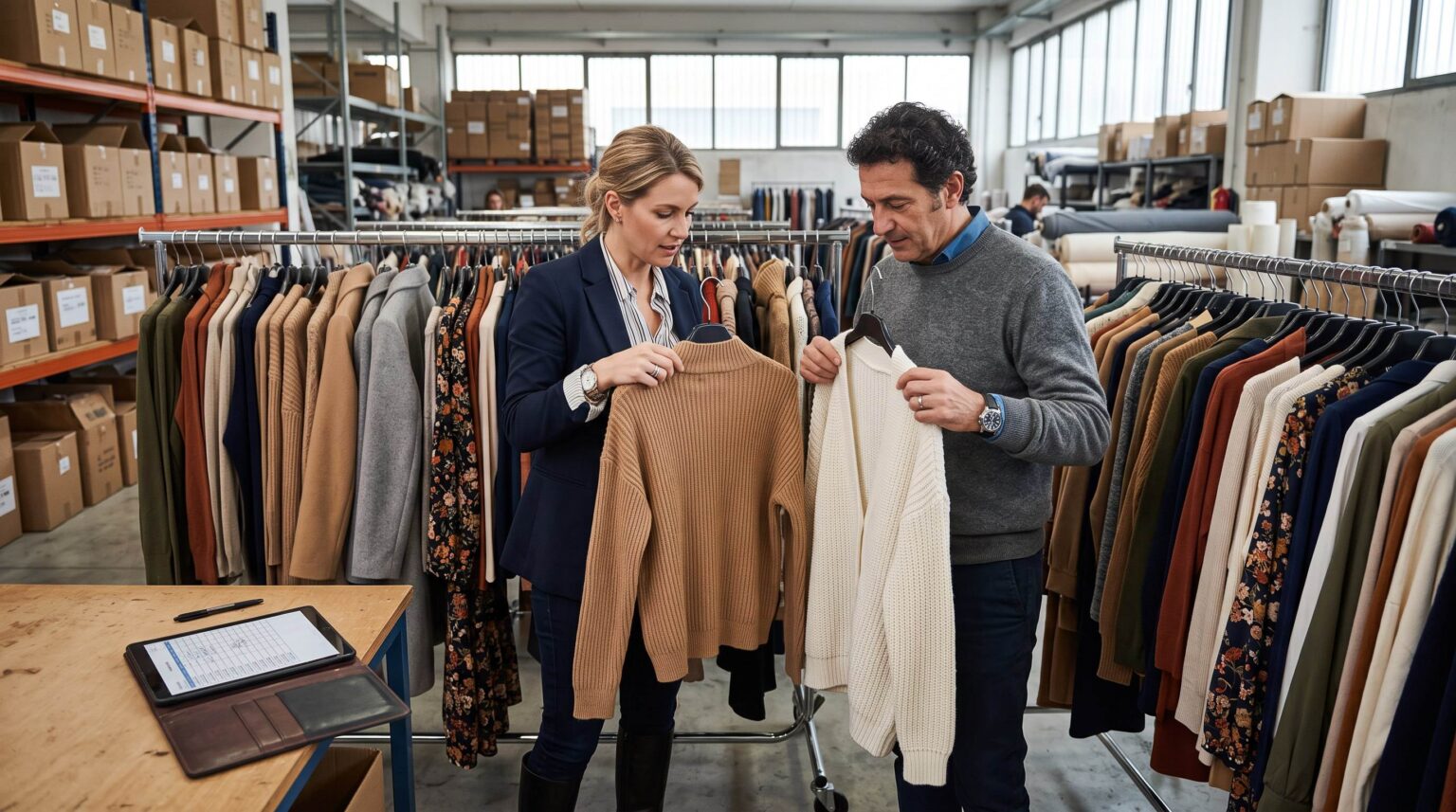
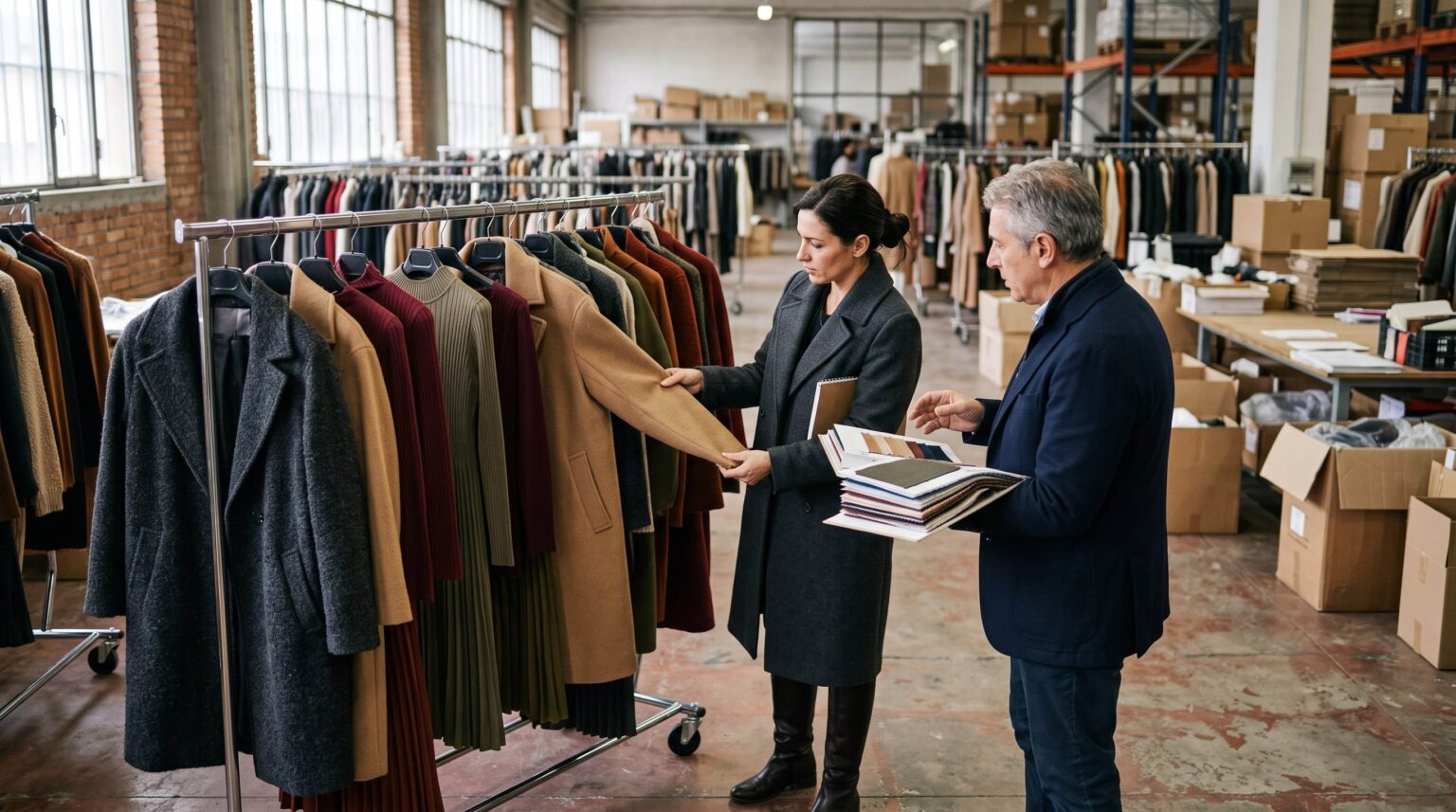
Curated selection of Italian women's fashion wholesale styles on a showroom rail in Prato including linen coords

Insights from the Prato wholesale market

Insights is where we document what we see, learn and think from inside the Italian wholesale market, season after season and showroom after showroom.

Every article in this section is written with a single question in mind: is this genuinely useful to a buyer making real decisions? That means no trend forecasts detached from commercial reality, no generic guides recycled from other markets. What you find here is grounded in what is actually happening in the Prato pronto moda district: which categories are moving, what prices look like, how logistics work, where the margin opportunity is in any given season.

The content covers the full range of what boutique buying from Italy involves: sourcing strategy, pricing and landed cost, supplier access and vetting, seasonal trend intelligence, and the operational mechanics of getting an Italian wholesale order from brief to your warehouse door. There are also case studies documenting real buying projects: actual briefs, actual selections, actual commercial outcomes.

If you are sourcing Italian womenswear wholesale and want substance over style, this is where to start.

If you buy for a store in one of our main markets, start from its page: United Kingdom, United States, Australia or Canada.

Sourcing Strategy

Cruise and Early SS27: Planning the Warm-Weather Buy While You Are Buying Winter

Warm-weather buying lands in the middle of the winter order, and boutiques serving hot markets or running a cruise capsule have to work both calendars together. This article looks at when the first linens and silks reach the Prato warehouses, how to divide a budget across two overlapping seasons, which fabrics have to be committed early because they do not come back, and why retailers in the southern hemisphere need to buy on Italian timing rather than on their own retail calendar.

Fabric & Materials

Reading Wool: Fibre, Weight and Finish Behind the Price of a Winter Garment

Two wool garments can look identical on a rail and cost very different amounts at wholesale level. The difference sits in composition, cloth weight, finishing and internal construction, and in how those elements behave after a season of wear. This article explains what to check by hand during a buying session, what to ask the supplier, and why expectations have to match the price band being bought. It closes on the commercial point: reading wool is what allows a retailer to justify a selling price to the final customer.

How It Works

Peak Season on the Floor: Why Deciding During the Session Beats Deciding Later

In the Italian pronto moda districts stock rotates and is not reproduced indefinitely, so a garment seen during a session may no longer exist a few days later. September and October sharpen that effect, because the same warehouses serve many buyers inside the same weeks. This article explains how to structure a buying day that actually produces decisions, why a long list of maybes costs more than a mistake on a few units, how booked goods wait for payment rather than being reserved indefinitely, and what can realistically be added once suppliers have packed. It also states the reverse side plainly: deciding quickly is not buying everything, it is entering the warehouse with a criterion.

How It Works

Paying for an Italian Order: Prepayment, Card Limits, Currency and Bank Costs

Payment is the part of an Italian order buyers ask about first and plan for last. This article sets out the six accepted methods, the full prepayment rule and its 24 to 48 hour window, the deposit and balance structure used for private label production, and the second payment that covers shipping once the cartons have been packed and weighed. It also explains why booked pronto moda stock is not reserved stock, how euro invoicing shifts currency and bank costs onto the buyer, and how proforma, final invoice and VAT are handled.

Sourcing Strategy

Scarves, Belts and Small Leather Goods: The Add-On Categories That Lift Basket Value

Small accessories change a boutique’s numbers before they change its window. Scarves, belts and small leather goods carry no size curve, so they do not generate broken-curve residuals, and their supplier minimums stay low enough to test a line without committing the season’s budget. This article looks at where they belong on the floor and in the online cart, how they lift the average basket without additional traffic, and why they are best added to a buying session that is already scheduled rather than organised on their own.

Case Study

Autumn Buying in Italy: Combining Pronto Moda and Production, a South American Case Study

An independent Argentinian store built its autumn range by buying part of the assortment ready from Italian pronto moda warehouses and having the rest produced to order. This account describes how the two calendars were overlapped instead of run in sequence, why a southern hemisphere retailer has to buy against the Italian season rather than the local one, and how customs documentation and landed cost were settled before the order was confirmed. Names, cities and commercial values are omitted.

How It Works

What Quality Control Actually Covers on an Italian Wholesale Order

Quality control on an Italian wholesale order is decided before buying, not after the cartons open. This article sets out what the standard inspection covers on every order, how the method combines a detailed check on part of the volume with a visual check on the rest, and when dimensional control applies. It states the defect tolerance openly at the low-cost end of pronto moda and explains how a problem is handled before shipment and after delivery.

Sourcing Strategy

Handbags From the Italian Districts: Buying Stock or Producing Your Own

A boutique or an online store adding bags has two realistic routes into the Italian districts. Buying finished stock lets you judge the product before paying, keep quantities small and reorder while a model lasts. Commissioning your own line gives exclusivity but requires sampling, longer timelines and minimums of 3,000 euro and 100 pieces per model. This article compares both, explains why specialised material minimums often bind harder than piece counts, covers vegan leather supply chains, and sets out why price positioning determines what the finished bag can realistically be.

Sourcing Strategy

After the Order Lands: Product Data, Measurements and Photography for Your E-commerce

Goods bought in Italy only generate revenue once they exist as published product pages. This article explains how to organise wholesale product data for ecommerce before the cartons arrive: recording composition, colour names and style codes during the buying session, measuring garments flat and publishing real dimensions instead of relying on size labels, writing descriptions that cover fabric hand, occasion and care, and separating still life catalogue photography from editorial work. It also covers why pronto moda rotation makes fast publication a commercial decision rather than a preference.

Sourcing Strategy

Beyond the Label: Boxes, Tissue, Mailers and the Unboxing Your Customer Remembers

Companion piece to the article on labels and swing tags, this one covers everything around the garment: boxes and counter-boxes, tissue paper, printed mailers for online orders, closure stickers with the logo, loyalty cards and letters inserted in the parcel. It explains the polybag materials available for individual bagging, who applies each operation and at what point in production, and why packaging is always quoted separately. It also sets out where the work is possible on private label, where it depends on the pronto moda supplier, and why very small runs rarely make commercial sense.

Italian fashion supply, curated and delivered to your inbox.

Join the Insider List

Be the first to access ready-to-wear drops, supplier insights and private label tips. No noise—only what helps your business buy smarter.
Need help?
Chat with us