
This Italian linen wholesale case study follows a Swiss client who came to us before her concept store had opened its doors. She had a lease, a fit-out plan and a precise idea of the mood she wanted on the rails: linen, natural cottons, neutral colours, pieces that could be sold as coordinated sets rather than isolated items. What she did not have was sales history. Nobody had ever walked into her shop and chosen one shirt over another, which meant that every buying decision in the first season had to rest on judgement instead of evidence.
The account is anonymised on purpose. We can say that the client is based in Switzerland and that the project was a concept store in the process of opening, but no names of clients, cities, shops or suppliers appear here, and no figures either. IFS never publishes supplier names and never hands out supplier lists, a boundary that protects both sides of the relationship. What follows is the sequence of steps we actually went through, the reasoning behind each one, and the parts of the plan that did not survive contact with the district. The general rules behind this case, from minimums to shipping, are explained in our guide to Italian linen wholesale.
Where the Italian Linen Wholesale Case Study Actually Began
Every collaboration starts with a screening conversation, and this one was no different. Before any supplier was contacted we spent a long call mapping her market, her price positioning, the customer she expected to serve and the season length she was buying for. Swiss retail is not one uniform market, and a store selling linen in a mountain canton works with a shorter warm window than one on a lake. That is the reason every new collaboration begins with a structured interview rather than a catalogue, and it filters out projects that would waste time on both sides.
The call produced a set of constraints rather than a wish list. She wanted a wardrobe built around linen shirting, wide trousers and light overlayers, in a palette that stayed within sand, chalk, clay and a muted green, and she ruled out prints almost entirely. She also accepted early that a store buying for the first time cannot commit deeply to any single style. What we agreed on instead was a first order of trial size, deliberately contained and spread across a range of styles, so that the opening rail would show breadth without betting the season on a single guess.
Turning a Mood Into a Brief for a First Wholesale Order in Italy
The next step was the brief, and it took longer to assemble than she expected. We asked for visual references, not runway images but photographs of the pieces she already imagined hanging together, and we built a shared board that both sides could add to as her thinking settled. Each entry carried a note on fabric weight, cut and the role that piece would play in the assortment. A board of that kind does two jobs at once: it gives the buying team something concrete to match against inside a showroom, and it makes the client notice when her own references disagree with each other.
Those disagreements surfaced quickly. Several references were washed heavy linens with a rustic hand, while others were fine, almost translucent shirting, and the two do not share a rail without looking accidental. We raised it before any supplier was approached, because the alternative is discovering the clash in a warehouse with a camera already running. Anyone preparing a first wholesale order in Italy gains from reading what the buying process looks like from the retailer’s side before the first session, since pronto moda mechanics differ sharply from ordering a season ahead through a brand agency.
A Deliberately Small Trial Session in Concept Store Sourcing
The first session ran online and was kept intentionally small: a trial pass across a limited number of warehouses, filmed live, with the client watching from Switzerland and asking for close-ups whenever a fabric read ambiguously on camera. A live session is not a pre-recorded tour. Garments come off the rail, get turned inside out, get held against the window light, and the client decides in the moment while the buyer negotiates on the spot. Everything chosen across the different suppliers then travelled as a single consignment, which is what keeps a shallow buy spread over several of them manageable.
The trial tested alignment as much as it tested product. Some of what she had imagined was simply not on the rails that season, not in her colours and not in her price band. Other things she had dismissed on paper, a particular trouser cut and a linen-cotton blend among them, looked considerably better on camera than in her references. Buying from outside the European Union added a further layer to her arithmetic, and she preferred to work through that side of the calculation on a trial order rather than on a full one.
Reading Linen Quality When the Assortment Has to Hold Together
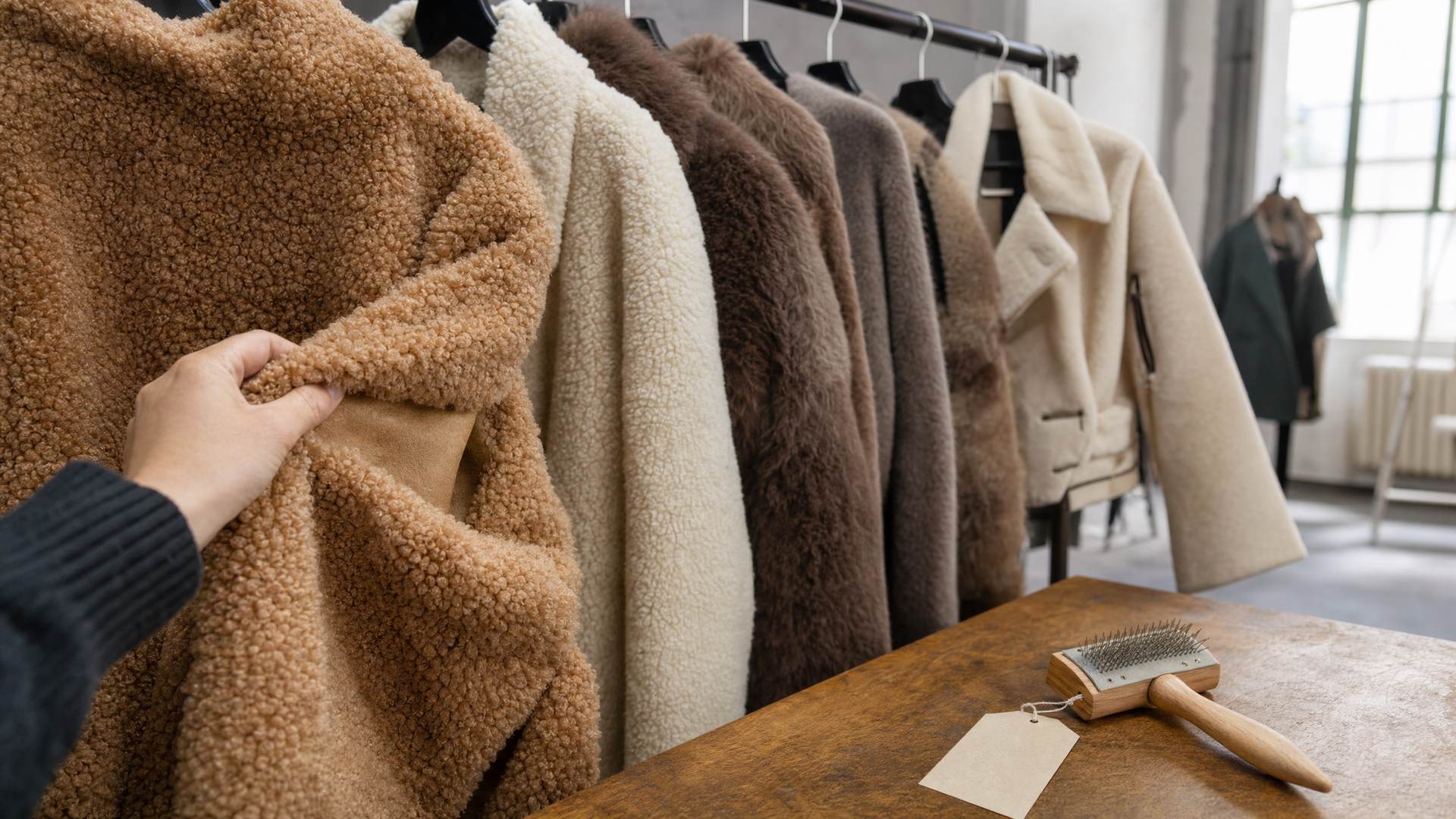
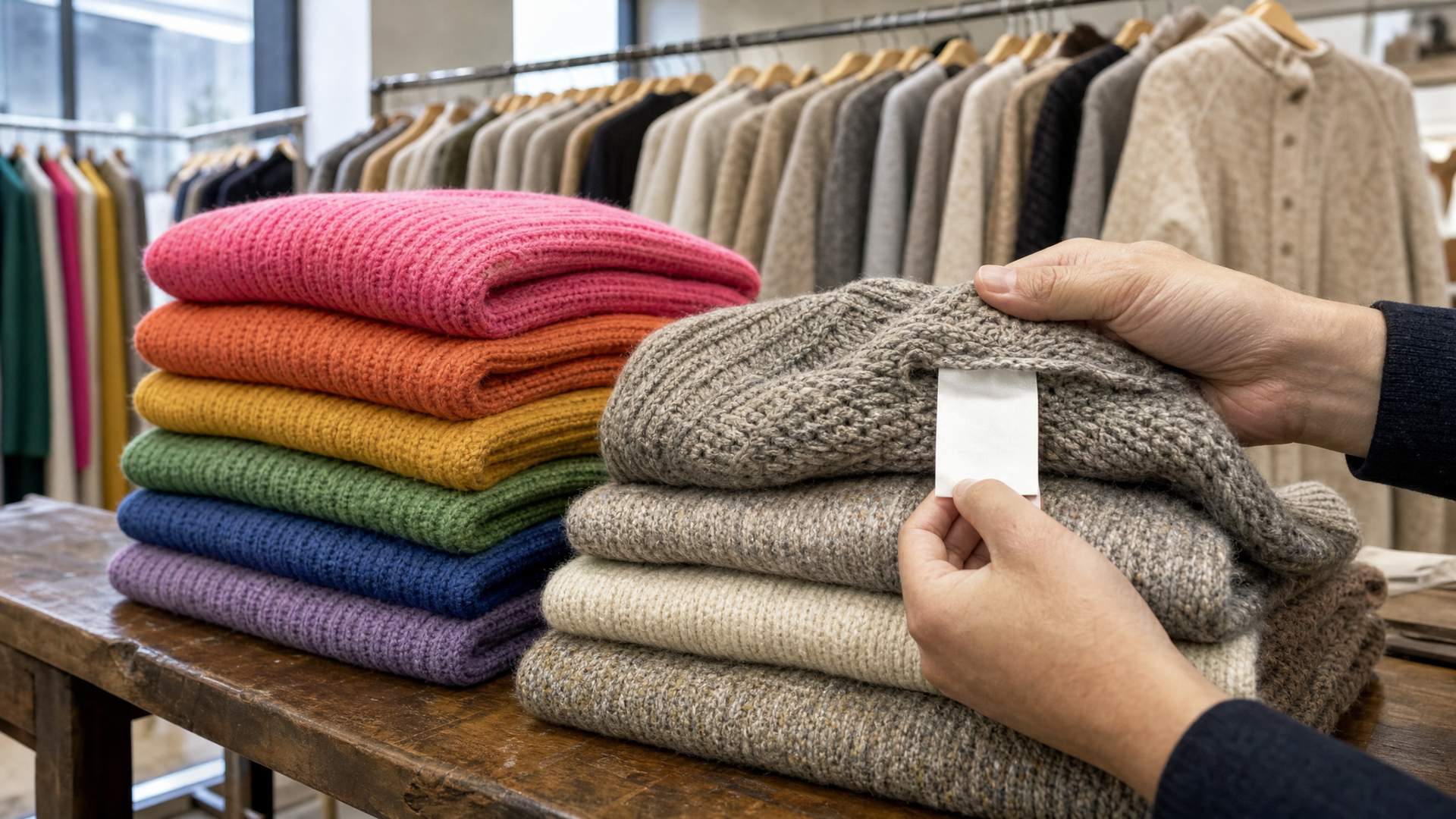
Linen behaves differently from cotton once a customer has it at home, and a new store learns that faster than it would like. Weight, weave density, yarn regularity and finishing all shape how a shirt drapes after a season of washing, and none of it is visible in a product photograph. We spent a large share of the session on exactly this, because knowing how to read linen quality at wholesale level separates a garment that ages into something a customer keeps from one that goes limp by late summer. She started asking about grammage before asking about price.
Quality also had to be judged against the way she intended to sell the linen assortment. Coordinated pieces only work if both halves behave alike, so a trouser and a shirt meant to hang together were checked on the same terms: comparable weight, comparable hand, colours that held next to each other instead of drifting apart under shop lighting. Where a pairing failed that test we treated the two garments as separate items rather than forcing the set, and in a few cases we left both on the rail because neither stood up convincingly on its own.
Scouting Between Sessions Keeps New Boutique Buying Moving
Between sessions the work does not pause. Warehouses across the district restock continuously, and a style absent in one month can appear in the next, which is the practical reason a partner standing inside the district is more useful than any list of contacts. Our buyers kept her brief open while visiting suppliers for other clients, and whenever something matched, a linen set in the right chalk tone or an overshirt in the right weight, they filmed it and sent the video the same day. She answered yes, no, or asked for a second angle.
That rhythm suited a store that had not opened yet. She could add depth to the pieces she felt most confident about without committing to another full session, and the additions joined what was already being prepared for her instead of being handled as a separate order. She never asked who the suppliers were, and we would not have said; those names stay with us, and the arrangement works because that line holds. What she received in place of a contact list was a reading of the district that kept updating while she was busy fitting out a shop in another country.
What the Second Season Added to This Italian Linen Wholesale Case Study
She came back for the following season, after the shop had opened, and the conversation had changed character. She had till data. She knew which linen shirt had cleared in a single weekend and which trouser had sat untouched, she had noticed that her customers bought coordinated pieces together far more often than she had assumed, and she could see that the darkest tone in her palette had barely moved. Buying stopped being a projection and became a response to something measurable. The second brief was shorter, sharper and far less romantic than the first.
No two openings resemble each other closely enough for one Italian linen wholesale case study to serve as a template, and nothing here should be read as a promise of comparable results or of finding the same product in the district. What does carry over is the method behind concept store sourcing without sales history: start narrow, test against a real audience, then let the reorder carry the weight once evidence exists. A store that opens with a small, coherent and slightly incomplete assortment stands on firmer ground than one that opens full of guesses.